Legal casino gambling age in Malta
Malta is a small market but one of the best-known gambling licensing jurisdictions. Since 2018 the sector has been governed by the Gaming Act (Chapter 583 of the Laws of Malta) and a set of regulations made under it. A single regulator, the Malta Gaming Authority (MGA), licenses and supervises land-based casinos, gaming parlours, the National Lottery and online operators. Hundreds of companies hold MGA licences and serve players in many other countries, which has made Malta’s rules a matter of European, not only national, interest. That interest sharpened after 2023, when Malta added Article 56A to the Gaming Act, a provision directed at foreign lawsuits against its licensees. This guide explains the framework, taxation, player protection and the related cases before the Court of Justice of the European Union (CJEU), and what an MGA licence means for players outside Malta.
Key points
- Gambling is regulated by the Gaming Act (Cap. 583), in force since August 2018, and its subsidiary regulations (S.L. 583.03 to 583.12). The MGA is the single regulator for online and land-based gaming.
- The MGA issues business-to-consumer (B2C) and business-to-business (B2B) licences, normally for ten years. At the end of 2025 it had 302 licensed companies holding 311 licences, 171 of them B2B.
- Gaming tax applies to revenue from players in Malta: 5% until September 2026, and from 1 October 2026 15% for casino-type games and 10% for other online game types.
- Article 56A, added in 2023, tells Maltese courts to refuse recognition of certain foreign judgments against licensees. The European Commission and an Advocate General of the EU Court of Justice consider it contrary to EU law; the Court had not ruled on its validity at the time of review.
- An MGA licence makes an operator lawful in Malta. It does not, by itself, make its services lawful in another country. The CJEU confirmed in April 2026 that other member states may prohibit such services.
- Players can self-exclude with online operators and self-bar from land-based venues. Support is available from the Responsible Gaming Foundation and Sedqa (helplines 1777 and 179).
Last reviewed: 6 October 2026.
Top Rated Online Casinos for Malta

Vegas Casino Online
Sign Up400% up to
$500

Liberty Slots Casino
Sign Up100% up to
$259

Sloto'Cash Casino
Sign Up100% up to
$500
Shazam Casino
Sign Up250% up to
$2,500

Lucky Tiger Casino
Sign Up250% up to
$1,000
Casino Brango
Sign Up500% up to
$/€100
+ 500 Spins
Vegas Casino Online
Sign Up400% up to
$500
Liberty Slots Casino
Sign Up100% up to
$259
Sloto'Cash Casino
Sign Up100% up to
$500
Shazam Casino
Sign Up250% up to
$2,500
Lucky Tiger Casino
Sign Up250% up to
$1,000
Casino Brango
Sign Up500% up to
$/€100
+ 500 Spins
Historical development
Modern gambling regulation in Malta began with two statutes. The Gaming Act of 1998 (Cap. 400) governed casinos, and the Lotteries and Other Games Act (Cap. 438), Act XXIV of 2001, in force from 2 September 2002, covered lotteries and other games and set up the Lotteries and Gaming Authority. Remote (online) gaming was licensed under the Remote Gaming Regulations (S.L. 438.04), made under the 2001 Act. The regulator later took the name Malta Gaming Authority.
The framework was rebuilt in 2018. According to the Chambers Gaming Law 2025 guide for Malta by GVZH Advocates, the new Gaming Act and its subsidiary legislation came into force in August 2018. The Maltese legislation portal records that both earlier Acts, and the Remote Gaming Regulations, were repealed by Act XVI of 2018 with effect from 1 January 2019.
The next major change was Act XXI of 2023, which inserted Article 56A into the Gaming Act. The CJEU’s summary in Case C-198/24 describes the effect in plain terms: “Since June 2023, Maltese law prohibits the enforcement of foreign judgments against gambling operators holding a Maltese licence” (CJEU press release No 76/26). The provision was debated in Parliament as Bill No. 55, which is why it is widely called “Bill 55”.
Legal framework

The principal statute is the Gaming Act (Cap. 583). Its long title covers gaming services “from and within Malta”, so it regulates services supplied to players abroad as well as at home. Key provisions in the consolidated text, include:
- Licensing. Carrying out an activity that requires authorisation without the required licence is an offence (Article 13).
- Penalties. Article 23 and the Third Schedule set fines of €10,000 to €500,000 (doubled for repeat offenders) and possible imprisonment for serious breaches.
- The National Lottery. Article 11(3) allows the Minister to grant a concession to operate the National Lottery; the concessionaire also needs MGA authorisation.
The Act is supplemented by regulations listed on the MGA’s regulatory framework page: the Gaming Licence Fees Regulations (S.L. 583.03), Gaming Definitions Regulations (S.L. 583.04), Gaming Authorisations Regulations (S.L. 583.05), Gaming Compliance and Enforcement Regulations (S.L. 583.06), Gaming Premises Regulations (S.L. 583.07), Gaming Player Protection Regulations (S.L. 583.08), Gaming Commercial Communications Regulations (S.L. 583.09), Gaming Tax Regulations (S.L. 583.10), Social Causes Fund Regulations (S.L. 583.11) and Retention of Data (MGA) Regulations (S.L. 583.12). The MGA also issues binding directives, including a 2018 Player Protection Directive and an ADR (alternative dispute resolution) Directive.
Article 56A (“Bill 55”)
Article 56A applies “notwithstanding any provision of the Code of Organization and Civil Procedure or of any other law, as a principle of public policy”. It provides that no action shall lie against an MGA licence holder, its current or former officers or key persons, or a player, in matters relating to a gaming service, if the action conflicts with or undermines the legality of gaming services provided in or from Malta under an MGA licence, and relates to an activity that is lawful under Maltese gaming law. Paragraph (b) adds that a Maltese court “shall refuse recognition and, or enforcement in Malta” of any foreign judgment given on such an action.
In practice the provision targets lawsuits, mainly in Austria and Germany, in which players seek repayment of losses from Malta-licensed operators that lacked a licence in the player’s country. Malta’s position, in a press release of 18 June 2025, is that Article 56A “does not establish new or separate grounds for refusing recognition or enforcement of judgments beyond those set out in Regulation (EU) 1215/2012” (the Brussels I bis Regulation on jurisdiction and the recognition of judgments). The European Commission and an Advocate General of the CJEU take the opposite view (see Recent and upcoming developments). According to Gecić Law, Maltese courts have applied the provision, including by refusing garnishee (account-attachment) orders against gaming companies.
EU law context
There is no EU legislation specific to gambling. The European Commission states that member states “are autonomous in the way they organise their gambling services, as long as they comply with the fundamental freedoms” of the Treaty on the Functioning of the European Union. An MGA licence is therefore a national authorisation that other member states are not obliged to accept.
Regulator and licensing model
Malta follows a licensing model: any applicant that meets the legal requirements can obtain a licence, and there is no cap on numbers. According to the Legal 500 country guide (GVZH Advocates, 2025), the MGA is “the single, central regulatory body for the gaming sector in Malta”. The main authorisations are:
- Gaming service licence (B2C), for operators that offer games to players;
- Critical gaming supply licence (B2B), for suppliers of games, platforms and other essential components;
- corporate group versions of both.
Licences are normally valid for ten years. Games are grouped into four types: Type 1, games of chance played against the house whose outcome is determined by a random number generator (for example casino games and lotteries); Type 2, games whose outcome depends on an event, mainly fixed-odds betting; Type 3, games in which the operator takes a commission, such as poker and betting exchanges; and Type 4, controlled skill games, currently limited to fantasy sports. The Chambers guide notes that land-based casino licences are issued by the MGA only to holders of a government concession. The MGA also regulates gaming parlours (“controlled gaming premises”), commercial bingo halls and the National Lottery, which the Chambers guide says has around 240 points of sale.
The Gaming Authorisations Regulations also allow a recognition notice. The Chambers guide describes this as a notice by which an authorisation issued by another EU or EEA state “is recognised as having the same effect as an authorisation issued by the MGA”. It operates only within Malta. It is not a passport into other countries’ markets.
Size of the sector. According to the MGA Annual Report 2025, published on 7 July 2026, the Authority had 302 licensed companies holding 311 gaming licences at the end of 2025. B2B licences rose from 68 in 2018 to 171 in 2025. In 2025 it issued 19 new licences (12 of them B2B) and eight renewals. It puts direct employment at about 15,039 full-time equivalents and the sector’s gross value added at €1,422.0 million, or 6.3% of Malta’s economic output. In 2025 it imposed administrative penalties totalling €162,520, suspended one licence and cancelled two.
The MGA’s public licensee register can be searched by licensee name, authorisation status, URL or gaming service. It is the authoritative check.
Online gambling: what is permitted and how it is enforced
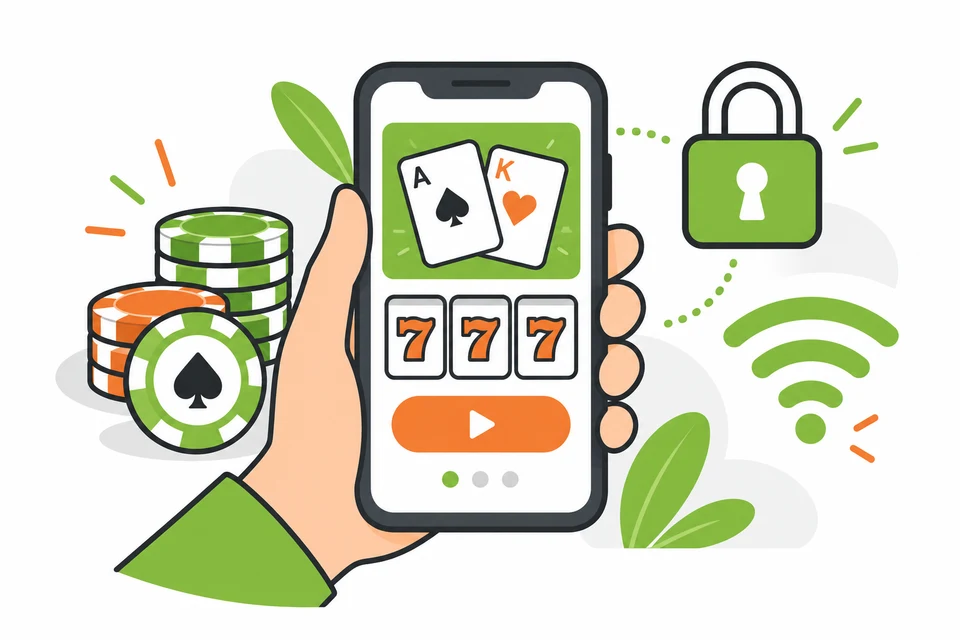
Online casino games, betting, poker and similar games are lawful in Malta when offered under an MGA licence or a recognition notice. Most MGA licensees serve mainly players abroad.
Offering, facilitating or marketing unlicensed gambling in Malta is a criminal offence. The Legal 500 guide gives the penalty as a fine of €10,000 to €500,000 or imprisonment of up to five years. Malta does not, however, use technical blocking. The Chambers guide states that “there are currently no technical measures, such as ISP blocking, in place to protect consumers from unlicensed operators”. Instead, the MGA publishes a list of unauthorised URLs: websites that falsely claim an MGA licence. The MGA says that any reference to an MGA licence on those domains “is false and misleading”, and warns that unlicensed entities are unregulated and that dealing with them is “risky for consumers”.
Advertising is permitted but regulated by the Gaming Commercial Communications Regulations (S.L. 583.09). According to the Legal 500 guide, advertisements must be socially responsible, must not target minors and must show responsible-gaming messages and licensing information.
Position of players
Players in Malta
For residents of Malta, playing with an MGA-licensed operator is lawful. The minimum age is 18 (Legal 500). Gaming tax is paid by the operator, not the player. Article 22 of the Gaming Act requires players to “behave in a fair and honest manner” towards operators.
The position on unlicensed operators is less clear-cut than in some countries. The Legal 500 guide states that, under the Criminal Code, individuals who take part in unlawful betting may commit a contravention against public order, punishable by the courts. We found no record of a player in Malta being prosecuted for using an unlicensed website. The main practical risk is the absence of supervision and of a complaint route.
Players outside Malta: what an MGA licence does and does not mean
Many readers play at MGA-licensed sites from other countries. Based on the sources reviewed:
What an MGA licence means. The operator has passed the MGA’s fitness and probity checks, is subject to MGA audits and enforcement, must apply the player-protection rules (limits, self-exclusion, reality checks) to its customers, must report on players’ funds (the MGA received 1,757 monthly player-funds reports in 2025), and must belong to an ADR scheme.
What it does not mean. It does not make the service lawful in the player’s own country. In Case C-440/23, referred by a Maltese court, the CJEU held on 16 April 2026 that EU law does not prevent a member state from prohibiting online gambling services that are lawfully authorised in another member state, and that EU law does not preclude a player’s claim for restitution of stakes lost on prohibited games (press release No 53/26). Advocate General Emiliou has likewise stated that the “country of origin” principle “does not apply in the field of online gambling”. The MGA reviews complaints only in English or Maltese.
Litigation abroad. In Case C-77/24, decided on 15 January 2026, the CJEU held that for claims over unlicensed online gambling, the damage “must be deemed to have occurred in the Member State in which that player is habitually resident”, so that, as a rule, the law of the player’s country applies (press release No 2/26). Whether Article 56A can lawfully block enforcement of such judgments in Malta is unresolved (see below).
Taxation
Operators
Online operators pay two kinds of charge. The first is the compliance contribution, which is levied on gaming revenue (stakes less winnings, often called gross gaming revenue or GGR) on a sliding scale. According to the MGA’s guidance note on licence fees and taxation, for Type 1 games the rate starts at 1.25% on the first €3 million of revenue and falls to 0.40%, with a minimum of €15,000 and a maximum of €375,000; other types have their own scales. B2C licences also carry an annual fee, generally €25,000. In 2025 the MGA collected €82.4 million in compliance contributions, licence fees, levies and consumption tax.
The second is gaming tax, which applies only to revenue from players in Malta. Until 30 September 2026 the rate was 5%. According to PwC Malta, the Gaming Tax (Amendment) Regulations, 2026 replaced the flat rate from 1 October 2026 with:
| Activity | Gaming tax from 1 October 2026 |
|---|---|
| Type 1 gaming services (casino-type games) | 15% of gaming revenue |
| Type 2, 3 and 4 gaming services | 10% of gaming revenue |
| Controlled gaming premises (gaming parlours) | 5% of gaming revenue |
| Junkets and junket events | 5% of gaming revenue |
PwC notes that a residence-based test applies: what matters is whether the player is established, has a permanent address or usually resides in Malta, not physical presence. Ganado Advocates identify the instruments as Legal Notices 84 and 86 of April 2026 and note accompanying changes narrowing the VAT exemption for gaming. Revenue from players abroad remains outside Maltese gaming tax.
Players
According to the Chambers guide, “player winnings are generally exempt from taxation in Malta”, unless gaming is carried on so frequently that it amounts to a trade, business or profession. Players resident elsewhere are taxed, if at all, under their own country’s rules.
Consumer protection and responsible gambling
The Gaming Player Protection Regulations and the 2018 Player Protection Directive require licensees to offer deposit, loss and time limits, reality checks and self-exclusion, to monitor for signs of problem gambling and to keep minors out. According to the MGA’s self-barring page, online self-exclusion can be for a definite or indefinite period, and account funds are not forfeited. Self-exclusion online applies operator by operator: the sources reviewed describe no central register covering all MGA-licensed websites.
For land-based venues, Malta has a self-barring system administered through the MGA and the Responsible Gaming Foundation (RGF). The RGF lists periods of six months to one year, an indefinite period or an auto-renewal option; an indefinite bar requires a medical certificate, and applicants must show an identity card. The RGF, set up in February 2014, supports people affected by problem gambling and their families. It gives two free helplines: Supportline 1777 and Appoġġ 179. The MGA’s safer gambling page also lists Sedqa, the national addiction service run by the Foundation for Social Welfare Services, Caritas, Oasi and the blocking tool BetBlocker.
Disputes should first be raised with the operator, then with its ADR body or through the MGA’s formal complaint channel. The MGA resolved 3,718 requests for assistance from players in 2025, most of them disputes rather than complaints about regulatory breaches. Our responsible gambling guide sets out general steps for keeping gambling under control.
Recent and upcoming developments
- Commission infringement proceedings (June 2025 onwards). On 18 June 2025 the European Commission sent Malta a letter of formal notice, INFR(2025)2100, for failing to comply with the Brussels I bis Regulation (Commission, June 2025). According to the EAPIL blog, the Commission considers that Article 56A requires Maltese courts to “systematically refuse” enforcement and “undermines the principle of mutual trust in the administration of justice”. We found no public record of a reasoned opinion or a referral to the Court as of 6 October 2026, but could not confirm the current stage; the case should be rechecked.
- Case C-77/24 (judgment, 15 January 2026), on a reference from the Austrian Supreme Court: player claims are in principle governed by the law of the player’s home country (see above).
- Case C-530/24 (Advocate General’s opinion, 19 March 2026). On a reference from the German Federal Court of Justice concerning a Malta-based sports betting operator, Advocate General Emiliou found that unlicensed operators may face civil consequences such as contract nullity and refunds unless that would be disproportionate (No 43/26). We found no judgment at the time of review.
- Case C-440/23 (judgment, 16 April 2026), on a reference from a Maltese court: member states may prohibit services licensed in another member state (see above).
- Case C-683/24 (Advocate General’s opinion, 23 April 2026). An Austrian court referred questions on Article 56A. Advocate General Emiliou proposed that the reference be declared inadmissible. In the alternative, he found Article 56A “manifestly incompatible with the rules governing the recognition and enforcement of judgments” (No 65/26). The opinion is not binding. At the time of review we had found no report of a judgment; readers should check the Court’s case page.
- Case C-198/24 (judgment, 21 May 2026). On a reference from the Regional Court for Civil Matters in Vienna, the CJEU held that a court deciding on a European Account Preservation Order may take into account the debtor’s past conduct and “the existence, in the Member State where the debtor is established, of a law capable of impeding the enforcement of the claim”, referring to Article 56A (No 76/26). The Court did not rule on whether Article 56A itself is compatible with EU law.
Casino listings for players in Malta
The listings below are generated automatically from our casino database. They do not by themselves show that an operator holds an MGA licence, or that its services are lawful in any other country. Readers in Malta should check the operator and the exact website address in the MGA’s licensee register and its list of unauthorised URLs.
Vegas Casino Online
No Deposit Bonus
$ 20
Liberty Slots Casino
No Deposit Bonus
$ 18

Slots.lv
100% up to
$2,000
+ 20 Spins
Sloto'Cash Casino
100% up to
∞

Casino Extreme
200 Spins

Bovada Casino
100% up to
$1,000
Casino Brango
500% up to
$/€100
+ 500 Spins
Shazam Casino
Exclusive No Deposit Bonus
$ 50
Lucky Tiger Casino
No Deposit Bonus
$ 55
Red Stag Casino
25% up to
∞
Rich Palms Casino
250% up to
∞

Miami Club Casino
50 Spins

Highway Casino
$ 30

Lincoln Casino
No Deposit Bonus
$ 18
Yabby Casino
202% up to
∞

DuckyLuck Casino
500% up to
$/€2,500
+ 150 Spins
PlayCroco Casino
300% up to
∞
+ 60 Spins
Fair Go Casino
200% up to
∞
Uptown Aces
250% up to
∞

Las Vegas USA Casino
No Deposit Bonus
$ 20
Drake Casino
300% up to
$2,000
Sun Palace Casino
No Deposit Bonus
$ 20
Slots Plus
No Deposit Bonus
$ 20
Ignition Casino
200% up to
$100
.jpg?x83485)
Everygame Classic Casino
200% up to
∞
+ 50 Spins
Slots And Casino
500% up to
∞
+ 150 Spins

Slotsroom Casino
400% up to
∞
+ 20 Spins

Casino Max
400% up to
∞
+ 20 Spins
El Royale Casino
230% up to
∞
Black Lotus Casino
300% up to
$7,000
+ 45 Spins
Red Dog Casino
Slots Empire
230% up to
$7,500

Lucky Creek
50 Spins

Spinfinity Casino
400% up to
∞
+ 20 Spins

Jackpot Capital
25% up to
∞
Ripper Casino
25% up to
∞

Las Atlantis Casino
$ 2,500

Slotastic
250% up to
∞

Grand Eagle
200% up to
$5,500
+ 30 Spins
Cherry Jackpot
400% up to
∞
+ 20 Spins
Grande Vegas
150% up to
$300
LadyLuck Casino
100 Spins

Roaring 21 Casino
400% up to
∞
+ 20 Spins

Ozwin Casino
$ 10
Treasure Mile
200% up to
$/€4,000
+ 50 Spins

TropicanaCasino
Borgata Online Casino

BetOnline Casino
100 Spins

Grand Rush
200% up to
$4,000
+ 40 Spins

Jazz Casino
10% up to
$250

BetMGM Casino NJ
100% up to
$1,000
Sources and further reading
- Laws of Malta (legislation.mt), Gaming Act, Chapter 583 (consolidated, accessed 6 October 2026).
- Laws of Malta (legislation.mt), Lotteries and Other Games Act, Chapter 438 (repealed) (accessed 6 October 2026).
- Laws of Malta (legislation.mt), Gaming Act, Chapter 400 (repealed) (accessed 6 October 2026).
- Malta Gaming Authority, Regulatory framework (accessed 6 October 2026).
- Malta Gaming Authority, Annual Report and Financial Statements 2025 (2026).
- Malta Gaming Authority, Guidance Note: Licence Fees and Taxation (accessed 6 October 2026).
- Malta Gaming Authority, Licensee register (accessed 6 October 2026).
- Malta Gaming Authority, Unauthorised URLs (accessed 6 October 2026).
- Malta Gaming Authority, Self-barring (accessed 6 October 2026).
- Malta Gaming Authority, Safer gambling (accessed 6 October 2026).
- Malta Gaming Authority, Lodge a complaint (accessed 6 October 2026).
- Responsible Gaming Foundation, Responsible Gaming Foundation (accessed 6 October 2026).
- A. J. Zammit and K. Hili (GVZH Advocates), Gaming Law 2025: Malta, Chambers and Partners (2025).
- A. J. Zammit (GVZH Advocates), Malta: Gambling Law, Legal 500 Country Comparative Guides (2025).
- PwC Malta, Changes in Gaming Tax applicable from October 2026 (2026).
- P. Micallef Grimaud and P. Formosa (Ganado Advocates), Malta’s Gaming Sector: Current Developments and Future Trends (2026).
- I. Eftimov (Gecić Law), The Long and Winding Road for the Maltese Gaming Industry: Latest Signpost from Luxembourg (2026).
- European Commission, Representation in Malta, June infringements package: key decisions (2025).
- Government of Malta, Ministry for the Economy, Enterprise and Strategic Projects, Press release on the Letter of Formal Notice concerning Article 56A (2025).
- Court of Justice of the EU, Press release No 2/26: Judgment in Case C-77/24 (2026).
- Court of Justice of the EU, Press release No 43/26: Advocate General’s Opinion in Case C-530/24 (2026).
- Court of Justice of the EU, Press release No 53/26: Judgment in Case C-440/23 (2026).
- Court of Justice of the EU, Press release No 65/26: Advocate General’s Opinion in Case C-683/24 (2026).
- Court of Justice of the EU, Press release No 76/26: Judgment in Case C-198/24 (2026).
- European Commission, Gambling (accessed 6 October 2026).