Legal casino gambling age in Colombia
Colombia treats gambling as a state monopoly. The Constitution reserves games of chance to the state and requires the revenue to be spent on health services. In practice the state rarely runs games itself. Instead, it grants concession contracts to private companies, which pay a share of their revenue back to the public health system. Online casino games and sports betting have been brought inside this model since 2016, when Coljuegos, the national monopoly administrator, approved rules for internet games. The first online contract was signed in 2017. Colombia was among the first countries in Latin America to regulate online gambling. This guide explains the legal basis of the monopoly, how online concessions work, how illegal sites are blocked, the position of players, the tax disputes of 2025 and 2026, and the responsible gambling rules.
Key points
- Article 336 of the 1991 Constitution makes games of chance a state monopoly whose revenue must go exclusively to health services. Law 643 of 2001 sets out the detailed monopoly regime.
- Coljuegos administers national games, including online games, through concession contracts. Its register, updated on 1 October 2026, listed 14 authorised online operators.
- Online operators pay 15% of gross gaming revenue (GGR) to Coljuegos, plus a fixed annual amount and a 1% administration charge. Games must return at least 83% of stakes to players.
- Coljuegos says it issued 46,228 orders to block unauthorised gambling websites between 2022 and July 2026.
- A 19% VAT on online gambling was imposed by emergency decree in 2025 and again for 2026. The Constitutional Court struck down the 2026 decree in April 2026. A separate 16% consumption tax on online GGR, created in March 2026, was still reported to apply in September 2026.
Last reviewed: 6 October 2026.

Top Rated Online Casinos for Colombia

Vegas Casino Online
Sign Up400% up to
$500

Liberty Slots Casino
Sign Up100% up to
$259

Sloto'Cash Casino
Sign Up100% up to
$500
Casino Brango
Sign Up500% up to
$/€100
+ 500 Spins
Shazam Casino
Sign Up250% up to
$2,500
Lucky Tiger Casino
Sign Up250% up to
$1,000
Vegas Casino Online
Sign Up400% up to
$500
Liberty Slots Casino
Sign Up100% up to
$259
Sloto'Cash Casino
Sign Up100% up to
$500
Casino Brango
Sign Up500% up to
$/€100
+ 500 Spins
Shazam Casino
Sign Up250% up to
$2,500
Lucky Tiger Casino
Sign Up250% up to
$1,000
Historical development
The monopoly principle dates from the 1991 Constitution. Article 336 allows the state to establish monopolies only for reasons of public interest and only by law. Its fourth paragraph provides that “the revenue obtained from the exercise of the monopolies of games of chance shall be destined exclusively for health services”, as quoted by the national tax authority in a DIAN legal opinion. A monopoly in this sense is a legal reservation: no one may organise games of chance unless the state does so directly or authorises them.
Congress set out the detailed regime ten years later in Law 643 of 2001, in force from 17 January 2001. It defined the monopoly as the state’s exclusive power to exploit, organise, administer, operate, control and regulate games of chance, and it allocated each type of game to a public body. For national games such as gaming machines, bingo and casinos, the administrator was originally the state company ETESA. In 2011 the government created a new body, Coljuegos, by Decree 4142 of 2011, to take over the administration of national games, according to Coljuegos.
Online gambling came later. Article 93 of Law 1753 of 2015, the National Development Plan law, recognised games operated over the internet as a type of “novel game” (juego novedoso) and gave the authorities powers to block unauthorised websites. Coljuegos’ board approved the rules for internet games in Agreement No. 4 of 24 May 2016. On 28 June 2017 Coljuegos signed the first online concession contract. It described Colombia as “the first country in Latin America to regulate games operated over the internet” and announced at the same time that 325 unauthorised gambling websites were to be blocked.
Legal framework

The main legal sources are:
- Constitution of 1991, Article 336. It establishes the gambling monopoly and ties its revenue to health services (DIAN, citing Article 336).
- Law 643 of 2001, the monopoly statute. It defines each type of game, sets the bodies that administer them, fixes the exploitation rights (derechos de explotación, the fees operators pay to the state) and prohibits sales to minors and unauthorised operation. Article 38, on novel games, sets exploitation rights of at least 17% of gross income, reduced to 15% where at least 83% of stakes are returned as prizes.
- Law 1753 of 2015, Article 93. It defines internet games as those in which the bet and the payment of prizes are made only through an authorised internet portal (Consejo Nacional de Juegos de Suerte y Azar). Paragraph 3 allows the monopoly administrators, supervisory authorities and the National Police to monitor “channels, financial entities, internet pages and media” used for unauthorised games and to order “the corresponding alerts and blocks”, as reproduced by the internet provider UNE.
- Agreement No. 4 of 2016 of the National Council of Games of Chance (CNJSA), as amended. It is the detailed regulation for online games.
- Coljuegos Resolution 20244000022654 of 16 October 2024, which sets responsible gambling obligations for national operators, including online operators.
Colombia is a unitary state, but gambling is split between national and territorial levels. According to Coljuegos, it administers national games: gaming machines, casinos and other “localised” games, novel games including online games, promotional games, national raffles and sports betting. The departments run the territorial games, namely the traditional lotteries and permanent betting known as chance. The National Council of Games of Chance, created under Decree 4144 of 2011, oversees territorial games. The National Health Superintendency (Supersalud) has inspection and supervisory powers, reflecting the link between gambling revenue and health funding.
Regulator and licensing model
Colombia does not issue gambling licences in the usual sense. It uses a concession model: Coljuegos signs a contract with a private company, which then operates the game on the state’s behalf in exchange for exploitation rights. This keeps the constitutional monopoly while allowing several private operators to compete. The Chambers Gaming Law 2025 guide for Colombia, written by Sora Lawyers, states that online concession contracts last between three and five years and that each entity may hold only one online contract. Operators must be Colombian companies or branches of foreign companies, and new operators need minimum equity of about USD 450,000.
The main financial terms, as set out in Agreement No. 4 of 2016 and summarised by Chambers, are:
- Variable exploitation rights: 15% of GGR. GGR means total stakes minus prizes paid.
- Fixed exploitation rights: an annual amount calculated as 811 legal monthly minimum wages per year of operation, which Chambers puts at about USD 290,000.
- Administration charge: an additional 1% of the exploitation rights, paid to Coljuegos.
- Return to player: games must return at least 83% of stakes to players.
- Guarantees: a fund or guarantee to cover the payment of prizes and players’ balances (set at COP 615 million in the compiled text of the Agreement), plus performance and civil liability guarantees. Chambers notes that since September 2025 insurance policies can also be accepted.
The number of online concessions changes as contracts start and end. Coljuegos announced on 26 May 2026 that a new contract running to 2031 brought the total to 15 operators, and repeated the figure of 15 in July 2026. Its register of authorised online operators, showing an update date of 1 October 2026, listed 14 operators when we reviewed it. Readers should rely on the register for the current position. Authorised sites operate under the Colombian .co domain, and players must register with full identity checks (CNJSA).
The sums involved are significant. Coljuegos reported that online operators transferred COP 317,977 million to the health sector in 2023. Trade press reporting by SiGMA in September 2026 states that Coljuegos collected COP 977.22 billion between January and August 2026, 39.38% more than in the same period of 2025. Of that sum, COP 473.02 billion came from online gaming. The money is transferred to the subsidised regime of the public health system.
Online gambling: what is permitted and how it is enforced
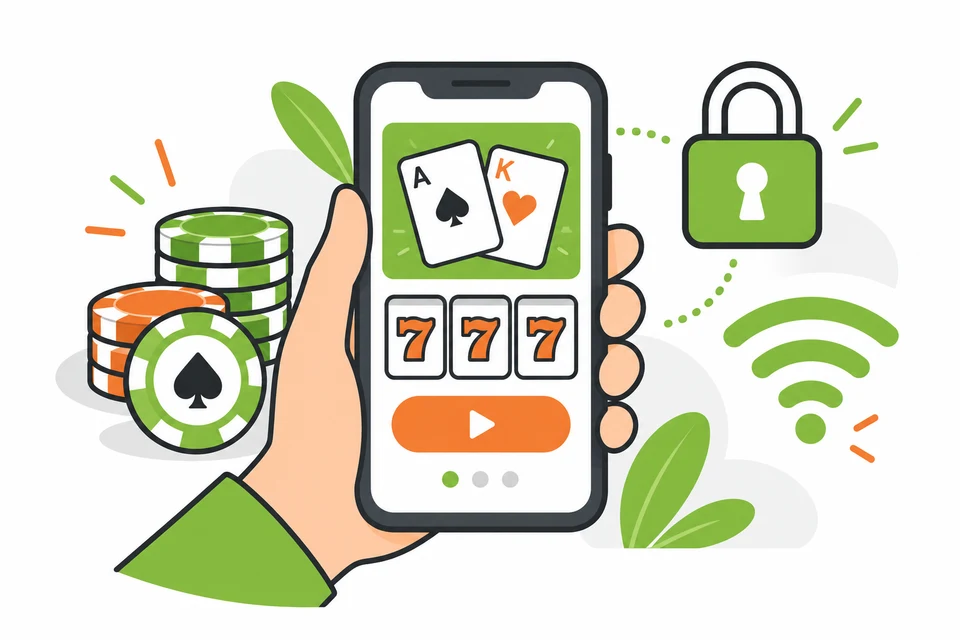
Under an online concession, an operator may offer casino-type games, including slot-type games and live casino, as well as sports betting, through its authorised website. Players must be adults, must be resident in Colombia and may hold only one account with each operator. Operators must verify a player’s identity before paying out (Agreement No. 4 of 2016). Any online operator without a Coljuegos contract is operating illegally, whatever licence it may hold abroad.
Blocking. The main enforcement tool is website blocking, which means requiring internet service providers to stop users in Colombia from reaching a listed site. Coljuegos identifies the sites and works with the Ministry of Information and Communications Technologies (MinTIC), which passes the orders to providers. In a press release of 2 July 2026, Coljuegos reported 46,228 blocking orders against unauthorised betting websites since 2022, out of 55,658 requests in its whole history. The figures count orders and requests, so they are not the same as the number of distinct operators. Chambers also notes that Coljuegos has introduced an artificial intelligence tool to detect illegal sites. Article 93 of Law 1753 of 2015 extends monitoring to financial entities and payment channels, but we did not find official figures on payment blocking.
Advertising. According to Chambers, advertising must state that gambling is prohibited for minors and only for those aged 18 and over. Operators’ advertising spending is capped by reference to the exploitation rights paid in the previous year. Resolution 20244000022654 of 2024 adds that commercial communications may not directly or indirectly target minors.
Position of players
Law 643 of 2001 is addressed to those who operate games. Its prohibitions cover unauthorised operation and sales to minors, and sanctions include the closure of establishments. Coljuegos’ enforcement statements describe blocking orders against websites and warn players that only authorised sites protect “their data and their bets” (Coljuegos, 2026). None of the official sources we reviewed states that an adult commits an offence by playing on an unauthorised website, and we found no record of players being prosecuted or fined for doing so. That does not make such play lawful or safe. Players on unauthorised sites have no recourse to Coljuegos, no guaranteed prize fund and none of the responsible gambling tools described below. Minors may not take part in any game of chance.
Taxation
Operators
Exploitation rights paid to Coljuegos (described above) are the basic charge on online operators. They are not technically a tax but a payment for the right to exploit the monopoly. Operators also pay ordinary corporate taxes. In addition, the government has used emergency powers twice to impose taxes on online gambling, and once more to propose a permanent tax. The sequence matters, because each measure had a different base:
- Decree 175 of 14 February 2025. Issued under a state of internal commotion (conmoción interior), it applied the general 19% VAT rate to games of chance operated exclusively over the internet. The tax base was the value of each deposit divided by 1.19. It applied until 31 December 2025. In judgment C-431 of 2025, delivered on 16 October 2025, the Constitutional Court upheld these VAT provisions, apart from one paragraph that it struck down.
- Decree 1474 of 29 December 2025. Issued under a state of economic and social emergency declared by Decree 1390 of 2025, it provided that games of chance operated exclusively over the internet, from Colombia or abroad, would be subject to 19% VAT during 2026 (Holland & Knight). Trade press reported that the base was now GGR. The Constitutional Court suspended the emergency decrees provisionally at the end of January 2026, by six votes to two (Yogonet, 2 February 2026). On 15 April 2026, in judgment C-079 of 2026, it declared Decree 1474 unconstitutional “by consequence”, because the emergency declaration on which it rested had fallen. It ordered the tax authority (DIAN) to refund indirect taxes to taxpayers who can prove they paid them.
- Decree 0240 of 12 March 2026. Issued under a new emergency declared by Decree 150 of 11 February 2026 after severe flooding, it created a national consumption tax of 16% on games of chance operated over the internet for 2026. The base is GGR, meaning total bets minus prizes paid in each two-month period (DIAN compilation of Decree 0240). In judgment C-191 of 24 June 2026 the Constitutional Court upheld the flood emergency declaration, subject to strict limits (Pérez-Llorca). We did not find a final ruling on Decree 0240 itself. SiGMA reported in September 2026 that online operators were paying 15% exploitation rights plus the 16% consumption tax on GGR.
Players
Winnings from lotteries, betting and similar games are taxed as occasional gains (ganancias ocasionales) at 20%. The payer withholds the tax when a payment exceeds 48 tax value units (UVT), which equals COP 2,513,952 in 2026 (Actualícese). Chambers states that online operators withhold the 20% when the player withdraws funds or a prize is paid.
Consumer protection and responsible gambling
The minimum age for gambling is 18. Resolution 20244000022654 of 2024 requires national operators, including online concessionaires, to run a responsible gambling programme. Its main elements are:
- Self-exclusion: online players can exclude themselves for a period they choose from preset options (days, weeks or months). A request to end the exclusion takes effect only after 72 hours. Each operator must keep its own register of excluded players. We found no single national self-exclusion register covering all operators.
- Risk test: operators must offer a test, designed by Coljuegos, that helps players identify risk factors.
- Support information: operators must give players a directory of mental health services and health insurers.
- Responsible gambling officer: each operator must designate a qualified employee to lead the programme.
- Deadlines: online operators had to adjust their systems by 31 December 2024.
Chambers adds that players can set their own limits on time, spending, deposits and losses. In December 2024 Coljuegos launched a public campaign, “Toma el control, juega a la fija” (“Take control, play it safe”). It offers the online risk test, a directory of mental health providers and information on self-exclusion. Coljuegos’ free national contact line is 01 8000 18 28 88. We did not find a dedicated national gambling helpline. Our responsible gambling guide sets out general steps for keeping gambling under control.
Land-based gambling and lotteries
Land-based gambling remains a large part of the market. According to Coljuegos, the departments manage 15 traditional lotteries and 38 concessions for chance, a daily betting game based on lottery results. Under Law 643 of 2001, traditional lotteries may be run by the departments, the capital district of Bogotá and the Colombian Red Cross, and each department may run only one. Chance is operated by private companies selected through public tenders for five-year terms. Casinos, bingo halls and gaming machines are “localised games” operated under concession contracts with Coljuegos. Chambers notes that a casino concession requires at least 80 gaming positions.
Recent and upcoming developments
- December 2025: Congress rejects a permanent VAT. The government’s financing bill, which would have made the 19% VAT on online gambling permanent, was rejected in Congress in December 2025 (Yogonet). The government then turned to emergency powers.
- January to April 2026: the 2026 VAT falls. The Constitutional Court suspended the economic emergency decrees in late January 2026 and declared Decree 1474 unconstitutional on 15 April 2026, ordering refunds (see Taxation).
- March 2026: 16% consumption tax. Decree 0240 created a 16% tax on online GGR for 2026 under the flood emergency. As of September 2026 it was reported to be in effect. We found no final Constitutional Court ruling on it.
- July 2026: a permanent VAT proposed again. Shortly before leaving office, the outgoing government filed a tax reform bill on 20 July 2026 that would make the 19% VAT on online gambling permanent from 2027, with estimated revenue of COP 1.7 trillion (Yogonet; iGaming Business). On 23 July 2026 the incoming administration of President Abelardo de la Espriella, inaugurated on 7 August 2026, said it rejected the reform (El Colombiano). We could not confirm the bill’s parliamentary status as of October 2026. Readers should treat the proposal as pending and unlikely to proceed in its original form.
- Enforcement and market growth. Coljuegos reported more than 46,000 blocking orders since 2022 and, according to SiGMA, online collections grew strongly in 2026, helped by betting on the football World Cup.
Casino listings for players in Colombia
The listings below are generated automatically from our casino database. They do not by themselves show that an operator holds a Coljuegos concession. Only operators on Coljuegos’ register of authorised online operators may lawfully offer online games to players in Colombia, and unauthorised sites may be blocked.
Vegas Casino Online
No Deposit Bonus
$ 20
Liberty Slots Casino
No Deposit Bonus
$ 18

Slots.lv
100% up to
$2,000
+ 20 Spins
Sloto'Cash Casino
100% up to
∞

Casino Extreme
200 Spins

Bovada Casino
100% up to
$1,000
Casino Brango
500% up to
$/€100
+ 500 Spins
Shazam Casino
Exclusive No Deposit Bonus
$ 50
Lucky Tiger Casino
No Deposit Bonus
$ 55
Red Stag Casino
25% up to
∞

Rich Palms Casino
250% up to
∞

Miami Club Casino
50 Spins

Highway Casino
$ 30

Lincoln Casino
No Deposit Bonus
$ 18

Yabby Casino
202% up to
∞

DuckyLuck Casino
500% up to
$/€2,500
+ 150 Spins
PlayCroco Casino
300% up to
∞
+ 60 Spins

Fair Go Casino
200% up to
∞

Uptown Aces
250% up to
∞

Las Vegas USA Casino
No Deposit Bonus
$ 20
Drake Casino
300% up to
$2,000
Sun Palace Casino
No Deposit Bonus
$ 20
Slots Plus
No Deposit Bonus
$ 20

Ignition Casino
200% up to
$100
.jpg?x83485)
Everygame Classic Casino
200% up to
∞
+ 50 Spins
Slots And Casino
500% up to
∞
+ 150 Spins
Slotsroom Casino
400% up to
∞
+ 20 Spins

Casino Max
400% up to
∞
+ 20 Spins
El Royale Casino
230% up to
∞
Black Lotus Casino
300% up to
$7,000
+ 45 Spins
Red Dog Casino
Slots Empire
230% up to
$7,500

Lucky Creek
50 Spins

Spinfinity Casino
400% up to
∞
+ 20 Spins

Jackpot Capital
25% up to
∞

Ripper Casino
25% up to
∞

Las Atlantis Casino
$ 2,500
Slotastic
250% up to
∞

Grand Eagle
200% up to
$5,500
+ 30 Spins
Cherry Jackpot
400% up to
∞
+ 20 Spins
Grande Vegas
150% up to
$300
LadyLuck Casino
100 Spins

Roaring 21 Casino
400% up to
∞
+ 20 Spins
Ozwin Casino
$ 10
Treasure Mile
200% up to
$/€4,000
+ 50 Spins
TropicanaCasino

Borgata Online Casino

BetOnline Casino
100 Spins

Grand Rush
200% up to
$4,000
+ 40 Spins

Jazz Casino
10% up to
$250

BetMGM Casino NJ
100% up to
$1,000
Sources and further reading
- National Tax and Customs Directorate (DIAN), Concepto 54121 de 2013 (citing Article 336 of the Constitution) (2013).
- Congress of Colombia (Alcaldía de Bogotá, Régimen Legal), Ley 643 de 2001, por la cual se fija el régimen propio del monopolio rentístico de juegos de suerte y azar (2001, as amended).
- Coljuegos, Juegos de suerte y azar (accessed 6 October 2026).
- Consejo Nacional de Juegos de Suerte y Azar / Coljuegos, Juegos online (accessed 6 October 2026).
- UNE EPM Telecomunicaciones, Control de juegos de azar (Ley 1753 de 2015, artículo 93) (accessed 6 October 2026).
- Coljuegos (Supersalud legal compilation), Acuerdo 4 de 2016: reglamento de juegos operados por internet (2016, as amended).
- Coljuegos, Coljuegos suscribe primer contrato para operar juegos “on line” en Colombia (2017).
- Coljuegos, ¿Es usuario de apuestas en línea? Conozca los 15 operadores autorizados por Coljuegos (2024).
- Coljuegos, Nuevo operador en línea autorizado por Coljuegos (2026).
- Coljuegos, Operadores de juegos online autorizados (accessed 6 October 2026).
- Coljuegos, Más de 46.000 solicitudes de bloqueo a portales ilegales han sido emitidas por Coljuegos (2026).
- Coljuegos (Supersalud legal compilation), Resolución 20244000022654 de 2024 (juego responsable) (2024).
- Coljuegos, “Toma el control, juega a la fija”, la campaña de Coljuegos para promover el juego responsable (2024).
- Carrasco, J. C. and Duque, J. (Sora Lawyers), Gaming Law 2025: Colombia, Chambers and Partners (2025).
- Actualícese, Cuantía mínima de retención en la fuente en loterías, rifas, apuestas y similares para 2026 (2026).
- Constitutional Court of Colombia, Sentencia C-431 de 2025 (Decreto Legislativo 175 de 2025) (2025).
- Holland & Knight, Nuevas medidas tributarias en Colombia para 2026: declaratoria de emergencia económica (2026).
- Yogonet, Colombia: la Corte Constitucional suspende el decreto que imponía el IVA al juego online (2026).
- Constitutional Court of Colombia, Sentencia C-079 de 2026 (Decreto Legislativo 1474 de 2025) (2026).
- DIAN legal compilation, Decreto Legislativo 0240 de 2026 (2026).
- Pérez-Llorca, La Corte Constitucional avala con límites estrictos la emergencia por la ola invernal (2026).
- Yogonet, Colombia: el Gobierno de Petro propone hacer permanente el IVA al juego online (2026).
- iGaming Business, Colombia government makes another attempt to implement online gambling VAT (2026).
- El Colombiano, Gobierno electo de Abelardo de la Espriella rechaza reforma tributaria de $21,9 billones (2026).
- SiGMA, Las apuestas del Mundial elevaron el recaudo del juego en Colombia (2026).