Legal casino gambling age in Nigeria
Nigeria has no single national gambling regulator. Since a Supreme Court judgment of 22 November 2024, the regulation of lotteries and games of chance has been treated as a matter for the 36 states, with the federal government’s competence confined to the Federal Capital Territory (FCT), Abuja. Each state may license, tax or prohibit gambling within its territory. The result is an uneven map. Lagos State runs the most developed licensing system in the country and licenses online sports betting and online casino operators. Several northern states that apply Sharia criminal law treat gambling as prohibited. A federal attempt to restore central control of online gaming, the Central Gaming Bill 2025, passed the National Assembly in December 2025, but President Bola Tinubu said he would not sign it.
Key points
- Lotteries and games of chance are not among the 68 items on the Exclusive Legislative List of the 1999 Constitution. In Attorney-General of Lagos State and Others v. Attorney-General of the Federation and Others (SC/1/2008, 22 November 2024), the Supreme Court held that they are residual matters for the states.
- The National Lottery Act 2005, which created the National Lottery Regulatory Commission (NLRC), can now operate only in the FCT. Gaming in Abuja is supervised by the FCT Lottery Regulatory Office, inaugurated in May 2025.
- The Lagos State Lotteries and Gaming Authority (LSLGA), established under the Lagos State Lotteries and Gaming Authority Law 2021, licenses online sports betting, online casino, lottery, casino and gaming machine operators, and publishes registers of licensed and unlicensed operators.
- The Central Gaming Bill 2025 was passed by both chambers in December 2025. The President publicly declined to sign it, and we found no report that the National Assembly had overridden that decision as of October 2026.
- In Kano and other states that adopted Sharia law from 2000, gambling is treated as prohibited and the Hisbah (religious police) has raided betting shops.
Last reviewed: 6 October 2026.
Top Rated Online Casinos for Nigeria

Jackpot Capital
Sign Up$ 50

Vegas Casino Online
Sign Up400% up to
$500

Liberty Slots Casino
Sign Up100% up to
$259

Sloto'Cash Casino
Sign Up100% up to
$500
Shazam Casino
Sign Up250% up to
$2,500
Casino Brango
Sign Up500% up to
$/€100
+ 500 Spins
Jackpot Capital
Sign Up$ 50
Vegas Casino Online
Sign Up400% up to
$500
Liberty Slots Casino
Sign Up100% up to
$259
Sloto'Cash Casino
Sign Up100% up to
$500
Shazam Casino
Sign Up250% up to
$2,500
Casino Brango
Sign Up500% up to
$/€100
+ 500 Spins
Historical development
For much of the period after 1999 both tiers of government claimed the right to regulate gambling. Lagos State legislated first. According to the LSLGA’s own account, the Lagos State Lotteries Board was established in 2004, before which “the gaming industry was unstructured”. Lagos had earlier passed a Pools Betting Control Law (2003) and later added a Casino and Gaming Regulatory Authority Law (2007) and Casino and Gaming Regulations (2008).
The federal government responded with the National Lottery Act 2005, which commenced on 30 March 2005. It established the National Lottery Regulatory Commission and the National Lottery Trust Fund, and it purported to require a federal licence for any lottery in Nigeria. Operators therefore often held both a federal licence from the NLRC and a state licence. Lagos State challenged the federal Act directly in the Supreme Court in 2008. The case took 16 years to decide (PwC Nigeria).
In 2021 Lagos consolidated its earlier laws into a single statute. The LSLGA states that the 2021 Law harmonised the Lotteries Law 2004, the Casino and Gaming Regulatory Authority Law 2007, the Pools Betting Control Law 2003 and the Casino and Gaming Regulations 2008 “into a single legislative document” (LSLGA).
Legal framework
The constitutional division of powers
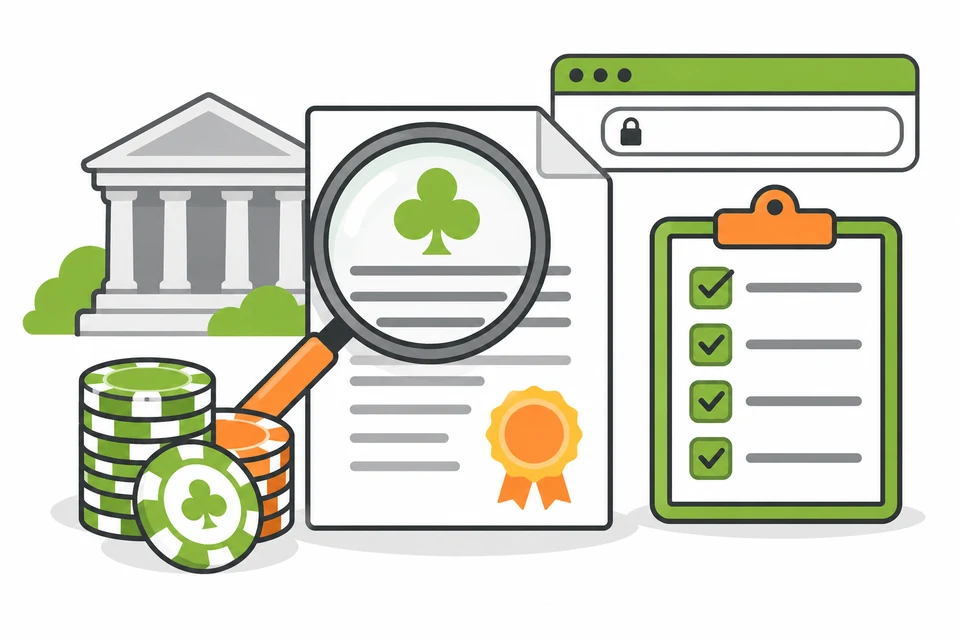
The Constitution of the Federal Republic of Nigeria 1999 divides legislative power between the National Assembly and the State Houses of Assembly. The Exclusive Legislative List sets out matters on which only the National Assembly may legislate. The Concurrent Legislative List sets out matters on which both may legislate. Matters on neither list are called residual matters and belong to the states. The FCT is different: the National Assembly legislates for it as it would for a state.
Gambling does not appear on either list. The federal government argued that lotteries could be regulated under item 62 of the Exclusive Legislative List, which concerns trade and commerce, and under the economic objectives in section 16 of the Constitution (AELEX, via Mondaq).
The Supreme Court judgment of 22 November 2024
The Supreme Court decided Attorney-General of Lagos State and Others v. Attorney-General of the Federation and Others (SC/1/2008) on 22 November 2024. A seven-member panel was unanimous. As summarised by AELEX, the court held that “the National Assembly lacked the authority to legislate over lottery and games of chance” and that “the states have the power to make laws to regulate and control the operation of lottery within their territories, to the exclusion of the federal government”. Other states were joined as parties as the case progressed.
The court did not erase the National Lottery Act altogether. It confirmed that the National Assembly may legislate on lotteries for the FCT. Commentators describe the result as confining the Act to Abuja: in the words of Afriwise, the judgment “effectively proscribed the application of the Lottery Act in all States except the Federal Capital Territory”. The court also granted a perpetual injunction restraining the federal government from enforcing the Act in Lagos. The state regulators’ federation adds that, in its reading, the court rejected the argument that digital gambling justifies federal control, because the “method of transmission (physical or digital) does not change the constitutional character” of the activity (FSGRN statement, July 2025). That is the regulators’ interpretation; the full judgment was not available to us from an official law report for this review.
The National Lottery Act 2005
The National Lottery Act 2005 defines a lottery very broadly. It covers “any game, scheme, arrangement, system, plan, promotional competition or device for the distribution of prizes by lot or chance, or as a result of the exercise of skill and chance or based on the outcome of sporting events”. Section 17 makes “the operation of the business of a national lottery or any lottery” subject to a licence granted by the President on the Commission’s recommendation. Section 34 creates offences, including selling tickets to minors and fraud involving tickets or proceeds. The Act was amended in 2017. After the 2024 judgment, these provisions are relevant only in the FCT.
State legislation
In the states, gambling is governed by each state’s own law. The Lagos State Lotteries and Gaming Authority Law 2021 was signed by Governor Babajide Sanwo-Olu on 19 April 2021. According to the LSLGA, it covers lotteries and “Casinos, Jackpot, Pools, Lotto, Virtual, Sports Betting, and rapidly expanding E-Sport”. A Vanguard analysis published in August 2026 reported that ten states had gaming frameworks before the judgment (Lagos, Akwa Ibom, Anambra, Cross River, Delta, Imo, Ogun, Ondo, Oyo and Rivers) and that Osun passed a Lotteries and Gaming Bill in November 2024 (Vanguard). We have not verified each of these state laws individually.
Criminal law and the northern states
Nigeria has two general criminal codes. The Criminal Code, historically applied in the southern states, contains old provisions on “common gaming houses”. Section 236 defines unlawful gaming to include roulette, dice games other than backgammon, and card games that are not games of skill. Keeping a gaming house is a misdemeanour, and a person found in one can be fined. The northern states use the Penal Code, and twelve northern states, including Kano, adopted Sharia criminal law from 2000 onwards (Sahara Reporters). In those states gambling is treated as prohibited. We were not able to verify the precise section numbers of the relevant Penal Code and Sharia Penal Code provisions from an official text for this review.
Regulators and licensing
Lagos State Lotteries and Gaming Authority
The LSLGA describes itself as “the pioneer gaming regulatory body in Nigeria”. It licenses public online lotteries, online sports betting, casinos, other lotteries, scratch cards and interactive games, gaming machines, pools betting and other games. Its register of licensed operators lists licensees by category with expiry dates. When reviewed in October 2026 the register included categories for online sports betting and online casino, online casino only, public online lottery, hotel (Category A) and standalone (Category B) casinos, gaming machines, pools betting and business-to-business suppliers. Lagos collects several revenue streams from licensees: “licence fees, state royalty and good-causes contributions, draw levies and gaming tax” (Vanguard). We could not find an official published schedule of fees.
In July 2026 the LSLGA issued a public notice to licensed operators, B2B providers and financial partners. It set a six-month roadmap: a registry census of operators, software suppliers and payment service providers; technical testing of game source code, random number generators, platforms and payment systems by accredited laboratories; and, at the end, a Certificate of Homologation (a certificate that the system meets the required technical standards). Systems that are not certified are to be “disconnected immediately upon expiration, resulting in license revocation”.
Other states and the reciprocity framework
State regulators formed the Federation of State Gaming Regulators of Nigeria (FSGRN). On 7 May 2025, at a ceremony in Lagos, the FSGRN, “comprising of over twenty member states”, adopted a Subnational Reciprocity Licensing Framework (Adeola Oyinlade & Co, June 2026). Under it, a Universal Reciprocity Certificate covers online sports betting, online casino operations, public online lottery services and promotional competitions, and is intended to remove the need for separate applications in each member state. By the FSGRN’s own count it represented 24 states in July 2025 (FSGRN).
The FCT and the former NLRC
The NLRC describes its role as licensing, supervising draws, monitoring remittances to the National Lottery Trust Fund and resolving complaints between players and operators. After the judgment, the FCT Administration created the FCT Lottery Regulatory Office (FCT-LRO), headed by Director-General Lanre Gbajabiamila, which was inaugurated in Abuja in May 2025 (Focus Gaming News). At the inauguration Gbajabiamila said that licences issued by the “now-defunct” NLRC would remain valid until they expired (ThisDay). According to Adeola Oyinlade & Co, the FCT-LRO licenses retail lotteries, sales promotions, sports betting, raffles, fixed-odds and pari-mutuel lotteries, casino gaming and interactive gaming. Its licences apply only in the FCT.
Online gambling
Online gambling in Nigeria is lawful only where a state (or, in Abuja, the FCT) permits and licenses it. There is no national online licence.
- Lagos. Online sports betting and online casino games are licensable. The LSLGA register lists operators licensed for “online sports betting/online casino” and for online casino only.
- Reciprocity states. Holders of the FSGRN Universal Reciprocity Certificate may offer online sports betting and online casino services in participating states, subject to each state’s own law.
- Sharia states. Where a state prohibits gambling, no lawful online offer exists for its residents. A licence from Lagos or another state does not change the law of the state where the player is.
The judgment created a practical problem for online gambling. A website is accessible in every state, but licences are territorial. As the PwC analysis noted, operators may face “double costs”, because payments to one regulator do not shield them from the requirement to obtain licences and pay levies to others. The reciprocity framework is the states’ answer; the Central Gaming Bill was the federal one.
Enforcement against unlicensed operators
Enforcement is mainly a matter for the state regulators. The LSLGA publishes a list of unlicensed operators, which it says are operating “in contravention of Section 33(3) of the Lagos State Lotteries and Gaming Authority Law 2021”. The list included more than 40 operators when we reviewed it, and it includes a number of internationally known offshore brands. The LSLGA first published such a list in June 2021, when its chief executive, Bashir Are, urged residents “to desist from patronising the platforms of the unlicensed gaming companies” (LSLGA notice). We found no official source describing a national system of website blocking by internet service providers for unlicensed gambling, and we do not state that one exists.
Position of players
Nigerian law focuses on operators, not players. The Lagos Law makes it an offence to conduct gaming without a licence, and the LSLGA’s public warnings are addressed to residents as consumers: they advise people to check the register and to avoid unlicensed platforms to “avoid scam and deception”. The sources reviewed for this guide do not show that playing with an unlicensed online operator is itself an offence under Lagos law, and we found no reported prosecution of an individual player in Lagos for doing so.
The position is different in the northern states that apply Sharia law. In November 2024, shortly after the Supreme Court judgment, the Director-General of the Kano Hisbah Board, Abba Sufi, said: “We will resume our clampdown on betting shops with renewed determination since betting is illegal under Kano State Sharia law” (Nigerian Tribune). In March 2025 the Hisbah raided and sealed a sports betting shop in Kano (Sahara Reporters). Sharia criminal law in these states applies to Muslims. Reported enforcement has targeted betting premises; we found no reliable report of individuals being punished for online gambling as such. In the south, the Criminal Code’s gaming-house provisions reach a person “found” in a common gaming house, but they concern physical premises and carry nominal fines.
Players in Lagos also bear a tax on online winnings, described below, and must identify themselves to licensed operators. A player who uses an unlicensed operator has no access to the Lagos complaints process or the SafePlay self-exclusion scheme, which cover licensed operators only.
Taxation
Gambling taxation is divided between the states and the federal government, and it has changed repeatedly since 2024.
- State levies. States charge licence fees, gaming taxes and other levies on operators licensed in their territory. In Lagos these include “licence fees, state royalty and good-causes contributions, draw levies and gaming tax” (Vanguard).
- Federal withholding tax on winnings. The Deduction of Tax at Source (Withholding) Regulations 2024 imposed withholding tax on “winnings from lottery, gaming, reality shows” at 5% for residents and 15% for non-residents, with effect from 1 October 2024 (PwC Nigeria).
- Lagos withholding tax on online winnings. In February 2026 the LSLGA announced a 5% withholding tax on net winnings paid by online betting platforms licensed in Lagos, deducted at payout and remitted to the Lagos State Internal Revenue Service (Yogonet). How this interacts with the federal withholding tax was not clear from the sources we reviewed.
- The 2025 tax reform. The Nigeria Tax Act 2025, signed on 26 June 2025, took effect on 1 January 2026. According to an EY tax alert of August 2025, gaming operators are now taxed like other companies, at company income tax rates that depend on company size, with general deductibility rules and continued withholding tax on winnings. On value added tax (VAT), sources differ. EY described the earlier VAT exemption as repealed, while later reports state that section 185(m) of the Act exempts “money, stakes or securities”, so that stakes are outside VAT but fees and commissions remain taxable (SiGMA News). Operators should take advice on this point.
Consumer protection and responsible gambling
There is no statutory national self-exclusion register covering the whole country. The most developed scheme is in Lagos. In August 2025 the LSLGA launched SafePlay (iGaming Business), which describes itself as “Lagos State’s official gambling self-exclusion registry”. A person registers with their National Identification Number (NIN) and chooses an exclusion period of 3 months, 6 months, 1 year, 5 years or permanently. According to SafePlay, the exclusion takes effect within 24 hours and blocks new accounts and bets with licensed operators, including online betting and casino platforms. It does not cover unlicensed or offshore operators. The service is free.
Support is offered by Gamble Alert, a Nigerian non-profit organisation that provides counselling, assessment tools, peer support and school prevention programmes, and lists a helpline on +234 916 295 7989. Complaints about licensed Lagos operators can be made to the LSLGA. Under-age gambling is prohibited by the state regulators and, in the FCT, by section 34 of the National Lottery Act. See also our responsible gambling guide.
Recent and upcoming developments
- 2024 to May 2025. The Supreme Court judgment (22 November 2024) was followed by the FSGRN reciprocity framework (7 May 2025) and the FCT Lottery Regulatory Office (May 2025).
- 2025: Central Gaming Bill. The bill (HB.2062), sponsored in the House by Deputy Speaker Benjamin Kalu and in the Senate by Senate Leader Opeyemi Bamidele, sought to repeal the National Lottery Act 2005 and its 2017 amendment and to create a framework for “online and remote gaming beyond state and national boundaries” as well as gaming in the FCT (Channels Television). The House passed it in July 2025. The FSGRN called it “a repackaged version of the now-nullified National Lottery Act 2005”. The Senate passed it on 2 December 2025.
- December 2025: President declines to sign. At a party meeting in Abuja the President said, as reported by ThisDay: “Residual matters belong to the legislative authority of the states … I am a constitutional democrat … I won’t sign it” (see also The Guardian Nigeria). Under the Constitution the National Assembly can in principle pass a bill over the President’s refusal by a two-thirds majority. As of October 2026 we found no report that it had done so, and law-firm commentary from June 2026 describes the bill as not assented to.
- 2026: tax and technical changes. The Nigeria Tax Act 2025 took effect on 1 January 2026, Lagos introduced a withholding tax on online winnings in February, and the LSLGA began technical certification in July.
Whether a federal role in online gaming can be created without a constitutional amendment remains contested.
Casino listings for players in Nigeria
The listings below are generated automatically from our casino database. They do not show that an operator is licensed in Nigeria or in any Nigerian state. Online casino games are lawful only where a state licenses them, and gambling is prohibited in several northern states, so the listings must not be read as an indication that playing is lawful where you live. Check any operator against the LSLGA register of licensed operators or your own state regulator before relying on its claims.
Vegas Casino Online
No Deposit Bonus
$ 20
Liberty Slots Casino
No Deposit Bonus
$ 18

Slots.lv
100% up to
$2,000
+ 20 Spins
Sloto'Cash Casino
100% up to
∞

Casino Extreme
200 Spins

Bovada Casino
100% up to
$1,000
Casino Brango
500% up to
$/€100
+ 500 Spins
Shazam Casino
Exclusive No Deposit Bonus
$ 50
Lucky Tiger Casino
No Deposit Bonus
$ 55
Red Stag Casino
25% up to
∞
Rich Palms Casino
250% up to
∞

Miami Club Casino
50 Spins

Highway Casino
$ 30

Lincoln Casino
No Deposit Bonus
$ 18
Yabby Casino
202% up to
∞

DuckyLuck Casino
500% up to
$/€2,500
+ 150 Spins
PlayCroco Casino
300% up to
∞
+ 60 Spins
Fair Go Casino
200% up to
∞
Uptown Aces
250% up to
∞
Las Vegas USA Casino
No Deposit Bonus
$ 20
Drake Casino
300% up to
$2,000
Sun Palace Casino
No Deposit Bonus
$ 20
Slots Plus
No Deposit Bonus
$ 20
Ignition Casino
200% up to
$100
.jpg?x83485)
Everygame Classic Casino
200% up to
∞
+ 50 Spins
Slots And Casino
500% up to
∞
+ 150 Spins
Slotsroom Casino
400% up to
∞
+ 20 Spins

Casino Max
400% up to
∞
+ 20 Spins
El Royale Casino
230% up to
∞
Black Lotus Casino
300% up to
$7,000
+ 45 Spins
Red Dog Casino
Slots Empire
230% up to
$7,500

Lucky Creek
50 Spins
Spinfinity Casino
400% up to
∞
+ 20 Spins
Jackpot Capital
25% up to
∞
Ripper Casino
25% up to
∞
Las Atlantis Casino
$ 2,500
Slotastic
250% up to
∞
Grand Eagle
200% up to
$5,500
+ 30 Spins
Cherry Jackpot
400% up to
∞
+ 20 Spins
Grande Vegas
150% up to
$300
LadyLuck Casino
100 Spins
Roaring 21 Casino
400% up to
∞
+ 20 Spins
Ozwin Casino
$ 10
Treasure Mile
200% up to
$/€4,000
+ 50 Spins
TropicanaCasino
Borgata Online Casino

BetOnline Casino
100 Spins
Grand Rush
200% up to
$4,000
+ 40 Spins

Jazz Casino
10% up to
$250

BetMGM Casino NJ
100% up to
$1,000
Sources and further reading
- PwC Nigeria, Supreme Court verdict on the National Lottery Act (2024).
- AELEX (T. Osazuwa, P. Akinmodun and M. Popoola), via Mondaq, Regulation of Lotteries in Nigeria: Review of the Supreme Court’s Decision and Its Implications (2025).
- Afriwise, Supreme Court Declares National Lottery Act Invalid: Implications on Lottery Businesses in Nigeria (2024).
- Policy and Legal Advocacy Centre (PLAC), National Lottery Act 2005 (accessed 6 October 2026).
- National Lottery Regulatory Commission, Who We Are (accessed 6 October 2026).
- Lagos State Lotteries and Gaming Authority, About and Legislation (accessed 6 October 2026).
- Lagos State Lotteries and Gaming Authority, List of Licensed Operators (accessed 6 October 2026).
- Lagos State Lotteries and Gaming Authority, Illegal Operators (accessed 6 October 2026) and Notice of Unlicensed Gaming Operators in Lagos State (2021).
- Lagos State Lotteries and Gaming Authority, Official Public Notice to All Licensed Gaming Operators, B2B Providers and Financial Partners (2026).
- Federation of State Gaming Regulators of Nigeria (via LSLGA), State Regulators to NASS: Central Gaming Bill Violates Constitution, Supreme Court Judgement (2025).
- Adeola Oyinlade & Co (F. Ayeomoni), Navigating Nigeria’s New Gaming Laws: A 2026 Regulatory Guide for Sports Betting and Casino Operators (2026).
- Vanguard, One judgment, thirty-six rulebooks: the compliance bill facing Nigeria’s digital gaming operators (2026).
- Focus Gaming News, FCT launches lottery regulatory office following Supreme Court ruling (2025).
- ThisDay, At Inauguration of FCT Lottery Regulatory Office, Gbajabiamila Says Licences from Defunct NLRC Valid (2025).
- Channels Television, Senate Moves To Repeal National Lottery Act As Central Gaming Bill Scales Third Reading (2025).
- The Guardian Nigeria, Tinubu declines assent to Central Gaming Bill (2025).
- ThisDay, Tinubu’s Refusal to Sign Central Gaming Bill: A Constitutional and Political Examination (2025).
- Jurist.ng, Criminal Code Act, section 236: Gaming houses (accessed 6 October 2026).
- Nigerian Tribune, Kano Hisbah vows crackdown on gambling, betting shops under Sharia law (2024).
- Sahara Reporters, Ramadan: Hisbah Operatives Raid, Shut Down Sports Betting Shop In Kano State (2025).
- PwC Nigeria, Highlights of the Deduction of Tax at Source (Withholding) Regulations 2024 (2024).
- EY, West Africa: Taxation of gaming and betting industry in Ghana and Nigeria (2025).
- SiGMA News, Nigeria’s Tax Act 2025 removes VAT on gambling stakes (2026).
- Yogonet, Lagos introduces 5% withholding tax on online betting winnings (2026).
- iGaming Business, Nigeria regulator sets live SafePlay self-exclusion tool (2025).
- SafePlay, SafePlay: Responsible Gambling Registry (accessed 6 October 2026); Gamble Alert, Gamble Alert (accessed 6 October 2026).