Legal casino gambling age in Latvia
Latvia regulates gambling through a licensing system that covers land-based venues and online play. The Gambling and Lotteries Law (Azartspēļu un izložu likums), adopted in 2005, lets companies registered in Latvia obtain licences to run casinos, gaming halls, betting and “interactive” (online) gambling. Players are forbidden by law to take part in online gambling that is not licensed in Latvia, and unlicensed sites are blocked. On 1 April 2026 the specialist regulator, the Lotteries and Gambling Supervisory Inspection (IAUI), was merged into the State Revenue Service (Valsts ieņēmumu dienests, VID). This guide explains the history of the framework, the licensing model, online enforcement, the position of players, taxation, consumer protection and the reforms of 2024–2026.
Key points
- Gambling is governed by the Gambling and Lotteries Law of 17 November 2005 and by the Law on the Lottery and Gambling State Fee and Tax. Online gambling has been licensable since 2003.
- Since 1 April 2026 the State Revenue Service has issued licences, kept the self-exclusion register and ordered the blocking of unlicensed sites. These were previously the tasks of the IAUI.
- A gambling licence requires a capital company registered in Latvia with paid-up share capital of at least €1,400,000. Licences run for an indefinite term but must be re-registered every year.
- Since 1 January 2026 interactive gambling has been taxed at 15% of revenue, up from 12%. Players’ winnings above €3,000 a year are subject to personal income tax.
- Taking part in online gambling not licensed in Latvia is prohibited by Article 3.1 of the law. Payment providers must refuse card payments to unlicensed operators.
- Anyone can enter the national self-exclusion register for at least 12 months, online through Latvija.gov.lv.
Last reviewed: 6 October 2026.

Top Rated Online Casinos for Latvia

Vegas Casino Online
Sign Up400% up to
$500

Liberty Slots Casino
Sign Up100% up to
$259

Sloto'Cash Casino
Sign Up100% up to
$500
Shazam Casino
Sign Up250% up to
$2,500

Lucky Tiger Casino
Sign Up250% up to
$1,000

Miami Club Casino
Sign Up100% up to
$100
Vegas Casino Online
Sign Up400% up to
$500
Liberty Slots Casino
Sign Up100% up to
$259
Sloto'Cash Casino
Sign Up100% up to
$500
Shazam Casino
Sign Up250% up to
$2,500
Lucky Tiger Casino
Sign Up250% up to
$1,000
Miami Club Casino
Sign Up100% up to
$100
Historical development
After independence was restored in 1991, gambling in Latvia was regulated by the law “On Lotteries and Gambling” (Par izlozēm un azartspēlēm). The consolidated text on likumi.lv shows that it was amended many times between 1995 and 2003. It has since lost force and been replaced by the 2005 law.
Online gambling was brought into the licensed system early. According to Dienas Bizness, the Saeima (parliament) adopted amendments to the 1994 law in final reading on 19 June 2003. They allowed “interactive” gambling through telecommunications, in particular the internet, under a licence. The minimum capital was set at 60,000 lats, and the tax was 10% of stakes placed and accepted.
The current Gambling and Lotteries Law was adopted on 17 November 2005 and published in Latvijas Vēstnesis No. 195 on 7 December 2005, according to the official gazette. In its original version, Article 8 required licence holders to have paid-up share capital of at least 1,000,000 lats. Foreign shareholders could hold no more than 49%, with an exception for investors from EU member states.
Enforcement against unlicensed websites began in 2014. Cabinet Regulation No. 291 of 9 June 2014, in force from 1 August 2014, set out how the IAUI sent blocking decisions to electronic communications providers and to the holder of the “.lv” registry. The regulation was replaced in 2022 by Cabinet Regulation No. 506. Neatkarīgā Rīta Avīze reported in January 2016 that the inspection had issued 361 blocking decisions in 2015, covering 453 domain names.
Later reforms concentrated on advertising, land-based venues and player protection (2021–2025), taxation (2024 and 2026) and the institutional reorganisation of 2026. They are described in the sections that follow.
Legal framework

The main statutes are:
- the Gambling and Lotteries Law (Azartspēļu un izložu likums), as amended. It defines the types of gambling and lotteries. It sets licensing conditions, rules on venues, interactive gambling and advertising, the self-exclusion register, supervision and administrative penalties;
- the Law on the Lottery and Gambling State Fee and Tax (Par izložu un azartspēļu nodevu un nodokli) of 1994. It sets licence fees and gambling tax rates;
- the Payment Services and Electronic Money Law and the Electronic Communications Law, which supply the legal basis for payment blocking and website blocking;
- Cabinet of Ministers regulations that implement the law, for example on the self-exclusion register and on website blocking.
The law defines interactive gambling as gambling “in which the player can take part using electronic communications services”. Under Article 10, a gambling organisation licence is issued by the VID “for an indefinite term” and must be re-registered with the VID each year. It entitles the holder to organise the games named in it throughout Latvia. Separate licences are needed for each casino, gaming hall, bingo hall and betting venue.
Municipalities have an important role for land-based gambling. Under Article 42, a municipal council decides on each application to open a venue and may refuse permission where the venue would substantially harm the interests of the state and residents. Since the 2021 amendments it may also designate areas where gambling is not allowed through binding regulations.
As an EU member state, Latvia must respect the Treaty freedoms, especially the freedom to provide services. The European Commission states that there is no sector-specific EU legislation on gambling services. Member states may organise gambling as they see fit, provided they respect those freedoms, and the Court of Justice of the EU (CJEU) has ruled on whether national restrictions are compatible with them. A licence from another member state therefore does not by itself allow an operator to serve Latvian residents. Latvia’s licensing condition is a company registered in Latvia rather than a local presence of any EU company. We found no CJEU judgment concerning Latvian gambling law specifically. The Commission’s non-binding Recommendation 2014/478/EU of 14 July 2014 sets out principles for protecting online players and preventing gambling by minors.
Regulator and licensing model
Latvia uses a licensing model. Any company that meets the statutory conditions may apply, and the number of licences is not capped. This differs from a monopoly, in which one operator, usually state-owned, has the exclusive right to offer gambling.
Until March 2026 the sector was supervised by a specialist body, the Lotteries and Gambling Supervisory Inspection (Izložu un azartspēļu uzraudzības inspekcija, IAUI). The Ministry of Finance announced that from 1 April 2026 the IAUI would be merged into the VID. The amending law adopted by the Saeima on 3 December 2025 replaced references to the inspection with the VID throughout the Gambling and Lotteries Law. According to LV portāls, the government’s legal information portal, seven other laws and ten sets of Cabinet regulations were amended at the same time. The functions passed to two new VID units: one for licensing, compliance and legal matters and one for on-site, remote, technical and financial inspections. iGaming Business reported that 21 posts moved from the former regulator, and that the government justified the merger as a way to use state resources more efficiently and to strengthen supervision.
Under Article 8 of the law, an applicant for a gambling organisation licence must be a capital company registered in Latvia with paid-up share capital of at least €1,400,000. The VID’s page on licence conditions confirms this figure. The state fee for issuing a licence is set in the fee and tax law. In the consolidated text, it is €200,000 for a licence limited to gambling organised only through electronic communications, and €427,000 for a standard gambling licence. Operators must also meet technical requirements: the 2021 amendments confirmed duties to register players, to keep players’ funds in dedicated accounts and to use certified gaming systems.
The VID publishes a list of licensed gambling organisers, and Article 3.1 of the law requires it to publish information on licensed interactive gambling and lottery organisers on its website. The number of current interactive licensees was not stated in the sources we could read, so readers should consult the list directly.
The state lottery operator is the state joint-stock company Latvijas Loto (VAS “Latvijas Loto”). According to its website, it sells numerical lotteries, including Eurojackpot, Vikinglotto, Loto 5, Latloto and Keno, as well as instant lotteries and online games. Lotteries are regulated separately from gambling. The VID’s licensee page notes that Latvijas Loto is not a gambling organiser for these purposes.
Online gambling: what is permitted and how it is enforced
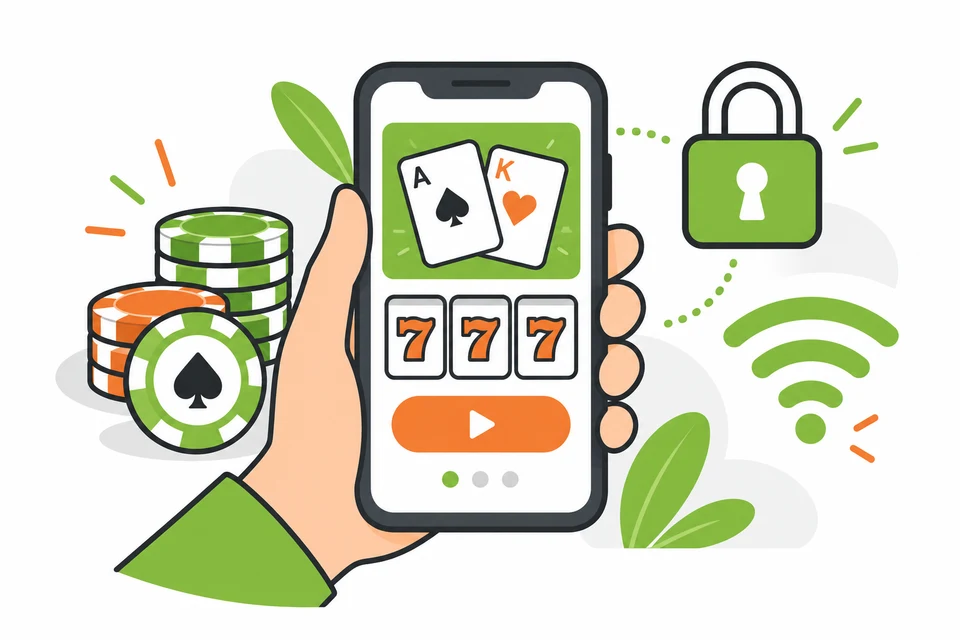
Online casino games, betting and lotteries are lawful in Latvia when offered by an operator licensed by the VID. Online gambling is now the larger part of the market. According to LV portāls, interactive gambling produced €31.4 million of the sector’s €44.8 million revenue in the first quarter of 2022, about 70%. The IAUI noted in February 2025 that online revenue had overtaken that of physical venues.
Enforcement against unlicensed operators uses three tools:
- Website blocking. The regulator issues decisions requiring electronic communications providers to restrict access to the websites of unlicensed interactive gambling organisers. Under the original 2014 procedure, providers had five working days to comply. Since April 2026 the VID has had these powers, and it publishes a list of blocked merchants with reference to the Gambling and Lotteries Law.
- Payment blocking. According to a 2020 explanation on LV portāls, Article 44.2(4) of the Payment Services and Electronic Money Law requires payment service providers to refuse remote card payments by Latvian residents to unlicensed interactive gambling organisers. Banks identify such transactions using the merchant category codes of the card schemes.
- Administrative sanctions. The 2021 amendments added chapters on suspending and cancelling licences and on administrative fines for legal persons.
Blocking has not always been effective. In April 2019 LSM, the public broadcaster, reported that about 30% of internet service providers had not carried out the inspection’s blocking orders. The then head of the IAUI, Signe Birne, said that large operators found the Latvian market interesting but did not consider a licence profitable.
Advertising. The amendments of 15 April 2021, in force from 30 April 2021, introduced a general ban. Article 41(5) prohibits advertising of gambling venues and interactive gambling websites outside gambling venues. Inside a venue, only the venue name and the operator’s registered trademark may be displayed. The December 2025 amendments allow licensed betting and lottery operators to display their registered trademarks at sports venues and in sponsorship. Such displays must carry an age warning and information about the self-exclusion register. The Cabinet must assess the effects of the exception, including on public health and tax revenue, by 1 May 2027.
Position of players
Latvian law addresses players directly. Article 3.1 of the Gambling and Lotteries Law states: “A person is not permitted to take part in interactive gambling or interactive lotteries that are organised in the Republic of Latvia without a licence issued by the State Revenue Service.” The same article says that information on licensed operators is available on the VID website.
The penalty for a player is less clear from the sources we could check. In 2019 LSM reported that the authorities planned fines of up to €350 for people who played on unlicensed sites, as part of amendments to several laws. A 2020 explanation on LV portāls referred to 2019 amendments that created “responsibility for participation in unlicensed gambling”. We could not confirm the current fine for players in the consolidated text, and we found no published figures on fines actually imposed on players. The prohibition is therefore clear in law. The practical risk of a penalty has not been documented in the official sources we reviewed.
Players also face practical consequences. Payments to unlicensed operators with Latvian cards should be refused, blocked sites may be unreachable, and players lose the protection of the self-exclusion register and VID supervision. Winnings from such operators are also outside the tax withholding system described below.
Taxation
Operators
Gambling tax is levied under the Law on the Lottery and Gambling State Fee and Tax. Rates for land-based gaming are fixed sums per machine or table. Rates for betting, bingo and interactive gambling are a percentage of revenue from organising the game. For interactive lotteries, the law states the base as ticket sales less prizes paid. Rates have risen twice in recent years:
| Type of game | 2023 | 2024–2025 | From 1 January 2026 |
|---|---|---|---|
| Interactive gambling (online) | 10% | 12% | 15% |
| Gaming machines (per machine place, per year) | €5,172 | €6,204 | €7,440 |
| Roulette, card and dice tables (per table, per year) | €28,080 | €33,696 | €40,440 |
| Betting and totalisator | not verified | 15% | 18% |
| Bingo | not verified | 10% | 12% |
The 2024 increases were approved by the Cabinet in October 2023, according to LV portāls. The 2026 increases were reported by LSM on 3 December 2025 and by iGaming Business. The government had originally planned them for 2027 and brought them forward by a year, expecting about €9.2 million in extra revenue. The fee and tax law directs 5% of gambling tax revenue to the budget of the municipality where the gambling takes place.
The difference from Latvia’s northern neighbour is large. Estonia’s Tax and Customs Board lists a remote gambling tax of 6% of stakes less prizes for 2025 and 5.5% for several remote categories in 2026. The bases are defined differently, so the rates are not exactly comparable.
Players
According to the VID’s 2025 methodological material on personal income tax on winnings, a person’s lottery and gambling winnings are not taxed if they do not exceed €3,000 in total in a year. Above that amount, winnings are taxed at the progressive income tax rates: 25.5% up to €105,300 and 33% above it, with an additional 3% from 2025 where annual income exceeds €200,000. Latvian operators withhold the tax when a payout exceeds €3,000. Winnings from abroad must be declared in the annual return, with credit for any foreign tax withheld.
Consumer protection and responsible gambling
The central protection tool is the register of self-excluded persons (pašatteikušos personu reģistrs), created by Article 4.1 of the law. Any natural person may ask in writing to be barred from all gambling in Latvia, including interactive gambling and interactive lotteries. The minimum period is 12 months from the date of entry. Operators have remote access to the register and must check it, and visitors to land-based venues must show identification. Since April 2026 the VID has been the controller of the register. Requests can be made online with Latvija.gov.lv authentication through the online register, which remains available 24 hours a day, according to LV portāls. The VID also has a page on the self-exclusion register. Removal is possible only on request after the minimum period.
Use of the register has grown. LV portāls reported that 31,251 people had registered by 6 June 2022, of whom 20,828 had an active exclusion. A 2019 Ministry of Health study cited by LV portāls in 2023 estimated that 6.4% of respondents aged 15–64 showed problem gambling patterns.
The minimum age for gambling is 18. Operators of gaming venues must keep under-18s out, and Latvijas Loto requires players to be at least 18. Latvijas Loto also offers responsible-play tools and a contact line for players. We could not verify a dedicated national gambling helpline from an official source. People seeking help can contact a general practitioner or a specialist psychiatry and addiction service, and our responsible gambling guide sets out general steps for keeping gambling under control.
Recent and upcoming developments
- Merger of the regulator (in force). Since 1 April 2026 the VID has carried out all licensing, supervision, blocking and register functions (Ministry of Finance).
- Tax increases (in force). Higher rates for interactive gambling (15%), machines, tables, betting and bingo apply from 1 January 2026. iGaming Business reported that the industry body warned of the closure of more than 20 venues.
- Sports sponsorship exception (in force). The December 2025 amendments allow trademarks of licensed betting and lottery operators at sports events. A government review is due by 1 May 2027.
- Minimum age of 21 and other restrictions (pending). A bill to raise the gambling age from 18 to 21 and to set an 18+ limit for lotteries was referred by the Saeima to its Budget and Finance (Taxation) Committee on 26 September 2024, according to LV portāls. It also proposed closing venues between 6:00 and 9:00, raising the minimum number of machines per hall from 20 to 25, introducing personalised player cards and banning free alcohol. Similar proposals had been supported in principle by the Saeima in 2022 (LV portāls). We could not confirm that the bill had been adopted by the date of review, so it should be treated as pending.
- Gaming hall locations. Riga City Council has adopted binding regulations that effectively ban gaming halls in most of the city. In February 2025 the IAUI said that municipal bans were regularly challenged in court and argued that location rules should be set in the law itself (Kodols.lv).
Casino listings for players in Latvia
The listings below are generated automatically from our casino database. They do not by themselves show that an operator holds a Latvian licence. Latvian law forbids taking part in online gambling that is not licensed by the VID, so check every operator against the VID’s list of licensed gambling organisers and its list of blocked merchants before registering. A listing below must not be read as an indication that playing with an unlicensed operator is lawful.
Vegas Casino Online
No Deposit Bonus
$ 20
Liberty Slots Casino
No Deposit Bonus
$ 18

Slots.lv
100% up to
$2,000
+ 20 Spins
Sloto'Cash Casino
100% up to
∞

Casino Extreme
200 Spins

Bovada Casino
100% up to
$1,000
Casino Brango
500% up to
$/€100
+ 500 Spins
Shazam Casino
Exclusive No Deposit Bonus
$ 50
Lucky Tiger Casino
No Deposit Bonus
$ 55
Red Stag Casino
25% up to
∞
Rich Palms Casino
250% up to
∞
Miami Club Casino
50 Spins

Highway Casino
$ 30

Lincoln Casino
No Deposit Bonus
$ 18
Yabby Casino
202% up to
∞

DuckyLuck Casino
500% up to
$/€2,500
+ 150 Spins
PlayCroco Casino
300% up to
∞
+ 60 Spins

Fair Go Casino
200% up to
∞
Uptown Aces
250% up to
∞
Las Vegas USA Casino
No Deposit Bonus
$ 20
Drake Casino
300% up to
$2,000
Sun Palace Casino
No Deposit Bonus
$ 20
Slots Plus
No Deposit Bonus
$ 20
Ignition Casino
200% up to
$100
.jpg?x83485)
Everygame Classic Casino
200% up to
∞
+ 50 Spins
Slots And Casino
500% up to
∞
+ 150 Spins
Slotsroom Casino
400% up to
∞
+ 20 Spins

Casino Max
400% up to
∞
+ 20 Spins
El Royale Casino
230% up to
∞
Black Lotus Casino
300% up to
$7,000
+ 45 Spins
Red Dog Casino
Slots Empire
230% up to
$7,500

Lucky Creek
50 Spins

Spinfinity Casino
400% up to
∞
+ 20 Spins

Jackpot Capital
25% up to
∞
Ripper Casino
25% up to
∞

Las Atlantis Casino
$ 2,500
Slotastic
250% up to
∞

Grand Eagle
200% up to
$5,500
+ 30 Spins
Cherry Jackpot
400% up to
∞
+ 20 Spins
Grande Vegas
150% up to
$300
LadyLuck Casino
100 Spins

Roaring 21 Casino
400% up to
∞
+ 20 Spins
Ozwin Casino
$ 10
Treasure Mile
200% up to
$/€4,000
+ 50 Spins

TropicanaCasino
Borgata Online Casino

BetOnline Casino
100 Spins

Grand Rush
200% up to
$4,000
+ 40 Spins

Jazz Casino
10% up to
$250

BetMGM Casino NJ
100% up to
$1,000
Sources and further reading
- Saeima / likumi.lv, Azartspēļu un izložu likums (Gambling and Lotteries Law), consolidated text (accessed 6 October 2026).
- Latvijas Vēstnesis, Azartspēļu un izložu likums, original text, No. 195 (2005).
- Saeima / likumi.lv, Par izlozēm un azartspēlēm (law no longer in force) (accessed 6 October 2026).
- Saeima / likumi.lv, Par izložu un azartspēļu nodevu un nodokli (Law on the Lottery and Gambling State Fee and Tax), consolidated text (accessed 6 October 2026).
- Latvijas Vēstnesis, Grozījumi Azartspēļu un izložu likumā, No. 73A (2021).
- Latvijas Vēstnesis, Grozījumi Azartspēļu un izložu likumā, No. 244 (2025).
- Cabinet of Ministers / likumi.lv, Regulation No. 291 on blocking access to websites of unlicensed interactive gambling organisers (2014).
- Ministry of Finance, Azartspēļu un izložu nozares uzraudzību pārņem Valsts ieņēmumu dienests (2026).
- LV portāls, Izložu un azartspēļu uzraudzības inspekciju pievieno VID (2026).
- State Revenue Service, Licencētie azartspēļu organizētāji (accessed 6 October 2026).
- State Revenue Service, Bloķētie komersanti (accessed 6 October 2026).
- State Revenue Service, Azartspēļu organizēšanas licences saņemšanas nosacījumi (accessed 6 October 2026).
- State Revenue Service, Pašatteikušos personu reģistrs (accessed 6 October 2026).
- State Revenue Service, Iedzīvotāju ienākuma nodoklis no izložu un azartspēļu laimestiem (methodological material) (2025).
- LV portāls, MK apstiprina izmaiņas likumā par izložu un azartspēļu nodevu un nodokli (2023).
- LSM, Gambling taxes to increase in Latvia (2025).
- iGaming Business, Latvia to fast-track gambling tax hike (2025).
- iGaming Business, Latvia merges gambling watchdog with tax authority in regulatory restructure (2026).
- LV portāls, Likumā noteikts, ka jāatsaka maksājums par dalību nelicencētās azartspēļu vietnēs (2020).
- LSM, Centienos apkarot nelicencētās azartspēles vērsīsies pret spēlētājiem un interneta nodrošinātājiem (2019).
- LV portāls, Samazinās azartspēļu pieejamību. Vai apkaros vēlmi spēlēt? (2022).
- LV portāls, Top jauns likums: Būs stingrāki vecuma un azartspēļu organizēšanas laika ierobežojumi (2024).
- Kodols.lv, Inspekcija: Nosacījumiem par azartspēļu atrašanās vietām ir jābūt likumā (2025).
- Dienas Bizness, Legalizē interaktīvās azartspēles (2003).
- Neatkarīgā Rīta Avīze, Pērn bloķēta 361 nelicencēta azartspēļu vietne (2016).
- VAS Latvijas Loto, Latvijas Loto (accessed 6 October 2026).
- European Commission, Gambling (accessed 6 October 2026).
- European Commission, Recommendation 2014/478/EU on principles for the protection of consumers and players of online gambling services (2014).
- Estonian Tax and Customs Board, Gambling tax (accessed 6 October 2026).