Legal casino gambling age in Kazakhstan
Kazakhstan permits gambling, but only within tight territorial and technical limits. The Law of the Republic of Kazakhstan No. 219-III of 12 January 2007 “On Gambling Business” allows four activities: casinos, slot-machine halls, bookmakers and totalisators. Casinos and slot halls may operate only in designated gambling zones, historically on the shore of the Kapchagay reservoir near the city now called Konaev and in the Burabay district of Akmola region. Online casinos are expressly prohibited. Licensed bookmakers and totalisators may, however, accept bets remotely through “electronic cash desks” connected to a state-run Unified Accounting System. Reforms since 2024 have added advertising limits, wider bans on who may gamble and new zones open only to foreigners.
Key points
- Gambling is governed by the Law “On Gambling Business” of 12 January 2007, in force since 1 April 2007. Article 6 lists the four permitted activities and prohibits “electronic casinos and internet casinos” (Article 6).
- Casinos and slot halls may operate only in territories set by the Government. Kazakh citizens may use those at Kapchagay and Burabay; new zones from 11 September 2026 admit only foreigners.
- Licences are issued by the Committee for the Regulation of Gambling Business and Lotteries of the Ministry of Tourism and Sports, created in September 2024. Licences run for ten years.
- Online betting is lawful only with licensed bookmakers and totalisators, which must accept remote bets through the Unified Accounting System (ESU). The ESU is run by a state-owned operator and was launched in pilot mode on 11 September 2025.
- Persons under 21, people on the restriction list, registered debtors and certain convicted persons may not gamble. Since 9 September 2024 civil servants, military and law-enforcement personnel are also barred, on pain of dismissal. Self-exclusion for six months to ten years is available.
Last reviewed: 6 October 2026.
Top Rated Online Casinos for Kazakhstan
.jpg?x83485)
Everygame Classic Casino
Sign Up200% up to
∞
+ 50 Spins

Vegas Casino Online
Sign Up400% up to
$500

Liberty Slots Casino
Sign Up100% up to
$259

Sloto'Cash Casino
Sign Up100% up to
$500
Shazam Casino
Sign Up250% up to
$2,500

Lincoln Casino
Sign Up100% up to
$100
+ 25 Spins
Everygame Classic Casino
Sign Up200% up to
∞
+ 50 Spins
Vegas Casino Online
Sign Up400% up to
$500
Liberty Slots Casino
Sign Up100% up to
$259
Sloto'Cash Casino
Sign Up100% up to
$500
Shazam Casino
Sign Up250% up to
$2,500
Lincoln Casino
Sign Up100% up to
$100
+ 25 Spins
Historical development
According to the Wikipedia article on gambling in Kazakhstan, which we use only as a pointer, the Ministry of Finance began licensing gambling in 1999 and casinos operated in the main cities. The decisive change came with the Law “On Gambling Business” of 12 January 2007. Article 17 of that law states that it entered into force on 1 April 2007 and that, from that date, “licences issued before 1 April 2007” for gambling business ceased to have effect (Article 17). Casinos and slot halls could then reopen only in designated zones.
The zones were the shore of the Kapchagay reservoir in Almaty region and the Burabay (Borovoe) resort area in Akmola region. The town of Kapchagay was renamed Konaev on 17 March 2022 and became the capital of Almaty region (Wikipedia, Konaev).
The law has been amended many times since. Three later rounds of amendments matter most. A law of 2 July 2020 (No. 356-VI) added voluntary self-exclusion (Article 15-1) (Article 15-1). A law of 19 April 2023 (No. 223-VII) gave the competent authority the duty to monitor the internet for illegal gambling and to keep the list of restricted persons (Article 8). The broad anti-addiction law of 8 July 2024 (No. 116-VIII) followed the National Kurultai in March 2024, where President Tokayev described gambling addiction (ludomania) as one of the main social evils (The Astana Times).
Legal framework

The central statute is Law No. 219-III of 12 January 2007 “On Gambling Business”. Because the official Adilet portal requires JavaScript, we read the consolidated version, current to 25 August 2026, on the Paragraph legal database and article texts on Kodeksy-kz. Its main provisions are:
- Definitions (Article 1). A bookmaker is an organiser that “concludes bets with participants”; a totalisator provides intermediary services when participants bet among themselves (pool betting). An internet casino is an internet resource that enables games of chance to be organised and played in real time over the internet (Article 1).
- Permitted and prohibited activities (Article 6). Only casinos, slot-machine halls, bookmakers and totalisators may operate. Prohibited are any other gambling activity, “electronic casinos and internet casinos”, and the internet resources of foreign bookmakers and totalisators without a licence (Article 6).
- Register of illegal foreign operators (Article 6-1). Added in 2024, it requires the competent authority to publish a list of foreign gambling organisers whose activity is illegal in Kazakhstan, including their merchant identifiers. Payment service providers are deemed notified five working days after publication (Article 6-1).
- Licensing (Article 9). Separate licences cover games of chance and betting. Both are valid for ten years, and a gaming licence is issued for each gambling establishment (Article 9).
- Location (Article 11). Casinos, slot halls, bookmakers and totalisators must be placed “in territories determined by the Government of the Republic of Kazakhstan”. Local executive bodies (akimats) fix the exact boundaries in agreement with the competent authority (consolidated text).
- Unified Accounting System (Articles 12 and 12-2). Bookmakers and totalisators must accept bets through their electronic cash desks “only via the unified accounting system”, and pay winnings on such bets into the player’s electronic wallet within that system (Article 12). Article 12-2, added in 2024, provides for a legal entity designated by the competent authority to run the system, with servers located in Kazakhstan (Article 12-2).
- Participation limits (Articles 15 and 15-1). These set the minimum age, the categories of barred persons and the self-exclusion scheme (see Position of players).
Lotteries fall under a separate law, “On Lotteries and Lottery Activity”, which the Tax Code cross-refers to when it makes the lottery operator the tax agent for prize income (Tax Code, Article 361).
Criminal liability lies in Article 307 of the Criminal Code, “Organisation of illegal gambling business”. Running an illegal gambling business, including outside the permitted places, is punishable by a fine of up to 2,000 monthly calculation indices (MRP, a statutory unit used to set fines and fees), restriction of liberty or imprisonment of up to two years, with confiscation of property. Aggravated forms carry up to five years, and offences by a criminal group or yielding especially large income carry four to seven years’ imprisonment or a fine of ten to twenty times the income received (Criminal Code, Article 307).
Regulator and licensing model
Kazakhstan uses a licensing model: private companies may obtain licences, but only for the four permitted activities and only in permitted places. The competent authority (upolnomochenny organ) is the Ministry of Tourism and Sports. A government resolution of 4 September 2024 created within it a separate Committee for the Regulation of Gambling Business and Lotteries; gambling and lottery functions had previously sat in the Committee for the Tourism Industry (Zakon.kz).
Under Article 8 of the law, the competent authority issues gambling licences, keeps the list of persons restricted from gambling and systematically collects and analyses information on internet resources showing signs of internet casinos or unlicensed foreign bookmakers and totalisators (Article 8).
We did not find an official, consolidated figure for the number of current licensees on a page we could read, so none is given here.
The Unified Accounting System. The ESU is the technical core of the betting market. According to SBC Eurasia, the Government created a limited liability partnership, the Operator of the Unified Accounting System, in late December 2024. The entity is wholly state-owned, its capital provided from state property held by the Ministry of Tourism and Sports. The operator’s own website, cmaai.kz, names it the Centre for Monitoring and Analysis of Gambling and gives its basis as Government Resolution No. 1087 of 20 December 2024. Baq.kz reported in October 2025 that the system was launched in pilot mode on 11 September 2025. It processes payments between players and bookmakers, records each player’s bets, and blocks bets from people under 21 and from restricted persons. The Committee’s head said it would let the regulator see “the history of all bets” and enforce payment of wrongly withheld winnings (Baq.kz, July 2025).
A 2024 opinion piece in The Diplomat recalled that an earlier, privately run betting accounting centre tendered in 2020 had been halted after a vice-minister was dismissed on bribery charges, and warned of market capture. These are the author’s views.
Online gambling: what is permitted and how it is enforced
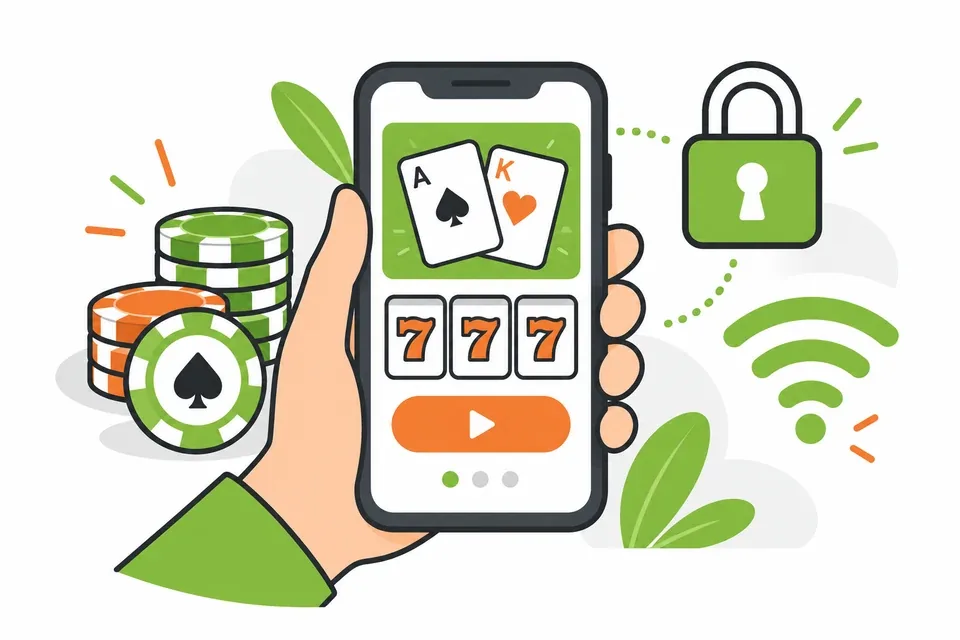
Online casino games are prohibited: Article 6 bans “electronic casinos and internet casinos”, and there is no licence for them (Article 6). Online sports betting is permitted, but only with a Kazakh-licensed bookmaker or totalisator. Remote bets must be accepted through an electronic cash desk connected to the ESU, and players must first be registered and identified (Article 12). Foreign bookmakers and totalisators without a Kazakh licence are banned outright.
Enforcement uses four tools:
- Website blocking. The competent authority monitors the internet for illegal gambling sites (Article 8). The ESU operator states on its website (accessed 6 October 2026) that its monitoring system had identified 215,825 violations involving illegal online gambling resources and that 194,809 illegal links had been blocked. In October 2025 Baq.kz reported that the system had flagged more than 7,000 illegal gambling sites for blocking in its first month.
- Payment blocking. The register of illegal foreign operators under Article 6-1 lists merchant identifiers, so that banks and payment organisations can refuse transactions (Article 6-1). The Astana Times reported that the 2024 law barred banks and payment institutions from transactions with unlicensed overseas bookmakers.
- Criminal prosecution. Article 307 of the Criminal Code applies to organisers of online casinos. In December 2025 the Agency for Financial Monitoring (AFM) reported a scheme that had moved more than 600 billion tenge to online casinos through over 20 payment organisations, with nine people detained and further suspects sought under international arrest warrants (Informburo). In April 2026 an appeal court replaced a suspended sentence with four years’ imprisonment for a Shymkent resident who ran an online poker club, and 2.8 billion tenge was confiscated (Informburo).
- Advertising restrictions. The 2024 law prohibited outdoor advertising of bookmakers and totalisators and their advertising on public transport, in the mass media, in films and in reference services. Exceptions were kept for the betting premises themselves, sports facilities, sports kit and live broadcasts of international sporting events (Kursiv; Tengrinews). A further law signed on 25 April 2025 banned advertising of bookmakers and totalisators sent to mobile phone subscribers and on online platforms, and confined it to sports media (Zakon.kz). Advertising of online casinos is unlawful in any case, since the activity itself is prohibited.
Position of players
Article 15 of the law bars the following from taking part in games of chance or betting (Article 15):
- persons under 21 years of age;
- persons restricted from gambling, that is, those on the list kept by the competent authority, whether after self-exclusion or because a court has limited their legal capacity for abuse of gambling;
- persons with unpaid obligations under enforcement documents for property claims who are entered in the Unified Register of Debtors; and
- persons sentenced to restriction of liberty or given a suspended sentence (added by the law of 25 April 2025, according to Zakon.kz).
The debtor ban is wide. The Astana Times reported in July 2024 that more than 3.5 million people were then on the Unified Register of Debtors. The ESU is designed to check these lists automatically before a bet is accepted (Baq.kz). A 2024 draft reportedly proposed raising the minimum age to 25 (The Diplomat); the text in force sets 21.
Civil servants. From 9 September 2024 civil servants, military personnel, special services and law-enforcement officers, and heads of budget-funded organisations may not take part in gambling or betting (KT.kz; Kursiv). A breach is grounds for dismissal. We could not identify the precise statutory provisions that impose the ban. It is enforced: in May 2026 district prosecutors in Zhetysu region secured the dismissal of an official who had “regularly participated in gambling”, treating it as a breach of anti-corruption rules (Zakon.kz).
Ordinary adult players. For adults who are not in a barred category, playing with a licensed bookmaker is lawful. The law prohibits organising online casinos and offering unlicensed foreign betting, and Article 307 of the Criminal Code is aimed at organisers. In the sources we reviewed we found no provision that makes it a criminal offence for an ordinary adult to play on an offshore site, and no reported prosecution of a player for doing so. We could not review the Administrative Offences Code in full, so an administrative liability for participants cannot be ruled out. In practice they face blocked sites and refused payments and have no access to ESU dispute handling.
Taxation
Operators
Operators pay a gambling business tax under the new Tax Code of 18 July 2025 (No. 214-VIII), in force since 1 January 2026. It is a fixed monthly tax per unit, not a percentage of gross gaming revenue (GGR, stakes less winnings paid). The taxable objects are gaming tables, slot machines and the cash desks and electronic cash desks of totalisators and bookmakers (Article 606). The rates in Article 607 are expressed in monthly calculation indices (MRP), at the MRP value in force on the first day of the quarter (Article 607):
| Taxable object | Monthly rate (MRP) |
|---|---|
| Gaming table | 1,660 |
| Slot machine | 60 |
| Totalisator cash desk | 300 |
| Totalisator electronic cash desk | 4,000 |
| Bookmaker cash desk | 300 |
| Bookmaker electronic cash desk | 3,000 |
The tax period is a calendar quarter. Licence fees are set separately under the Tax Code. Readers should check the rates against the official text, as the new Code is still being amended.
Players
Winnings are taxable income for individuals. Article 379 of the Tax Code defines taxable income “in the form of winnings” as winnings paid or payable, as defined in Article 21 (Article 379). The general rates of individual income tax under the 2025 Code are progressive, at 10% and 15% (Article 363). We could not verify from a primary source how net betting winnings are calculated or the withholding mechanism for bookmakers, so players with large winnings should consult the State Revenue Committee or a tax adviser.
Consumer protection and responsible gambling
Self-exclusion. Under Article 15-1, a citizen aged 21 or over may restrict himself or herself from gambling and betting for between six months and ten years by applying to the competent authority. The application cannot be withdrawn, but it can be extended before it expires. Close relatives may seek inclusion of a person whose capacity has been limited by a court. Gambling organisers must refuse access to listed persons, and the Unified Accounting System must reject electronic payments involving them (Article 15-1). The ESU operator states that citizens can check whether they are restricted and set self-exclusion through the eGov Mobile application (cmaai.kz).
Identification and warnings. Bookmakers and totalisators must register and identify a participant before accepting a bet, and must display warnings about the risks of gambling at their premises and on their online platforms (Article 12).
Treatment. In 2024 the government announced plans to halve the number of people with gambling problems, from about 350,000 to 175,000 by 2026, through free treatment and rehabilitation (Kursiv). We did not find a national gambling helpline that we could verify. The ESU operator publishes a contact line (+7 776 444 58 55) for questions about its services and restrictions (cmaai.kz). Our responsible gambling guide sets out general steps for keeping gambling under control and recognising the warning signs.
Recent and upcoming developments
- July 2024 anti-addiction law. Law No. 116-VIII of 8 July 2024 added the debtor and civil-servant bans, the advertising restrictions, the register of illegal foreign operators, the ESU operator framework and new criminal penalties. Most provisions took effect 60 days after publication (Tengrinews; Article 6-1).
- September 2024: new Committee. The Committee for the Regulation of Gambling Business and Lotteries was set up within the Ministry of Tourism and Sports (Zakon.kz).
- April 2025 advertising law. A ban on advertising bookmakers to mobile subscribers and on online platforms, and the bar on gambling by persons with suspended or liberty-restricting sentences (Zakon.kz).
- September 2025: ESU pilot. The Unified Accounting System began pilot operation on 11 September 2025 (Baq.kz).
- December 2025 to March 2026: new gambling zones. The Mazhilis passed a law on 29 December 2025 to create new zones in Mangystau, Almaty, Zhetysu and East Kazakhstan regions, open only to foreigners (Informburo). The President signed it on 16 March 2026 as part of a law on supporting tourism and children’s sport (Vlast.kz). The consolidated text now leaves the list of territories to the Government (Article 11).
- August–September 2026: zones decree. A government decree dated 26 August 2026 and effective 11 September 2026 confirms the Kapchagay reservoir shore (Almaty region) and Burabay district (Akmola region) as zones open to all. It adds zones restricted to foreign citizens, stateless persons and staff: the Talgar and Uygur districts of Almaty region; the Caspian coast in Mangystau region; the Alakol lake shore and Panfilov district in Zhetysu region; the Markakol and Zaysan districts of East Kazakhstan region; Baiterek district in West Kazakhstan region; and the Alakol shore in Abai region (Zakon.kz; Sputnik Kazakhstan; Forbes Kazakhstan). Press reports count the new zones as six or nine, depending on grouping.
- Further amendments. The consolidated law shows further amendments by laws of 30 December 2025 (No. 246-VIII), 16 March 2026 (No. 270-VIII) and June 2026 (Article 15 notes). In October 2025 officials said they were drafting changes to widen the ESU’s powers and introduce compulsory contributions from bookmakers to sport (Baq.kz). We found no adopted text on the contributions at the time of review.
Casino listings for players in Kazakhstan
The listings below are generated automatically from our casino database. They do not by themselves show that an operator is licensed in Kazakhstan. Online casino games are prohibited under Article 6 of the Law “On Gambling Business”, and no operator can hold a Kazakh online casino licence. The only lawful online gambling for residents is betting with bookmakers and totalisators licensed by the Committee for the Regulation of Gambling Business and Lotteries and connected to the Unified Accounting System (ESU operator). The listings must not be read as an indication that playing online casino games is lawful in Kazakhstan.
Vegas Casino Online
No Deposit Bonus
$ 20
Liberty Slots Casino
No Deposit Bonus
$ 18

Slots.lv
100% up to
$2,000
+ 20 Spins
Sloto'Cash Casino
100% up to
∞

Casino Extreme
200 Spins

Bovada Casino
100% up to
$1,000
Casino Brango
500% up to
$/€100
+ 500 Spins
Shazam Casino
Exclusive No Deposit Bonus
$ 50

Lucky Tiger Casino
No Deposit Bonus
$ 55
Red Stag Casino
25% up to
∞
Rich Palms Casino
250% up to
∞

Miami Club Casino
50 Spins

Highway Casino
$ 30
Lincoln Casino
No Deposit Bonus
$ 18
Yabby Casino
202% up to
∞

DuckyLuck Casino
500% up to
$/€2,500
+ 150 Spins
PlayCroco Casino
300% up to
∞
+ 60 Spins

Fair Go Casino
200% up to
∞
Uptown Aces
250% up to
∞

Las Vegas USA Casino
No Deposit Bonus
$ 20
Drake Casino
300% up to
$2,000
Sun Palace Casino
No Deposit Bonus
$ 20
Slots Plus
No Deposit Bonus
$ 20
Ignition Casino
200% up to
$100
Everygame Classic Casino
200% up to
∞
+ 50 Spins
Slots And Casino
500% up to
∞
+ 150 Spins
Slotsroom Casino
400% up to
∞
+ 20 Spins

Casino Max
400% up to
∞
+ 20 Spins
El Royale Casino
230% up to
∞
Black Lotus Casino
300% up to
$7,000
+ 45 Spins
Red Dog Casino
Slots Empire
230% up to
$7,500

Lucky Creek
50 Spins

Spinfinity Casino
400% up to
∞
+ 20 Spins

Jackpot Capital
25% up to
∞
Ripper Casino
25% up to
∞

Las Atlantis Casino
$ 2,500
Slotastic
250% up to
∞

Grand Eagle
200% up to
$5,500
+ 30 Spins
Cherry Jackpot
400% up to
∞
+ 20 Spins
Grande Vegas
150% up to
$300
LadyLuck Casino
100 Spins
Roaring 21 Casino
400% up to
∞
+ 20 Spins
Ozwin Casino
$ 10
Treasure Mile
200% up to
$/€4,000
+ 50 Spins

TropicanaCasino
Borgata Online Casino

BetOnline Casino
100 Spins

Grand Rush
200% up to
$4,000
+ 40 Spins

Jazz Casino
10% up to
$250

BetMGM Casino NJ
100% up to
$1,000
Sources and further reading
- Republic of Kazakhstan / Paragraph, Law No. 219-III of 12 January 2007 “On Gambling Business”, consolidated text as of 25 August 2026 (accessed 6 October 2026).
- Kodeksy-kz, Law “On Gambling Business”: Article 6, Types of activity in the sphere of gambling business (accessed 6 October 2026).
- Kodeksy-kz, Law “On Gambling Business”: Article 12, General requirements; Article 12-2, Unified accounting system (accessed 6 October 2026).
- Kodeksy-kz, Law “On Gambling Business”: Article 15, and Article 15-1, Restriction of participation (accessed 6 October 2026).
- Kodeksy-kz, Criminal Code of the Republic of Kazakhstan, Article 307, Organisation of illegal gambling business (accessed 6 October 2026).
- Kodeksy-kz, Tax Code of 18 July 2025 No. 214-VIII, Articles 606–610, Gambling business tax (accessed 6 October 2026).
- Kodeksy-kz, Tax Code of 18 July 2025 No. 214-VIII, Article 379, Income in the form of winnings (accessed 6 October 2026).
- Centre for Monitoring and Analysis of Gambling (ESU operator), Unified Accounting System (accessed 6 October 2026).
- Zakon.kz, Committee for the Regulation of Gambling Business and Lotteries created in Kazakhstan (2024).
- Zakon.kz, Territories where casinos and gaming halls may be located determined in Kazakhstan (2026).
- Sputnik Kazakhstan, Casinos only for foreigners: zones for gambling establishments approved (2026).
- Forbes Kazakhstan, List of territories for gambling establishments expanded and approved (2026).
- Vlast.kz, Tokayev signs amendments expanding zones for gambling business (2026).
- Informburo, Number of gambling zones to be increased in Kazakhstan (2025).
- The Astana Times, Kazakhstan tightens gambling business restrictions with amended law (2024).
- Kursiv Media, President Tokayev signs law banning public servants from gambling (2024).
- Tengrinews, Tokayev signs law on gambling business (2024).
- Zakon.kz, Tokayev signs law banning bookmaker advertising on mobile devices (2025).
- Kazinform / KT.kz, Gambling ban for civil servants takes effect in Kazakhstan (2024).
- Zakon.kz, Gambling ended an official’s career in Zhetysu region (2026).
- SBC Eurasia, Operator of the unified accounting system for gambling business launched in Kazakhstan (2025).
- Baq.kz, How the system of digital control of bets and bookmakers works in Kazakhstan (2025).
- Baq.kz, Unified bet accounting system being launched in Kazakhstan (2025).
- Informburo, AFM uncovers scheme of illegal transfers to online casinos worth 600 billion tenge (2025).
- Informburo, Shymkent resident sentenced over online casino with 2.8 billion tenge income (2026).
- The Diplomat, A Trojan horse? The new Kazakh gambling legislation needs a closer look (2024).
- Wikipedia, Gambling in Kazakhstan (accessed 6 October 2026).