Legal casino gambling age in Bahamas
The Bahamas runs a two-track gambling system. Resort casinos are licensed to serve visitors, while people who live in the country are barred from playing in them. Residents instead gamble through locally owned “gaming houses”, the businesses known locally as web shops, which sell numbers games and offer online gaming through player accounts. Both tracks are governed by the Gaming Act 2014 and its regulations and supervised by the Gaming Board for The Bahamas. The current structure is the result of a policy reversal: in January 2013 voters rejected a referendum proposal to regulate and tax web shops, yet the government went on to license them under the 2014 legislation. The law contains no licence that allows a foreign online casino to serve players in the Bahamas.
Key points
- The Gaming Act 2014 (No. 40 of 2014, Chapter 388), in force since 24 November 2014, replaced the Lotteries and Gaming Act 1969 and continued the Gaming Board as the national regulator.
- Casinos operate under gaming licences and serve non-residents. “Domestic players” (citizens ordinarily resident in the country, permanent residents, work permit holders and their spouses) may not game in them.
- Gaming house operator licences, open only to companies wholly owned by Bahamian citizens resident in the country, allow numbers games and online gaming for domestic players only. The Gaming Board lists seven gaming house operators and three casino operators (August 2026).
- Online gaming is lawful only through these licensed channels: account-based play with a local gaming house, or casino-linked proxy, mobile and restricted interactive licences that are closed to domestic players.
- Gaming houses pay a monthly gaming tax on revenue. Since 2019 this has been reported as a two-tier rate of 15% and 17.5%. A planned tax on players’ winnings was legislated in 2019 but never applied and was abandoned in 2022.
Last reviewed: 6 October 2026.
Top Rated Online Casinos for Bahamas

Vegas Casino Online
Sign Up400% up to
$500

Liberty Slots Casino
Sign Up100% up to
$259

Sloto'Cash Casino
Sign Up100% up to
$500
Shazam Casino
Sign Up250% up to
$2,500
Lucky Tiger Casino
Sign Up250% up to
$1,000
Casino Brango
Sign Up500% up to
$/€100
+ 500 Spins
Vegas Casino Online
Sign Up400% up to
$500
Liberty Slots Casino
Sign Up100% up to
$259
Sloto'Cash Casino
Sign Up100% up to
$500
Shazam Casino
Sign Up250% up to
$2,500
Lucky Tiger Casino
Sign Up250% up to
$1,000
Casino Brango
Sign Up500% up to
$/€100
+ 500 Spins
Historical development
Organised gambling regulation in the Bahamas dates from the Lotteries and Gaming Act 1969. According to the Gaming Board, the Board was created in August 1969 under that Act and given the duty to keep under review the extent, character and location of licensed gaming. A 1978 amendment gave the Hotel Corporation of The Bahamas exclusive ownership of casino licences and allowed hotel-casino operators to manage gaming operations. Section 50 of the 1969 Act prohibited people ordinarily resident in the Bahamas, permanent residents, work permit holders and their spouses from gambling in casinos, a restriction based on residence rather than nationality (The Tribune, 2017).
Outside the casinos, an informal market grew up. So-called web shops sold tickets on numbers games, and later offered online games, without a legal basis. The Progressive Liberal Party government of Perry Christie put the question to voters in a referendum on 28 January 2013. Voters were asked whether they supported the regulation and taxation of web shop gaming and whether they supported a national lottery. Both proposals were rejected, by about 61% and 60% of votes cast respectively (Wikipedia summary of official results). An editorial in The Nassau Guardian (October 2023) later recalled that the government nonetheless went on to legalise web shops without creating a national lottery, while keeping the casino ban for residents.
That regularisation took place through a package of legislation that came into force on 24 November 2014: the Gaming Act 2014, the Gaming Regulations 2014, the Gaming House Operator Regulations 2014, the Financial Transactions Reporting (Gaming) Regulations 2014 and, later, the Gaming Rules 2015 (Gaming Board). Existing web shops were brought into a transition process. According to a government statement reported by The Bahamas Investor, operators had to pay tax arrears from 1 July 2014 by 1 December 2014, and those not approved had to stop operating by 9 December 2014. Applications for gaming house operator licences closed on 20 February 2015, followed by probity investigations. The Gaming Board describes the result as bringing “an otherwise unregulated domestic gaming sector under proper oversight”.
Legal framework
The principal statute is the Gaming Act, 2014, published as Chapter 388 of the Statute Law of The Bahamas. It received assent on 1 October 2014 and commenced on 24 November 2014. The Gaming Board cites it as Act No. 40 of 2014 (Offences and Penalties). Detailed rules are left to ministerial regulations (section 81) and Board rules (section 82).
Several definitions in section 2 shape the whole system:
- Domestic player: a citizen of the Bahamas who is ordinarily resident there, a holder of a permanent residence certificate or residence permit, a holder of a permit for gainful occupation (a work permit) under the immigration law, and the spouse of any such person.
- Proxy gaming: placing a bet on a gambling game by remote communication, either by persons located on the licensed casino premises or by citizens of foreign jurisdictions permitted by the Board.
- Mobile gaming: placing bets from within a permitted area of a casino resort, using a client terminal or mobile electronic device.
The subordinate legislation is published by the Gaming Board on its legislation page. The Gaming Regulations, 2014 (S.I. No. 84 of 2014) govern casinos, including casino taxation. The Gaming House Operator Regulations, 2014 (S.I. No. 85 of 2014) govern web shops, their player accounts, responsible gaming duties and tax. Both were amended in 2019, alongside a Gaming (Amendment) Act 2019. The Board’s legislation page also lists anti-money laundering statutes, including the Financial Transactions Reporting Act 2018 and the Proceeds of Crime Act 2018, among the laws relevant to licensees.
Regulator and licensing model
The Bahamas follows a licensing model: private operators may offer gambling under a state licence, but licences are segmented by product and by the customer’s residence. The Gaming Board for The Bahamas, continued by section 3 of the 2014 Act, is a body corporate whose main object under section 9 is to grant, refuse or recommend licences and to regulate licensed gaming. The Board’s website lists the minister responsible for gaming as the Hon. Glenys Hanna Martin (from May 2026) and the chairman as Philip McKenzie (from July 2026).
Section 23 of the Act provides ten categories of licence: gaming licences (casinos), proxy gaming licences, mobile gaming licences, restricted interactive gaming licences, junket operator licences, gaming house operator licences, gaming house premises licences, gaming house agent licences, supplier licences, and key employee and gaming employee licences. Persons under 18 are disqualified from employment licences (section 25).
Casinos
A gaming licence authorises casino gaming at a resort. According to the Board’s list of licensees, current as of August 2026, there are three commercial casino operators: Atlantis Paradise Island Resort and Casino, Baha Mar Hotel and Casino in Nassau, and Resorts World Bimini Bay Casino. The Board states that together they employ about 2,990 people. Casinos may hold the add-on proxy, mobile and restricted interactive licences described below.
The rule that residents may not play remains in force. The Tribune reported in May 2023 that, under section 69 of the Act read with the definition of domestic player in section 2, citizens and permanent residents “cannot sit at a slot machine at Atlantis, Baha Mar or Resorts World” (The Tribune, 4 May 2023). We were not able to read section 69 itself in the published text available to us, so we do not state the penalty attached to it.
Gaming houses
Section 44 of the Act reserves gaming house operator licences to companies wholly owned by citizens of the Bahamas who are ordinarily resident there. Licences may be applied for only in response to a formal invitation issued by the Board and advertised in the Gazette, and the Gaming House Operator Regulations (regulation 4) allow the Board to limit the number of licences in each category. A gaming house operator licence authorises business with domestic players only, in three forms: online (interactive) gaming from a website run on a server located in the Bahamas; over-the-counter account-based betting on the numbers game; and over-the-counter cash bets on the numbers game. Separate licences cover each retail premises (section 45) and agents.
The Board lists seven licensed domestic gaming operators offering products such as lotto, slots and sports betting, employing about 4,950 people in total (Gaming Board, August 2026). It also publishes a directory of licensed suppliers and testing laboratories and applies Gaming Laboratories International technical standards, including GLI-19 for interactive systems (Technical Standards).
Online gambling: what is permitted and how it is enforced
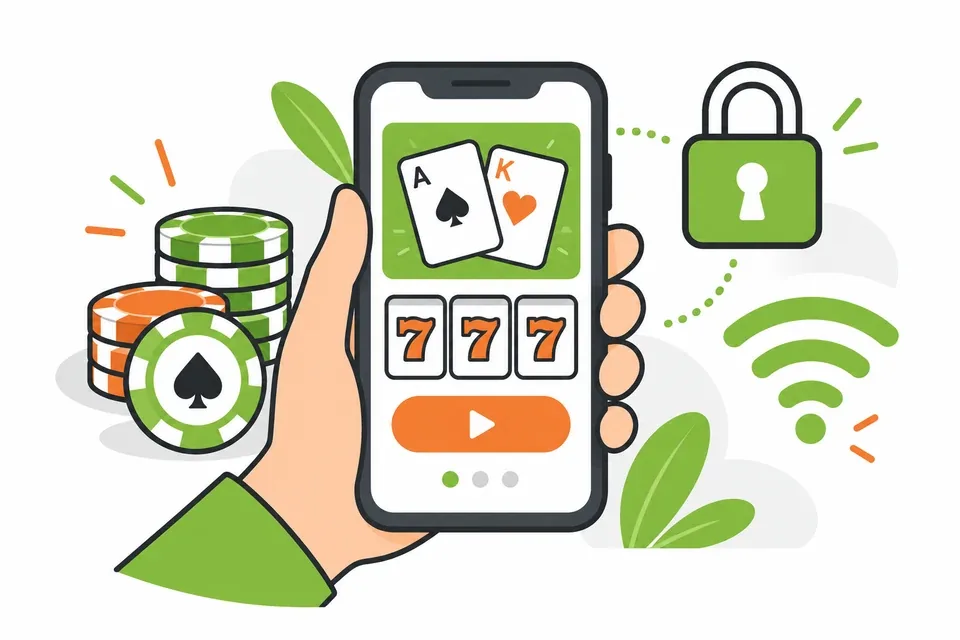
Bahamian law permits online gambling only inside the licensing structure described above. There are two lawful routes, and they face in opposite directions.
- Domestic online gaming through gaming houses. Under section 44(2)(a) of the Act, a gaming house operator may offer interactive gaming, including internet betting on the numbers game, to domestic players only. The account must have been opened face to face, after the operator has checked documentary proof that the holder is a domestic player and is not otherwise barred from gaming. Play is limited to the credit balance: no transaction may take the account below zero. The Gaming House Operator Regulations prohibit anonymous accounts, more than one account per patron and transfers between patrons’ accounts (regulation 20), and require that online sites show that only persons aged 18 or over and only domestic players may take part (regulation 46).
- Casino-linked remote gaming for non-residents. Proxy gaming, mobile gaming and restricted interactive gaming licences (sections 40 to 42) may be issued only to holders of a casino gaming licence. Mobile gaming is confined to permitted areas of the resort. Restricted interactive and proxy gaming may serve people on the licensed premises and citizens of foreign jurisdictions that the Board has permitted. They are not open to domestic players.
There is no licence category for a stand-alone online casino aimed at foreign markets, and no licence that would allow an offshore operator to serve residents of the Bahamas.
Enforcement against unlicensed operators
Enforcement has concentrated on unlicensed domestic numbers operations rather than on foreign websites. The 2019 amendments extended the Board’s remit from licensed operators to all gaming, licensed and unlicensed, and created an investigations function. Attorney General Carl Bethel said in July 2019 that the changes were aimed at “midnight cowboys” offering numbers by telephone and at an unlicensed gaming house operating from about 11 locations (BGOA reprint of press report, July 2019). The same package was reported to allow the Board, with the permission of the court, to instruct internet service providers to suspend services to illegal operators during an investigation (EW News; BGOA reprint). We found no published list of blocked websites and no record of this power being used against foreign online casinos.
The Board also polices the use of licensed accounts. In Public Notice No. 1 of 2026 (14 July 2026) it warned that some patrons were using gaming house accounts to deposit and withdraw funds for non-gaming services, and stated that such accounts may be used only for authorised gaming and that misuse may lead to investigation and regulatory action (Gaming Board).
Advertising. We found no general gambling advertising code. Specific restrictions appear in the Gaming House Operator Regulations: an operator may not encourage a patron who has set a gaming limit to raise or remove it, and may not send direct marketing to patrons who have set their limit at zero (regulation 27).
Position of players
For residents, the legal position depends on where they play. Playing with a licensed gaming house, in person or online, is lawful for domestic players; online play is limited to those aged 18 or over. Playing in a resort casino is not open to domestic players. The Act’s general offences in section 75 are aimed mainly at operators and others who make false statements, conduct unapproved games, obstruct Board investigations or fail to comply with a summons, with fines of up to B$20,000, which may be doubled for second or subsequent convictions. We did not find a provision, in the sections we could read, that specifically penalises a resident for playing on an unlicensed or offshore website, and we found no reported prosecutions of players for doing so. The practical consequence is a loss of protection: the Board’s dispute procedure and the operators’ responsible gaming duties apply only to licensed operators.
Visitors may play in the licensed casinos. When gaming taxes were reformed in 2019, ministers said casino winnings, including tourists’ winnings at resort casinos, would not be taxed (CalvinAyre, July 2019). The minimum age for domestic online gaming with gaming houses is 18 (regulation 46). We could not verify the minimum age for casino play from the legislation available to us.
Taxation
Gaming houses
As originally made, regulation 57 of the Gaming House Operator Regulations charged gaming house operators a monthly gaming tax equal to the greater of 11% of taxable revenue or 25% of earnings before interest, taxes, depreciation and amortisation (EBITDA). This is the wording still shown on the Board’s taxation page. Returns are due within 30 days of the end of each monthly period, and late payment attracts a penalty of 10% of the tax for each week or part week unpaid, capped at twice the tax.
The rate was the subject of a dispute in 2018–2019. The government announced a steep sliding scale in its 2018 budget, operators applied to the Supreme Court for judicial review, and the parties then negotiated a settlement (BGOA reprint, February 2019). Under the resulting 2019 amendments, as reported, gaming houses pay 15% on net taxable revenue up to US$24 million and 17.5% on revenue above that, applied retroactively from 1 January 2019 (CalvinAyre; BGOA reprint). The Board’s own taxation page has not been updated to reflect these rates, and the 2019 amending instruments it publishes are not available in searchable text, so readers should confirm current rates with the Board.
Casinos
Under the Gaming Regulations 2014, as summarised by the Gaming Board, casinos pay an annual basic tax calculated by reference to the size of the casino floor, in six equal monthly instalments from 31 January (regulation 187), and a gaming tax at a fixed rate of 5% of adjusted gross revenue, the casino’s takings after winnings are paid, for each monthly tax period (regulation 188).
Players
The 2019 package also legislated a patron tax on winnings from lottery and numbers products, at 5% on winnings up to US$1,000 and 7.5% above that (CalvinAyre). It was repeatedly deferred and never came into effect. In January 2022 the Davis administration said it would abandon it. Minister Michael Halkitis stated that the tax “had not come into effect” and that the industry was already “very, very heavily taxed” (The Tribune, 5 January 2022; The Gleaner). We found no tax on players’ gambling winnings currently in force.
Consumer protection and responsible gambling
Responsible gaming obligations are set mainly at operator level. Under regulation 26 of the Gaming House Operator Regulations, gaming houses must have procedures to identify patrons who are, or appear to be at risk of becoming, problem gamblers, and must give them enough information to obtain counselling or reach a support organisation. Regulation 27 lets registered patrons set written limits on deposits, losses or wagers; a limit can be set at zero, which works as a form of operator-level self-exclusion. Operators must display links to their dispute procedure, responsible gambling resources and the Board’s website before play starts (regulation 46).
The Act refers to a register of excluded persons kept under section 74, but we found no national self-exclusion scheme that players can join through a single portal, and no dedicated national gambling helpline. The Board’s responsible gaming pages anticipate that gaming houses will “continue to become more aggressive, assertive and attractive” in marketing and product roll-outs. The Sandilands Rehabilitation Centre, which works on addiction, holds an annual symposium at which the Board has presented on the risks of gambling (Gaming Board, March 2025).
Patrons who have a dispute with a licensed operator can use the Board’s dispute procedure. A Board officer first tries to reach agreement between the parties; if that fails, the Board investigates, issues a preliminary written determination with reasons and, if either party objects, holds a hearing. Our general guide to responsible gambling explains warning signs and practical tools.
Recent and upcoming developments
- January 2022: patron tax dropped. The government confirmed that the never-implemented tax on lottery winnings would be abandoned (The Tribune).
- May 2023: Gaming Board reform proposals. Board officials described possible amendments: allowing residents to play in casinos by removing section 69, establishing a national lottery under the minister’s existing power in section 58, permitting stand-alone casinos on the Family Islands only, barring welfare recipients from gaming, tiered fees for gaming house premises, digital verification of domestic players and accepting cryptocurrency. The Board said these were only under consideration (The Tribune, 4 May 2023). Board chairman Dr Daniel Johnson argued for giving residents “choice”; Tourism Minister Chester Cooper said the work was not yet before the Cabinet for any determination (The Nassau Guardian, October 2023).
- 2024–2026: no new gaming statute found. The Board’s legislation page lists no gaming Act or regulations later than the 2019 amendments, and we found no bill to open casinos to residents or create a national lottery as of 6 October 2026.
- 2026: leadership change and account misuse notice. The Board lists a new minister responsible from May 2026 and a new chairman from July 2026 (Gaming Board), and in July 2026 it issued Public Notice No. 1 of 2026 on the misuse of gaming house accounts (Gaming Board).
Casino listings for players in the Bahamas
The listings below are generated automatically from our casino database. They do not by themselves show that an operator is licensed in the Bahamas. Bahamian law allows residents to gamble online only with locally owned licensed gaming houses and provides no licence for foreign online casinos, so the listings must not be read as an indication that playing with a listed operator is lawful for residents. Readers should check the Gaming Board’s list of licensees before playing.
Vegas Casino Online
No Deposit Bonus
$ 20
Liberty Slots Casino
No Deposit Bonus
$ 18

Slots.lv
100% up to
$2,000
+ 20 Spins
Sloto'Cash Casino
100% up to
∞

Casino Extreme
200 Spins

Bovada Casino
100% up to
$1,000
Casino Brango
500% up to
$/€100
+ 500 Spins
Shazam Casino
Exclusive No Deposit Bonus
$ 50
Lucky Tiger Casino
No Deposit Bonus
$ 55
Red Stag Casino
25% up to
∞
Rich Palms Casino
250% up to
∞

Miami Club Casino
50 Spins

Highway Casino
$ 30

Lincoln Casino
No Deposit Bonus
$ 18
Yabby Casino
202% up to
∞

DuckyLuck Casino
500% up to
$/€2,500
+ 150 Spins
PlayCroco Casino
300% up to
∞
+ 60 Spins
Fair Go Casino
200% up to
∞
Uptown Aces
250% up to
∞
Las Vegas USA Casino
No Deposit Bonus
$ 20
Drake Casino
300% up to
$2,000
Sun Palace Casino
No Deposit Bonus
$ 20
Slots Plus
No Deposit Bonus
$ 20
Ignition Casino
200% up to
$100
.jpg?x83485)
Everygame Classic Casino
200% up to
∞
+ 50 Spins
Slots And Casino
500% up to
∞
+ 150 Spins
Slotsroom Casino
400% up to
∞
+ 20 Spins

Casino Max
400% up to
∞
+ 20 Spins
El Royale Casino
230% up to
∞
Black Lotus Casino
300% up to
$7,000
+ 45 Spins
Red Dog Casino
Slots Empire
230% up to
$7,500

Lucky Creek
50 Spins
Spinfinity Casino
400% up to
∞
+ 20 Spins

Jackpot Capital
25% up to
∞
Ripper Casino
25% up to
∞

Las Atlantis Casino
$ 2,500
Slotastic
250% up to
∞
Grand Eagle
200% up to
$5,500
+ 30 Spins
Cherry Jackpot
400% up to
∞
+ 20 Spins
Grande Vegas
150% up to
$300
LadyLuck Casino
100 Spins
Roaring 21 Casino
400% up to
∞
+ 20 Spins
Ozwin Casino
$ 10
Treasure Mile
200% up to
$/€4,000
+ 50 Spins
TropicanaCasino
Borgata Online Casino

BetOnline Casino
100 Spins

Grand Rush
200% up to
$4,000
+ 40 Spins

Jazz Casino
10% up to
$250

BetMGM Casino NJ
100% up to
$1,000
Sources and further reading
- Government of The Bahamas, Gaming Act, 2014 (Chapter 388) (2014).
- Government of The Bahamas, Gaming House Operator Regulations, 2014 (S.I. No. 85 of 2014) (2014).
- Gaming Board for The Bahamas, Gaming Regulations, 2014 (S.I. No. 84 of 2014) (2014).
- Gaming Board for The Bahamas, Legislation (accessed 6 October 2026).
- Gaming Board for The Bahamas, Our History (accessed 6 October 2026).
- Gaming Board for The Bahamas, Our Licensees (accessed 6 October 2026).
- Gaming Board for The Bahamas, Licence Holders (accessed 6 October 2026).
- Gaming Board for The Bahamas, Taxation Rates (accessed 6 October 2026).
- Gaming Board for The Bahamas, Offences and Penalties (accessed 6 October 2026).
- Gaming Board for The Bahamas, Technical Standards (accessed 6 October 2026).
- Gaming Board for The Bahamas, Patron Disputes and Complaints (accessed 6 October 2026).
- Gaming Board for The Bahamas, Responsible Gaming (accessed 6 October 2026).
- Gaming Board for The Bahamas, Use of Patron Accounts Held with Licensed Gaming House Operators (Public Notice No. 1 of 2026) (2026).
- Gaming Board for The Bahamas, Gaming Board Engages Students at Gambling Addiction Symposium (2025).
- The Bahamas Investor, New gaming legislation imminent (2014).
- Wikipedia, 2013 Bahamian gambling referendum (accessed 6 October 2026).
- The Nassau Guardian, New House session should deal with gaming issue (2023).
- The Tribune (Fay Simmons), Recipients of welfare may face gaming ban (2023).
- The Tribune, Gambler winnings tax ‘too complex’ (2022).
- The Gleaner, Bahamas to scrap patron tax on lottery winnings (2022).
- The Tribune (Cedric Moss), Gambling and the Bahamas Constitution (2017).
- CalvinAyre.com, Bahamas new tax regime for web shop revenue, punters’ winnings (2019).
- Bahamas Gaming Operators Association, Govt reaches agreement with gaming house operators (2019).
- Bahamas Gaming Operators Association, House to debate gaming amendments today (2019).
- Bahamas Gaming Operators Association, Gaming bill passes in Senate (2019).
- EW News, New Gaming Act allows internet shutdown of non-compliant gaming operators (undated, c. 2019).