Legal casino gambling age in Trinidad and Tobago
Trinidad and Tobago is part-way through a long transition in its gambling law. Gambling is still governed mainly by the Gambling and Betting Act, Chap. 11:19, which does not provide for casinos or online gambling, and by the National Lotteries Act, Chap. 21:04, under which the state-owned National Lotteries Control Board (NLCB) runs the national lottery. Casino-style gaming takes place in private members’ clubs registered as clubs rather than licensed as casinos. The Gambling (Gaming and Betting) Control Act, 2021 created a Gambling Control Commission, but its licensing regime was not in force on the date of review. In autumn 2026 Parliament approved an order on remote (online) gambling, and the Government has said the remaining provisions will be proclaimed on or before 1 January 2027.
Key points
- The current statutes are the Gambling and Betting Act, Chap. 11:19, and the National Lotteries Act, Chap. 21:04. Neither provides a licence for casinos or online casinos. The NLCB is the statutory lottery operator (FIU guidance, 2017).
- Private members’ clubs registered under the Registration of Clubs Act, Chap. 21:01, offer casino-type gaming without a casino licence; the Financial Intelligence Unit (FIU) supervises them for anti-money laundering purposes (FIU).
- The Gambling (Gaming and Betting) Control Act, 2021 received assent on 12 July 2021. According to the Gambling Control Commission, only Parts I, II and X are in force, so the Commission exists but cannot yet issue licences. Section 76, on remote gambling, was proclaimed on 15 September 2026 (Parliament).
- The Gambling (Gaming and Betting) (Remote Gambling) Order, 2026 was approved by both Houses on 30 September and 2 October 2026 (Parliament); full proclamation is promised by 1 January 2027.
- The Finance Act, 2025 sharply increased penalties under the Gambling and Betting Act and created new offences against illegal lotteries that use NLCB draw results (Act No. 14 of 2025). We found no national self-exclusion scheme in operation.
Last reviewed: 6 October 2026.
Top Rated Online Casinos for Trinidad and Tobago

Vegas Casino Online
Sign Up400% up to
$500

Liberty Slots Casino
Sign Up100% up to
$259

Sloto'Cash Casino
Sign Up100% up to
$500
Shazam Casino
Sign Up250% up to
$2,500
Lucky Tiger Casino
Sign Up250% up to
$1,000
Casino Brango
Sign Up500% up to
$/€100
+ 500 Spins
Vegas Casino Online
Sign Up400% up to
$500
Liberty Slots Casino
Sign Up100% up to
$259
Sloto'Cash Casino
Sign Up100% up to
$500
Shazam Casino
Sign Up250% up to
$2,500
Lucky Tiger Casino
Sign Up250% up to
$1,000
Casino Brango
Sign Up500% up to
$/€100
+ 500 Spins
Historical development
For most of its history, Trinidad and Tobago has regulated gambling through a patchwork of statutes rather than a single code. The Gambling and Betting Act, Chap. 11:19, governs betting and pool betting; the National Lotteries Act, Chap. 21:04, provides for the national lottery run by the NLCB; the Betting Levy Board Act, Chap. 21:53, deals with a levy on horse-race bets; and the Registration of Clubs Act, Chap. 21:01, governs clubs (Bill Essentials; 2015 Bill). An amendment bill introduced in 2001 lapsed after its first reading when Parliament was dissolved on 13 October 2001 (Parliament).
The legal gap that shaped the market concerned casinos. A Trinidad law firm summarises the position under the existing framework as follows: “it remains illegal for persons to use their premises for gambling”, subject to exceptions that include private homes, liquor-licensed premises with amusement games and members’ clubs registered under the Registration of Clubs Act; there are “no legal casinos” in the country (trinidadlaw.com). In practice, casino-type gaming grew inside private members’ clubs (PMCs). In a 2013 note the Ministry of Finance stated that PMCs “have been engaging in Casino type activities” and that, according to the Financial Action Task Force, the sector consisted of close to 70 operational clubs by 2009. Parliament’s research note on the 2021 Bill cites a figure of 72 registered PMCs “that operated like casinos” without government supervision (Bill Essentials, 2021).
The response was a series of comprehensive bills. A Gambling (Gaming and Betting) Control Bill, 2015 was introduced on 22 May 2015; Parliament’s note on that Bill stated that it was inconsistent with sections 4 and 5 of the Constitution and therefore needed a three-fifths majority in both Houses (Parliament). It passed the House but lapsed on 17 June 2016. A 2016 version, introduced on 1 July 2016, was considered by a Joint Select Committee, which reported in November 2019 (Bill Essentials). On 15 May 2020 the motion for the Bill’s third reading failed, with 20 votes for, none against and 15 abstentions (Parliament). A revised Bill was introduced in the Senate on 11 June 2021, passed there on 21 June 2021 (24 for, 6 abstentions) and in the House of Representatives on 23 June 2021 (21 for, 15 abstentions), and received assent on 12 July 2021 as Act No. 8 of 2021 (Parliament).
Legal framework

The principal instruments are:
- The Gambling and Betting Act, Chap. 11:19. The older general statute, under which pool betting businesses are licensed (FIU). Its penalties were raised substantially by the Finance Act, 2025: the penalty in section 19 rose from a fine of $3,000 or 12 months’ imprisonment to $250,000 and three years on summary conviction, or $3 million and seven years on indictment, and fines in sections 20 and 21 rose to $30,000 and two years’ imprisonment. (Amounts are in Trinidad and Tobago dollars.) We could not retrieve the consolidated text from the official legislation portal.
- The National Lotteries Act, Chap. 21:04. The legal basis of the NLCB. The Finance Act, 2025 inserted a new section 33 creating offences for persons other than authorised agents who carry on lottery operations, with the same top-tier penalties, and widened the definition of a “ticket” to include printed receipts issued by any terminal or electronic means (Act No. 14 of 2025).
- The Registration of Clubs Act, Chap. 21:01. The statute under which private members’ clubs are registered. The FIU describes clubs registered under section 5(4) and licensed for gambling activities as one of the three supervised gambling sectors (FIU).
- The Gambling (Gaming and Betting) Control Act, 2021. The new framework. It establishes the Gambling (Gaming and Betting) Control Commission (Part II), a licensing regime (Part III), rules for gaming and betting (Parts IV and V), taxes and funds (Part VI), enforcement (Part VII) and offences and penalties (Part VIII). When fully in force, Schedule 7 repeals sections 4 to 16 and 26 to 40 of the Gambling and Betting Act, its Schedules and the Gambling and Betting (Licences) Regulations, and repeals sections 23 and 23A to 23C of the Registration of Clubs Act (Bill Essentials). The National Lotteries Act is not amended by the 2021 Act.
- Anti-money laundering law. PMCs, pool betting businesses and the NLCB are “listed businesses” under the First Schedule to the Proceeds of Crime Act, Chap. 11:27, and are subject to the Financial Intelligence Unit of Trinidad and Tobago Act, Chap. 72:01, and the Anti-Terrorism Act, Chap. 12:07 (FIU).
The 2021 Act comes into force by presidential proclamation (section 2). The Gambling Control Commission states that Parts I, II and X have been proclaimed (GCC), as did trade press in October 2025 (iGaming Business); a July 2024 Newsday report gave a different list, which we could not reconcile. Section 76 and Schedule 6 in its application to section 76 were proclaimed on 15 September 2026 by Legal Notice 700 of 2026 (Parliament).
Regulator and licensing model
Trinidad and Tobago currently has a mixed model. The national lottery is a state monopoly, meaning that only one body, the NLCB, may lawfully operate it. Betting offices and pool betting are licensed under the Gambling and Betting Act. Casino-style gaming is not licensed as such: it takes place in registered clubs that pay specific taxes but are not subject to a gambling regulator. The FIU acts as the anti-money laundering supervisor of all three sectors (FIU).
The Gambling Control Commission
The 2021 Act creates the Gambling (Gaming and Betting) Control Commission, governed by a board of a chairman and six to ten other members; persons who have operated a gambling establishment, or who hold or apply for a licence, may not serve (Bill Essentials). The first board was appointed in March 2022, when the then Minister of Finance, Colm Imbert, presented the instruments of appointment (CNC3). The Commission describes itself as the regulator of commercial gambling other than the National Lottery (GCC). Because the licensing and enforcement parts of the Act are not in force, its chairman said in 2024 that the Commission had “no regulatory powers at all” (Newsday).
Licences under the 2021 Act
Once Part III is proclaimed, the Commission will issue gaming operator’s, betting operator’s, gaming owner’s, bookmaker’s, promoter’s, gaming machine operating, gaming machine distributor, technical operator’s, premises, personal and gaming machine manufacture licences (Bill Essentials). Applicants must be aged 18 or over or be companies incorporated in Trinidad and Tobago and must pass a “fit and proper” test. Applications are advertised and open to public objection, decisions may be appealed to the High Court, and the Commission must keep public registers of licensees, gaming machines and premises. Transitional provisions allow existing gaming and betting operators to continue until the Commission decides on their licence applications (Bill Essentials). No register had been published at the date of review.
The National Lotteries Control Board
The NLCB operates the national lottery under the National Lotteries Act. In the October 2025 budget the Minister of Finance put its annual revenue at about $3 billion and estimated illegal lotteries at about $9 billion a year, saying that “illegal lotteries continue to impair the NLCB’s profit margins” (SiGMA; iGaming Business).
Online gambling: what is permitted and how it is enforced
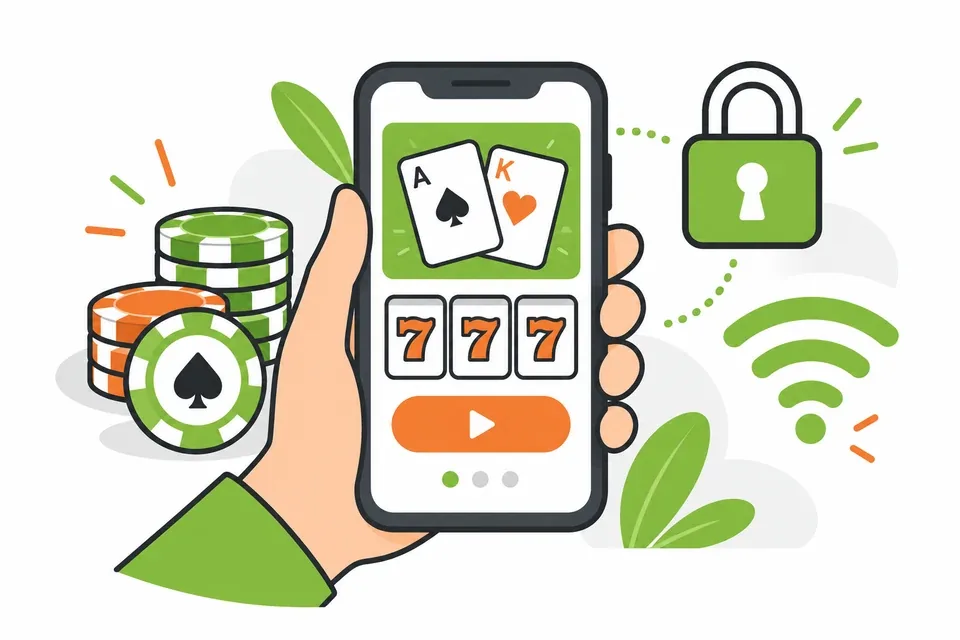
Neither the Gambling and Betting Act nor the National Lotteries Act contains a licensing regime for online casinos, and no online gambling licence had been issued at the date of review. The FIU supervises the NLCB in respect of its “online betting games” (FIU), which are games of the statutory lottery, not private internet casinos.
The 2021 Act defines remote gambling as gambling in which persons participate by the use of remote communication, including the internet, telephone, television and radio (Act No. 8 of 2021). As enacted, section 76 made it an offence to do anything in Trinidad and Tobago, or to use remote gambling equipment located there, to invite or enable a person in a “prohibited territory” to take part in remote gambling. The offence carried fines of $5 million to $10 million and imprisonment of seven to ten years (Bill Essentials). Section 76 was proclaimed on 15 September 2026 (Parliament).
The Gambling (Gaming and Betting) (Remote Gambling) Order, 2026, moved by the Minister of Finance, Davendranath Tancoo, was approved by the House of Representatives on 30 September 2026 by 33 votes to none and by the Senate on 2 October 2026 (Parliament). Parliament’s summary states that the Order amends section 76 to permit remote gambling activities. Trade press describe it as removing the restriction that had criminalised operators based in Trinidad and Tobago offering remote gambling internationally (Focus Gaming News; CasinoBeats). The text of the Order itself was not published on Parliament’s motion page when we reviewed it, so its exact wording could not be checked.
In the Senate debate, Opposition Senator Faris Al-Rawi asked when online gaming licences would actually be issued, and the Attorney General, John Jeremie, said that they would be brought into force “on or before 1 January, 2027” (TTT; CNC3). The Minister of Planning, Kennedy Swaratsingh, said oversight would be exercised through the Gambling Control Commission and the Central Bank (TTT), and argued that the industry “will thrive with or without us” (Ministry of Planning). Detailed rules on remote licences, technical standards and taxation had not been published at the date of review.
Enforcement and advertising. We found no legal provision for blocking gambling websites, no published blocklist and no rule requiring payment providers to block transactions with offshore operators. Enforcement measures announced in 2025 targeted illegal land-based lotteries rather than online sites (iGaming Business). Under the 2021 Act the Commission may attach advertising conditions to licences (Bill Essentials), but these provisions are not yet in force and we found no gambling-specific advertising code currently in force.
Position of players
The sources we reviewed do not show that a person in Trinidad and Tobago commits an offence merely by playing on a foreign gambling website. The offences in the 2021 Act are aimed at those who operate gambling without a licence (section 72), cheat, offer remote gambling to prohibited territories or allow children to gamble; the Act does not appear to create a separate offence for a player who takes part in unlicensed gambling (Act No. 8 of 2021; Bill Essentials). The Finance Act, 2025 offences concerning illegal lotteries are directed at persons who receive bets, issue tickets or pay out, not at buyers (Act No. 14 of 2025). Because we could not consult the consolidated text of the Gambling and Betting Act, we cannot rule out older provisions on participation in unlawful gaming; we found no reported prosecution or fine of a player for online gambling.
The practical consequence is a lack of protection: offshore operators are not supervised locally and no regulator can handle a player’s complaint against them. In the October 2026 Senate debate, Independent Senator Desiree Murray called for meaningful age and identity verification, deposit limits, self-exclusion and cooling-off periods in the new online regime (Ministry of Planning).
Age limits. The 2021 Act defines a child as a person under 18 and makes it an offence knowingly to invite or permit a child to gamble, to admit children to licensed premises other than racetracks, or to employ them in gambling, with fines of $3 million to $5 million and imprisonment of five to seven years (Bill Essentials). These provisions sit in Part VIII, which had not been proclaimed. In July 2025 the Prime Minister, Kamla Persad-Bissessar, announced plans to raise the minimum gambling age to 25 (iGaming Expert); we found no bill to that effect on the Parliament website as of 6 October 2026.
Taxation
Operators
Under the current system, PMCs and operators of amusement and gaming machines pay specific taxes to the Inland Revenue Division rather than to a gambling regulator. Figures cited in the remote gambling debate show 1,150 registered gaming accounts, 224 of them for Club Gaming Tax and 926 for Gaming Amusement Tax. Payments in 2025 totalled about $72.66 million, of which about $57.60 million was Club Gaming Tax and $15.06 million Gaming Amusement Tax (CasinoBeats; CNC3). We were unable to read the current rates on the Inland Revenue Division’s website, where the relevant notices are published as images.
Under the 2021 Act, holders of a gaming owner’s licence will pay the taxes on gambling tables and devices set out in Schedule 5 to the Commission instead (section 63). According to Newsday (July 2024), the schedule sets $120,000 a year for each roulette or electronic roulette table and $24,000 a year for each slot machine; the same report said more than 13,000 slot machines were imported between 2017 and 2022. The Act also requires the Commission to pay 2.5% of gaming revenues and 5% of betting revenues into Rehabilitation and Development Funds (Act No. 8 of 2021). The NLCB’s surplus is paid to the state; from 2025 the National Lotteries Act requires quarterly rather than annual payments and allows deposits to the Sport and Culture Fund (Finance Act, 2025). No tax rate for remote gambling had been published at the date of review.
Players
We found no official guidance on the taxation of gambling winnings, whether from the national lottery, clubs or online play. Readers should seek advice from the Inland Revenue Division.
Consumer protection and responsible gambling
Current safeguards rest mainly on anti-money laundering rules. Under the FIU’s 2017 guidance for the gambling sector, PMCs, pool betting businesses and the NLCB must register with the FIU within three months of starting business, appoint a compliance officer, apply customer due diligence, report suspicious transactions within 14 days and keep records for at least six years. For PMCs, customer due diligence is triggered by a transaction of $18,000 or more, or by linked transactions that together reach that amount. Under the 2021 Act the FIU remains the supervisory authority, and licensees must register with it within five business days of being licensed (Bill Essentials).
The 2021 Act names the protection of minors and other vulnerable persons as one of its objects and creates a Rehabilitation Fund to aid “victims of gambling addiction”, administered by a committee that is to include members with expertise in addiction (Bill Essentials). These mechanisms await proclamation. We found no national self-exclusion register and no national gambling helpline; people seeking help may need to approach general addiction services. Our responsible gambling guide sets out general steps for keeping gambling under control.
Recent and upcoming developments
- July 2025: age proposal. After the general election of 28 April 2025, the new Government announced a plan to raise the minimum gambling age to 25 (iGaming Expert). No bill had been found by 6 October 2026.
- October to December 2025: illegal lotteries. Penalties announced in the budget of 13 October 2025 (SiGMA) were enacted in the Finance Act, 2025, assented to on 23 December 2025.
- September to October 2026: remote gambling. Section 76 was proclaimed on 15 September 2026, and the Remote Gambling Order was approved unanimously on 30 September and 2 October 2026 (Parliament). Opposition MP Keith Scotland raised concerns about effects on mental health (CNC3).
- Pending: full proclamation. The Government’s target is 1 January 2027 (TTT). Until the remaining provisions are proclaimed, the existing statutes continue to apply, and the date should be treated as a target rather than a certainty.
Casino listings for players in Trinidad and Tobago
The listings below are generated automatically from our casino database. They do not by themselves show that an operator is licensed in Trinidad and Tobago. At the date of review no online casino licence had been issued and the licensing provisions of the 2021 Act were not in force, so no operator can currently hold a local online licence; readers should check the Gambling Control Commission for any register it publishes after the new regime starts. The listings must not be read as an indication that a site is authorised in Trinidad and Tobago.
Vegas Casino Online
No Deposit Bonus
$ 20
Liberty Slots Casino
No Deposit Bonus
$ 18

Slots.lv
100% up to
$2,000
+ 20 Spins
Sloto'Cash Casino
100% up to
∞

Casino Extreme
200 Spins

Bovada Casino
100% up to
$1,000
Casino Brango
500% up to
$/€100
+ 500 Spins
Shazam Casino
Exclusive No Deposit Bonus
$ 50
Lucky Tiger Casino
No Deposit Bonus
$ 55
Red Stag Casino
25% up to
∞
Rich Palms Casino
250% up to
∞

Miami Club Casino
50 Spins

Highway Casino
$ 30

Lincoln Casino
No Deposit Bonus
$ 18
Yabby Casino
202% up to
∞

DuckyLuck Casino
500% up to
$/€2,500
+ 150 Spins
PlayCroco Casino
300% up to
∞
+ 60 Spins
Fair Go Casino
200% up to
∞
Uptown Aces
250% up to
∞
Las Vegas USA Casino
No Deposit Bonus
$ 20
Drake Casino
300% up to
$2,000
Sun Palace Casino
No Deposit Bonus
$ 20
Slots Plus
No Deposit Bonus
$ 20
Ignition Casino
200% up to
$100
.jpg?x83485)
Everygame Classic Casino
200% up to
∞
+ 50 Spins
Slots And Casino
500% up to
∞
+ 150 Spins
Slotsroom Casino
400% up to
∞
+ 20 Spins

Casino Max
400% up to
∞
+ 20 Spins
El Royale Casino
230% up to
∞
Black Lotus Casino
300% up to
$7,000
+ 45 Spins
Red Dog Casino
Slots Empire
230% up to
$7,500

Lucky Creek
50 Spins
Spinfinity Casino
400% up to
∞
+ 20 Spins

Jackpot Capital
25% up to
∞
Ripper Casino
25% up to
∞

Las Atlantis Casino
$ 2,500
Slotastic
250% up to
∞

Grand Eagle
200% up to
$5,500
+ 30 Spins
Cherry Jackpot
400% up to
∞
+ 20 Spins
Grande Vegas
150% up to
$300
LadyLuck Casino
100 Spins
Roaring 21 Casino
400% up to
∞
+ 20 Spins
Ozwin Casino
$ 10
Treasure Mile
200% up to
$/€4,000
+ 50 Spins
TropicanaCasino
Borgata Online Casino

BetOnline Casino
100 Spins

Grand Rush
200% up to
$4,000
+ 40 Spins

Jazz Casino
10% up to
$250

BetMGM Casino NJ
100% up to
$1,000
Sources and further reading
- Parliament of Trinidad and Tobago, The Gambling (Gaming and Betting) Control Act, 2021 (Act No. 8 of 2021) (2021).
- Parliament of Trinidad and Tobago, The Gambling (Gaming and Betting) Control Bill, 2021: legislative history and proclamation status (accessed 6 October 2026).
- Parliament of Trinidad and Tobago, Bill Essentials: The Gambling (Gaming and Betting) Control Bill, 2021 (2021).
- Parliament of Trinidad and Tobago, The Gambling (Gaming and Betting) Control Bill, 2015 (2015).
- Parliament of Trinidad and Tobago, The Gambling (Gaming and Betting) Control Bill, 2016 (accessed 6 October 2026).
- Parliament of Trinidad and Tobago, The Gambling and Betting (Amendment) Bill, 2001 (accessed 6 October 2026).
- Parliament of Trinidad and Tobago, Approve the Gambling (Gaming and Betting) (Remote Gambling) Order, 2026 (2026).
- Parliament of Trinidad and Tobago, The Finance Act, 2025 (Act No. 14 of 2025) (2025).
- Gambling Control Commission of Trinidad and Tobago, Home page (accessed 6 October 2026).
- Financial Intelligence Unit of Trinidad and Tobago, Guidance Note for the Gambling Sector (2017).
- Ministry of Finance, The Gambling and Gaming Industry in Trinidad and Tobago (2013).
- Ministry of Planning, Economic Affairs and Development, Senate unanimously clears way for legal online gambling (2026).
- Miguel Vasquez, trinidadlaw.com, The Regulation of the Casino Industry in Trinidad and Tobago (accessed 6 October 2026).
- CNC3, Gambling Control Board appointed (2022).
- Trinidad and Tobago Newsday, Gambling Control Commission seeks to protect people (2024).
- CNC3, Remote gambling bill passed with Govt, Opposition support (2026).
- CNC3, Senate unanimously clears way for legal online gambling (2026).
- TTT News, Senate Approves Remote Gambling As Government Targets January 2027 (2026).
- iGaming Business, Trinidad and Tobago vows to clamp down on illegal gambling (2025).
- SiGMA, Trinidad and Tobago moves to tighten gambling laws (2025).
- iGaming Expert, Trinidad and Tobago set for sweeping gambling reforms (2025).
- CasinoBeats, Remote Gambling Vote Leaves Trinidad and Tobago Facing January Test (2026).
- Focus Gaming News, Trinidad and Tobago online gambling legislation approved in bid to attract igaming operators (2026).