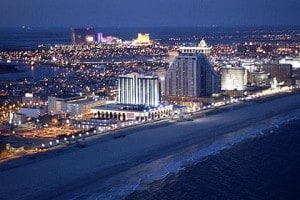
 Atlantic City has long been considered the gambling Mecca of the East Coast but last year, things went in the wrong direction when four casino venues filed for bankruptcy and a fifth one narrowly escaped closure. As a result, the economy of New Jersey and Atlantic City, in particular, was greatly affected in a negative manner.
It would not be excessive to say that the closure of the above-mentioned casinos played a critical role in city’s development or to be more precise – its decline. In brief, the fewer casinos are available to tourists and locals, the less generated amount from property taxes is.
Admittedly, the gambling revenues and the taxes the casino venues were supposed to pay turned out to be the bone of contention and Atlantic City authorities experienced difficulties in finding an alternative and making all affected sides content with the outcome. A suggestion for providing the remaining eight casinos with tax relief, known as “collective tax payment” was put forward but the smaller venues, such as the Golden Nugget, were absolutely against it.
The question about the tax increase and the involvement of the remaining casino venues in the economy of the city has been a subject for discussions for a long time.
As for the budget that was set aside for the 2015 fiscal year, the Mayor of Atlantic City announced that it is $235 million, which is 11% less than the sum spent during 2014.
Yet, in spite of the fact that a great number of residents were left out of job as a result of the casino closures, the city managed to produce $700 million in taxes for the state coffers. However, regardless of the struggling economy, the financial aid received during 2014 was modest, as compared to the aid, given to Camden and Newark.
Although the casino closures were a result of a combination of factors, the majority of market analysts attribute them to the fast development of the gambling sectors in the neighbouring states. In order to compensate for the losses brought about by the narrowed gambling sector, the property taxes literary skyrocketed.
Although Atlantic City officials tended to gradually increase them, the Mayor Don Guardian announced that despite the pessimistic situation, the property taxes are not going to be increased this year.
As for the city’s debt, it was formed mainly due to the appeals, submitted by large casinos. For instance, Borgata Hotel Casino and Spa issued a tax refund amounting more than $88 million.
Borgata can take pride in being among the most well-attended and profitable casinos in Atlantic City, which resisted the tough competition.
Casino officials were supposed to receive the tax refund by the end of 2014 but unfortunately, the financial crisis of Atlantic City has led to the delay.
The Mayor said that the option for selling bonds in order to pay off the debt is, for the time being, excluded from the list of available alternatives. Mayor Guardian recommended negotiations for avoiding bankruptcy.
New Jersey’s Governor arranged a team of specialists to review the shaky economy and suggest methods for remedying the situation.
Meanwhile, the city officials approved of the expansion of Steel Pier, which would help Atlantic City to diversify its non-gambling facilities and make up for the losses caused by the closure of the four casinos.