

Gambling in Canada rests on a division of powers. The federal Criminal Code makes most commercial gambling a criminal offence. It then exempts “lottery schemes” conducted and managed by provincial governments, together with some narrower categories. Each province therefore decides which forms of gambling, including online gambling, are offered within its borders and by whom. Most provinces sell online casino games through a provincial lottery corporation. Ontario has since 2022 run a separate model in which private operators, registered by a regulator, offer games on behalf of a provincial agency. Alberta launched a comparable competitive market in 2026. The Mohawk Territory of Kahnawà:ke issues its own online gaming authorisations, which sit outside the provincial schemes.
Key points
- Section 207(1)(a) of the Criminal Code allows “the government of a province” to “conduct and manage a lottery scheme in that province”. This is the legal basis for provincial online casinos.
- Single-event sports betting became lawful for provinces to offer on 27 August 2021, after the Criminal Code was amended.
- In Ontario, the Alcohol and Gaming Commission of Ontario (AGCO) registers and regulates online operators. iGaming Ontario conducts and manages the market. On 1 September 2026 iGaming Ontario’s directory listed 49 operators and 84 gaming websites.
- Alberta’s licensed, competitive iGaming market, set up under the iGaming Alberta Act, opened on 13 July 2026. AGLC regulates it and the Alberta iGaming Corporation conducts and manages it.
- The Kahnawà:ke Gaming Commission issues interactive gaming authorisations under Kahnawà:ke law. These are not provincial registrations.
- Ontario introduced a centralised online self-exclusion tool, BetGuard, in May 2026. ConnexOntario’s helpline (1-866-531-2600) operates 24 hours a day.
Last reviewed: 21 October 2026.
This guide summarises the law as described by official sources at the date of review. It is not legal advice. Because the position differs by province and territory, readers should check with the authority for the place where they are located.
Checking availability by province
Casino availability in Canada must be checked province by province. A Canadian-dollar cashier or an international licence is not proof of provincial authorisation.
Historical development
The Criminal Code has long treated gambling as a matter of criminal law, which falls under federal jurisdiction. Parliament has carved out exceptions that let provinces run gambling themselves, and section 207(1)(a) is the key provision. It permits a provincial government, “either alone or in conjunction with the government of another province, to conduct and manage a lottery scheme in that province”. Section 207(4)(c) excludes games “operated on or through a computer, video device, slot machine or a dice game” from the lottery schemes that charities, religious organisations and fairs may run. Under section 207(1)(a), however, provincial governments may operate such games themselves. This is why online casino games and slot machines in Canada are run or managed by provincial bodies.
Sports betting was the most recent major change. Until 2021, paragraph 207(4)(b) prevented provinces from offering betting on the outcome of a single sporting event. According to the Department of Justice, amendments to paragraph 207(4)(b), made by the Safe and Regulated Sports Betting Act (Bill C-218), came into force on 27 August 2021. They allow provinces and territories to offer and regulate single-event sport betting; betting on horse racing remains federally regulated. At the time, the Canadian Gaming Association estimated that about $10 billion a year was wagered through illegal bookmaking and $4 billion through unregulated offshore sites.
Legal framework

The Criminal Code’s general gambling offences include keeping a “common gaming house” or “common betting house” and various bookmaking and lottery offences. Section 201(1) makes keeping a common gaming or betting house an offence punishable by up to two years’ imprisonment on indictment. Section 201(2) makes it a summary offence to be “found, without lawful excuse” in such a place, or knowingly to permit premises to be used as one. These offences are then subject to the exemptions in section 207.
Within that federal framework, each province legislates for its own gambling market. It typically does so through a provincial gaming control statute, a Crown corporation that conducts and manages gambling, and a regulator that licenses suppliers and staff. Examples of provincial online platforms include PlayNow, run by the British Columbia Lottery Corporation (BCLC), and Loto-Québec’s Espacejeux. Loto-Québec describes itself as “a State corporation benefitting the entire population” (Loto-Québec). In Ontario, OLG.ca continues to operate alongside the private operators in the iGaming Ontario market.
Regulators and licensing models
Provincial monopolies
In most provinces the model is a monopoly: a single public body sells all lawful online gambling, including casino games, lotteries and sports betting, to residents of that province. The provincial corporation may use private technology suppliers, but it remains the operator in law. BCLC, for example, states that the “profits of our play go back to the provincial government to be reinvested into communities across B.C.”.
Ontario’s regulated competitive market
Ontario adopted a different structure while staying within section 207(1)(a). The province created iGaming Ontario, which conducts and manages online gaming, and contracts with private operators that provide the games. The AGCO explains that “iGaming Ontario is conducting and managing the new online gaming market”. It adds that from 4 April 2022, operators that completed AGCO registration and signed agreements with iGaming Ontario could offer regulated games to eligible Ontarians. The AGCO registers operators and sets standards under the Registrar’s Standards for Internet Gaming, made under the Gaming Control Act, 1992.
The market is substantial. iGaming Ontario’s directory of “all igaming sites offered by regulated Operators” listed 49 operators and 84 gaming websites as of 1 September 2026. iGaming Ontario publishes monthly market performance reports covering all operators since launch. AGCO advises players to look for the iGaming Ontario logo, which shows that a site “is being conducted and managed by iGaming Ontario, offers player protections and meets Ontario’s high standards”.
In peer-to-peer games such as poker, Ontario players currently play only against others in the Ontario market. In a reference brought by the Ontario government, the Court of Appeal for Ontario held by a 4-1 majority on 12 November 2025 (Reference re iGaming Ontario, 2025 ONCA 770) that the Criminal Code would permit Ontario’s regulated market to let players take part in games and betting with players outside Canada. Atlantic Lottery Corporation, BCLC, Manitoba Liquor and Lotteries and Loto-Québec appealed to the Supreme Court of Canada, which heard the case on 7 October 2026 and reserved judgment. No international player pooling has been implemented.
Alberta
Alberta has moved towards the Ontario approach. The iGaming Alberta Act, passed in spring 2025 as part of Bill 48, created the Alberta iGaming Corporation to conduct and manage a competitive online market, with Alberta Gaming, Liquor & Cannabis (AGLC) as regulator. According to the Government of Alberta, operators must register with AGLC, players must be at least 18, and advertising must not target minors or self-excluded and high-risk people. AGLC opened registration in January 2026 and the market opened on 13 July 2026, when the Canadian Gaming Association congratulated the province, AGLC and the Alberta iGaming Corporation “on launching a licensed, regulated iGaming market”. Operators continue to join after launch, so lists of authorised sites should be checked with AGLC.
The Kahnawà:ke Gaming Commission
The Kahnawà:ke Gaming Commission regulates gaming in the Mohawk Territory of Kahnawà:ke, near Montréal. It describes itself as “one of the first jurisdictions in the world to recognize the opportunities afforded by the interactive gaming industry”. The Commission acts under the Kahnawà:ke Gaming Law and issues several types of interactive gaming authorisation, including Client Provider Authorizations, as well as licences for land-based gaming in the territory. Its list of permit holders names authorised operators and their websites and notes that “not all URLs are accessible in all jurisdictions”.
A Kahnawà:ke authorisation is issued under Kahnawà:ke law. It is not a provincial lottery scheme under section 207(1)(a), an AGCO registration or an iGaming Ontario operating agreement. It therefore does not, by itself, show that a site is part of any provincial regulated market.
Online gambling: what is offered and how it is policed
Lawful online gambling is offered through provincial corporations or, in Ontario and Alberta, through regulated competitive markets. Loto-Québec’s Espacejeux, for example, offers casino games, sports betting, poker, bingo and instant games. Outside these channels, offshore sites continue to serve Canadian players. The Department of Justice cited industry estimates of the money flowing to unregulated offshore sites when it announced the 2021 sports betting reform.
The AGCO’s public guidance concentrates on consumer information rather than blocking. It warns that unregulated platforms lack transparency requirements, that payouts “could be withheld or delayed” and that personal data may be exposed. It points players to the iGaming Ontario logo and to AGCO’s complaint process for regulated sites. The Registrar’s Standards also govern advertising and inducements by registered operators; the standards documents on the AGCO website contain the current wording. Since 28 February 2024, AGCO rules have barred registered operators from using active or retired athletes in advertising, except to promote responsible gambling, and from using celebrities, influencers and other figures likely to appeal to minors.
Position of players
The Criminal Code’s gambling offences are directed mainly at those who keep, conduct or manage gambling. The one offence that can reach participants, being “found in” a common gaming house under section 201(2), was drafted for physical premises. The sources reviewed for this guide do not settle how, if at all, it applies to a person in Canada who plays on an offshore website, and we did not find official guidance treating such play as an offence. Provincial regulators focus their guidance on the consumer risks of unregulated sites. Players at these sites cannot use provincial complaint processes and are not covered by provincial self-exclusion programmes.
Taxation and public revenue
Because provincial bodies conduct and manage lawful gambling, much of the public return comes as profits paid to provincial governments rather than as a separate gambling tax. BCLC, for example, returns its profits to British Columbia’s government. The sources reviewed for this guide do not address the personal income tax treatment of winnings. Readers should consult the Canada Revenue Agency about their own circumstances.
Consumer protection and responsible gambling
Self-exclusion. Provincial operators run their own self-exclusion programmes. BCLC’s GameSense programme, for example, includes a “Voluntary Self-Exclusion/Game Break program”. In Ontario, the BetGuard tool launched on 15 May 2026. It lets Ontarians “self-exclude from all provincially regulated online sports betting, casino, and poker sites through one process”. The CGA describes Ontario as the first province to offer such a centralised tool.
Help services. In Ontario, ConnexOntario provides free, confidential help with mental health, addiction and problem gambling on 1-866-531-2600, 24 hours a day, 365 days a year. Residents of other provinces should consult their provincial health service or lottery corporation for local support. Our responsible gambling guide describes general tools such as limits and blocking software.
Deposits and withdrawals
Payment options depend on the operator and province. Provincial platforms and regulated Ontario sites set out accepted methods, limits and verification requirements in their own terms. Our guides to credit cards, iDebit and Canadian banks’ policies on online gambling provide background. For the closed INSTADEBIT service, see our closure and balance guidance.
 A payment method is not evidence that a site is lawful in a particular province. Banks and card issuers may apply their own gambling restrictions, and withdrawals can be subject to verification checks.
Interac payments
Interac includes different services; an Interac logo does not mean every product supports both deposits and withdrawals at a casino. Confirm which service the operator uses and follow the instructions for that transaction.
Interac’s e-Transfer guidance explains that Autodeposit can credit incoming funds without a security question. Where a security question is used, it is not a casino check of your online-banking password. Fees and limits depend on your financial institution and account. Bank transfer speed and a casino’s withdrawal approval time are separate.
Visa and Mastercard
Our guide to Visa casino payments in Canada covers the card category. Debit and credit products have different funding arrangements, and issuers can restrict gambling transactions. Check the rules for your actual card rather than assuming all cards from the same bank behave alike.
The same applies to MasterCard products. Deposit acceptance does not guarantee withdrawal support, and there is no universal rule that a first deposit enables later card payouts. Ask the operator which withdrawal route is available before funding the account. If a credit product is permitted, check cash-advance charges and interest; borrowing to gamble increases the potential cost of losses.
Other banking and prepaid options
INSTADEBIT is no longer a current deposit option: its official closure notice gives 27 February 2026 as the last deposit date and 30 April 2026 as the final balance-withdrawal date. Do not confuse it with iDebit or assume an old payment listing is still valid. Check any alternative service independently.
For Paysafecard, distinguish a prepaid PIN from an account-based product. Do not assume a voucher is a reloadable plastic card or that it can receive winnings. Confirm the payout arrangement and any refund conditions before purchasing a voucher.
CAD accounts, conversion fees and withdrawals
Check availability and authorisation for your province before comparing CAD payment options. A Canadian-dollar balance or a familiar bank logo does not establish that an operator is authorised where you live.
Check the account currency, the currency charged by the payment service and the currency of the receiving bank account separately. Keeping all three in CAD can avoid a currency conversion, but does not guarantee a fee-free transaction. Review the operator’s cashier charges and your bank, card or wallet provider’s current fees and exchange-rate terms before paying.
Before opening an account, confirm whether its base currency can be changed. Check deposit and withdrawal limits, identity requirements and the available payout route; an accepted deposit method may not support withdrawals. If a payout is converted, check which provider sets the rate and whether a further conversion occurs when the money reaches your bank or wallet. Keep the transaction confirmation so you can compare the amount requested with the amount received.
Game types
The main categories of casino game offered online in Canada are slots, table games and video poker. Live dealer versions of table games are also offered. The reference tables below summarise features of selected titles from our games database. Availability varies by operator and province, and the tables do not indicate that any game is offered on a particular regulated platform. Our guides to roulette, blackjack, baccarat and video poker explain the rules and house edge of each game.
Slots
| Game | Paylines | Free Spins | Wild Symbol | Scatter | Progressive |
|---|---|---|---|---|---|
 Good To Go | 20 |  | | |  |
 What A Hoot | 20 | | | | |
 Thunderstruck | 20 | | | | |
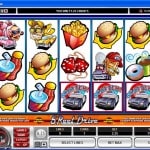 5 Reel Drive | 20 | | | | |
 Tomb Raider | 20 | | | | |
 Secret Admirer | 20 | | | | |
 Agent Jane Blonde | 20 | | | | |
 Hellboy | 20 | | | | |
Table games
| Game | Multihand | Split |
|---|---|---|
 Vegas Strip Blackjack Gold | | |
 Classic Blackjack Gold | | |
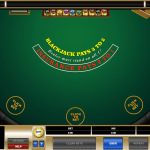 Multi-hand Blackjack Classic | | |
| Game | Double Zero | Jackpot |
 Premier Roulette | | |
 Euro Roulette Gold | | |
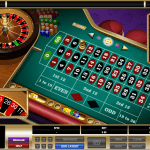 American Roulette by Microgaming | | |
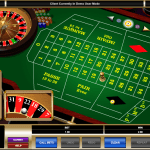 French Roulette by Microgaming | | |
Video poker
| Game | Wild | Multihand |
|---|---|---|
 Deuces & Joker | | |
 Jacks or Better by Microgaming | | |
 Joker Power Poker | | |
 All Aces | | |
Recent and upcoming developments
- 27 August 2021: single-event sport betting becomes lawful for provinces to offer.
- 4 April 2022: Ontario’s regulated competitive iGaming market opens.
- 15 May 2026: Ontario launches BetGuard, a centralised self-exclusion tool for regulated online gambling.
- 12 November 2025: the Court of Appeal for Ontario finds that international player pooling would be lawful (2025 ONCA 770); provincial lottery corporations appeal to the Supreme Court of Canada.
- 13 July 2026: Alberta launches its licensed, regulated iGaming market.
- 1 September 2026: iGaming Ontario’s directory lists 49 operators and 84 websites.
- 7 October 2026: the Supreme Court of Canada hears the appeal on international player pooling; judgment is reserved.
Two questions dominate current debate. The first is whether other provinces will follow Ontario and Alberta in admitting private operators, or keep their monopolies, and whether the Supreme Court of Canada will allow regulated markets to pool players internationally. The second is how far provinces can reduce play on offshore sites without blocking powers. Readers should check provincial announcements for changes.
How to check a Canadian casino’s authorisation
Check the rules and authorised services for the province where you are located. For Ontario, match the exact website with iGaming Ontario’s operator directory; the directory separately explains OLG.ca’s position. For other provinces, use the relevant provincial authority or public operator identified above. A foreign licence, a Canadian-dollar cashier or a familiar software supplier is not proof of provincial authorisation.
Identify the business operating the site and read its account terms, withdrawal requirements and complaint procedure before registering. Verify any regulatory or testing seal through the organisation that issued it. A testing seal concerns its stated certification scope; it is not a substitute for checking the operator’s authorisation. Attractive design, large bonuses and a long trading history do not guarantee that funds or personal information are protected.
Check payment eligibility, fees, currency conversion and payout routes separately, using the deposit and withdrawal guidance above. An accepted deposit method may not support withdrawals. Review promotion restrictions before opting in, and keep records of payments and requests for help. Customer support can explain procedures, but a quick reply or a high advertised return does not prove that a casino is safe.
Use official account and support channels, protect passwords and approval codes, and review the site’s privacy information. Do not rely on an absolute promise that information is never shared: payment processing, identity checks and legal obligations can involve other organisations. Licensing and security measures reduce some risks; they do not eliminate the risk of gambling losses.
Sources and further reading
- Government of Canada, Criminal Code, section 207: Permitted lotteries (accessed 5 October 2026).
- Government of Canada, Criminal Code, section 201: Keeping gaming or betting house (accessed 5 October 2026).
- Department of Justice Canada, Government of Canada announces coming-into-force date of Criminal Code amendments on single event sport betting (August 2021).
- Alcohol and Gaming Commission of Ontario, Player support and information: online gambling (iGaming) and sport and event betting (accessed 5 October 2026).
- Alcohol and Gaming Commission of Ontario, Standards, Acts and Regulations (Internet Gaming) (accessed 5 October 2026).
- iGaming Ontario, Operator directory (as of 1 September 2026).
- iGaming Ontario, Monthly market performance report (accessed 5 October 2026).
- Canadian Gaming Association, BetGuard launches as Ontario’s centralized self-exclusion tool (15 May 2026).
- Canadian Gaming Association, Alberta’s iGaming market: competitive, safe and legal (13 July 2026).
- Kahnawà:ke Gaming Commission, About the Commission (accessed 5 October 2026).
- Kahnawà:ke Gaming Commission, Interactive gaming permit holders (accessed 5 October 2026).
- British Columbia Lottery Corporation, Who we are (accessed 5 October 2026).
- Loto-Québec, Loto-Québec corporate site (accessed 5 October 2026).
- ConnexOntario, Mental health, addiction and problem gambling services (accessed 5 October 2026).
- Government of Alberta, iGaming in Alberta: fact sheet (January 2026).
- Supreme Court of Canada, Case 42141: Atlantic Lottery Corporation et al. v. Attorney General of Ontario (accessed 21 October 2026).
- Alcohol and Gaming Commission of Ontario, AGCO to ban athletes in Ontario’s igaming advertising to protect minors (29 August 2023).
Casino listings for players in Canada
The listings below are generated from our casino database. They do not by themselves show that an operator is authorised in any Canadian province or territory. Lawful online casino gambling is offered through provincial bodies. In Ontario it is offered through operators registered with the AGCO and contracted with iGaming Ontario, which you can check in iGaming Ontario’s operator directory; in Alberta, check with AGLC. A Kahnawà:ke or other overseas authorisation does not establish provincial authorisation.

888 Casino
100% up to
€200

Slots.lv
100% up to
$2,000
+ 20 Spins
CasinoChan
50% up to
€100
+ 30 Spins
Tsars Casino
100% up to
€300
+ 100 Spins

Casino Extreme
200 Spins

Slot Hunter
20% up to
∞

Casoo Casino
100% up to
$/€300
+ 100 Spins
7Bit Casino
20% up to
∞

22Bet Casino
100% up to
$/€300
+ 30 Spins

Lucky Tiger Casino
No Deposit Bonus
$ 55
Shazam Casino
Exclusive No Deposit Bonus
$ 50
Casino Brango
500% up to
$/€100
+ 500 Spins

1Red Casino
20% up to
∞

Omni Slots
100% up to
€300
+ 50 Spins

BitStarz Casino
100% up to
₿1
+ 180 Spins
Rich Palms Casino
250% up to
∞

Highway Casino
$ 30

Guts Casino

Mr Green Casino
200% up to
$/€100
+ 50 Spins
King Billy Casino
13% up to
∞
Yabby Casino
202% up to
∞
LOKI Casino
50% up to
€500
+ 60 Spins
Casino Classic
1 Spins

Sloto'Cash Casino
35% up to
∞
Uptown Aces
250% up to
∞
Casumo
100% up to
$/€300
+ 50 Spins

Fastpay Casino
10% up to
∞
Fair Go Casino
200% up to
∞
Betsafe Casino
100% up to
€100
+ 150 Spins

LeoVegas
50 Spins
Rizk Casino

Videoslots.com
100% up to
$/€200
PlayCroco Casino
300% up to
∞
+ 60 Spins

Wildz Casino
100% up to
€500
+ 200 Spins

High Flyer Casino
Sports Interaction Casino (SIA)
Zodiac Casino
$ 80

Vegas Casino Online
$ 20

Fruits4Real
125% up to
€125
+ 60 Spins

Las Vegas USA Casino
No Deposit Bonus
$ 20

CasinoCasino
100% up to
€100
GunsBet Casino
60% up to
$/€300
+ 20 Spins

EnergyCasino
100% up to
$/€200
+ 400 Spins

Omni Casino
100% up to
$/€250
Slots Plus
No Deposit Bonus
$ 20
Sun Palace Casino
No Deposit Bonus
$ 20
Casilando
10 Spins

Oshi Casino
100% up to
∞
+ 150 Spins
Gold Prize Casino
10% up to
$100

Casino Max
100% up to
∞
Slots Empire
230% up to
$7,500
Red Dog Casino
Black Lotus Casino
300% up to
$7,000
+ 45 Spins
El Royale Casino
230% up to
∞

Slotsroom Casino
350% up to
∞
+ 15 Spins

TonyBet Casino
100% up to
$/€750
+ 25 Spins
EmuCasino
100% up to
∞
Luxury Casino
100% up to
$/€150

CasinoExtra
100% up to
$/€50
+ 100 Spins

House of Jack Casino
100% up to
€500
+ 200 Spins

Jackpot Capital
25% up to
∞

Lucky31
100% up to
$/€100

Royal Panda
100% up to
$/€1,000
Villento Casino
100% up to
$/€150

PokerStars Casino

Lucky Creek
50 Spins

Spinfinity Casino
350% up to
∞
+ 15 Spins

Goodman Casino
120% up to
$/€500
+ 125 Spins
Everygame Casino
125% up to
$1,000

Golden Tiger Casino
100% up to
$/€100
BlackJack Ballroom
100% up to
$/€150

Slotastic
400% up to
∞
+ 20 Spins

William Hill Casino
€ 1,000
+ 200 Spins
Yeti Casino
10% up to
∞

Scatters Casino
100 Spins

Las Atlantis Casino
$ 2,500
Ripper Casino
25% up to
∞

North Casino
100% up to
$/€100
SlotsPalace Casino
25% up to
$/€200

Eddy Vegas Casino
30% up to
∞

Charmius
10% up to
∞

Casino Action
100% up to
$/€150
10bet Casino
100% up to
£25
Cherry Jackpot
400% up to
∞
+ 20 Spins
Fun Casino
100 Spins
Grande Vegas
150% up to
$300

Roaring 21 Casino
400% up to
∞
+ 20 Spins

21 Casino
21 Spins
Playzee Casino
100% up to
$/€300
+ 100 Spins

Dreamz Casino
10% up to
∞
Treasure Mile
200% up to
$/€4,000
+ 50 Spins

Grand Eagle
200% up to
$5,500
+ 30 Spins
Ozwin Casino
$ 10
LadyLuck Casino
100 Spins

PowerPlay
100% up to
$/€200
G'Day Casino
100% up to
€100
+ 25 Spins

PlayOJO Casino
50 Spins

Grand Mondial

DBbet Casino
100% up to
€100

777 Casino
100% up to
$/€20
Casino Mate
100% up to
$/€200
+ 20 Spins

Cadoola Casino
25% up to
$/€200
Dafabet Casino
100% up to
$140
Syndicate Casino
100% up to
€225

MELBET Casino
50% up to
€350
+ 30 Spins

Slot Planet
100% up to
€222
+ 22 Spins

Nomini Casino
100% up to
€500
+ 200 Spins

iLucki Casino

Wazamba
50% up to
∞
+ 200 Spins

Neon54 Casino
25% up to
$/€200

BetOnline Casino
100 Spins

Betway Casino
150 Spins

Grand Rush
100% up to
$1,000

GetSlots Casino

RedCherry Casino
20% up to
∞

CasinoClic
100% up to
€200
+ 30 Spins

Jazz Casino
10% up to
$250

Betmaster Casino
 Curaçao Gambling Regulator Plans In-House Portal After Breach
 ACMA Warns Robinson and Mathieson Over Vegastars Promotions
 Booming Games Moves Ontario Titles to 93.5% RTP
 Spain’s Licensed Casinos Capture 95.6% of Interest
 Wildz Group Confirms Finnish Licence Before Market Opens Next July