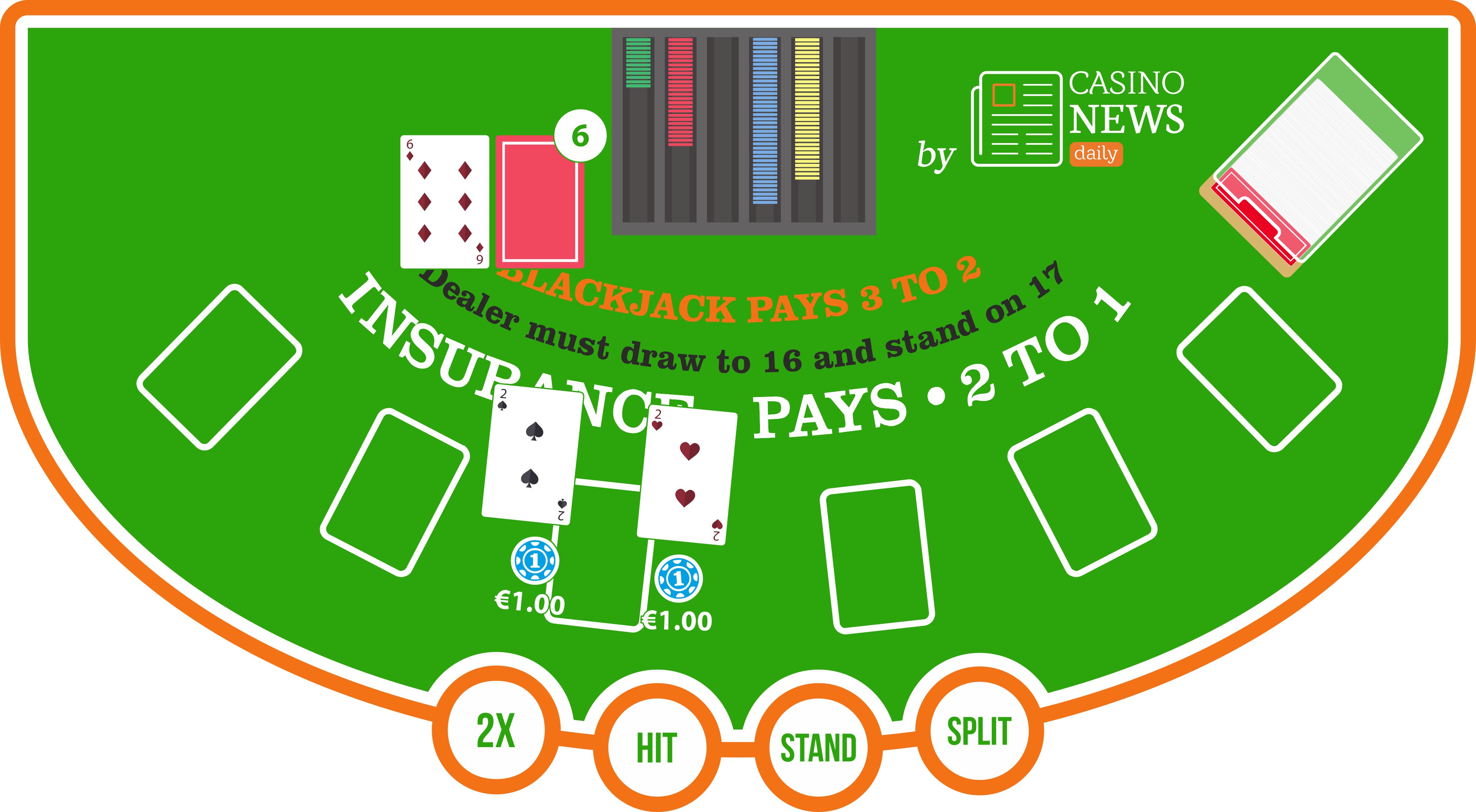




 In short: Under standard multi-deck basic strategy, always split aces and eights and never split tens or fives. Split 9s against 2 to 6, 8 and 9, and 7s against 2 to 7. When doubling after a split is allowed, also split 6s against 2 to 6, 2s and 3s against 2 to 7, and 4s against 5 or 6.
 As we’ve already explained in the introductory articles, when you are dealt a pair or two 10 cards, regardless of their face, you have the opportunity to split the hand into two separate ones and each of the new hands is played like an ordinary one. There are, of course, rule variations that for example limit the number of resplits or do not permit the resplitting of aces, but in general, they are played like an ordinary hand.
Best Online Blackjack Bonuses for Australians

Sloto'Cash Casino
100% up to
$500

Shazam Casino
$ 50

Lucky Tiger Casino
$ 55

Slots Plus
$ 20

Rich Palms Casino
250% up to
∞

Miami Club Casino
100% up to
$100

Lincoln Casino
$ 18

Liberty Slots Casino
$ 18

Bovada Casino
100% up to
$1,000

Ignition Casino
200% up to
$100
As with every other scenario in basic strategy, the decision of whether to split a certain pair or not depends on the pair itself and its relevance to the dealer’s up-card.
Don’t split 10s
Splitting a 10-10 hand defies all logic unless you are a card counter. Thus, for the employers of basic strategy, you should never ruin a near-perfect hand. Simple math calculations show what a minimal chance the dealer has of getting a blackjack or a multiple-card 21 against your 10 -10.
Card counters tend to split 10s once they have identified a situation in which splitting their hand gives them a further advantage in the game. If you are not counting cards, you have no reason to split 10s.

Splitting 9s
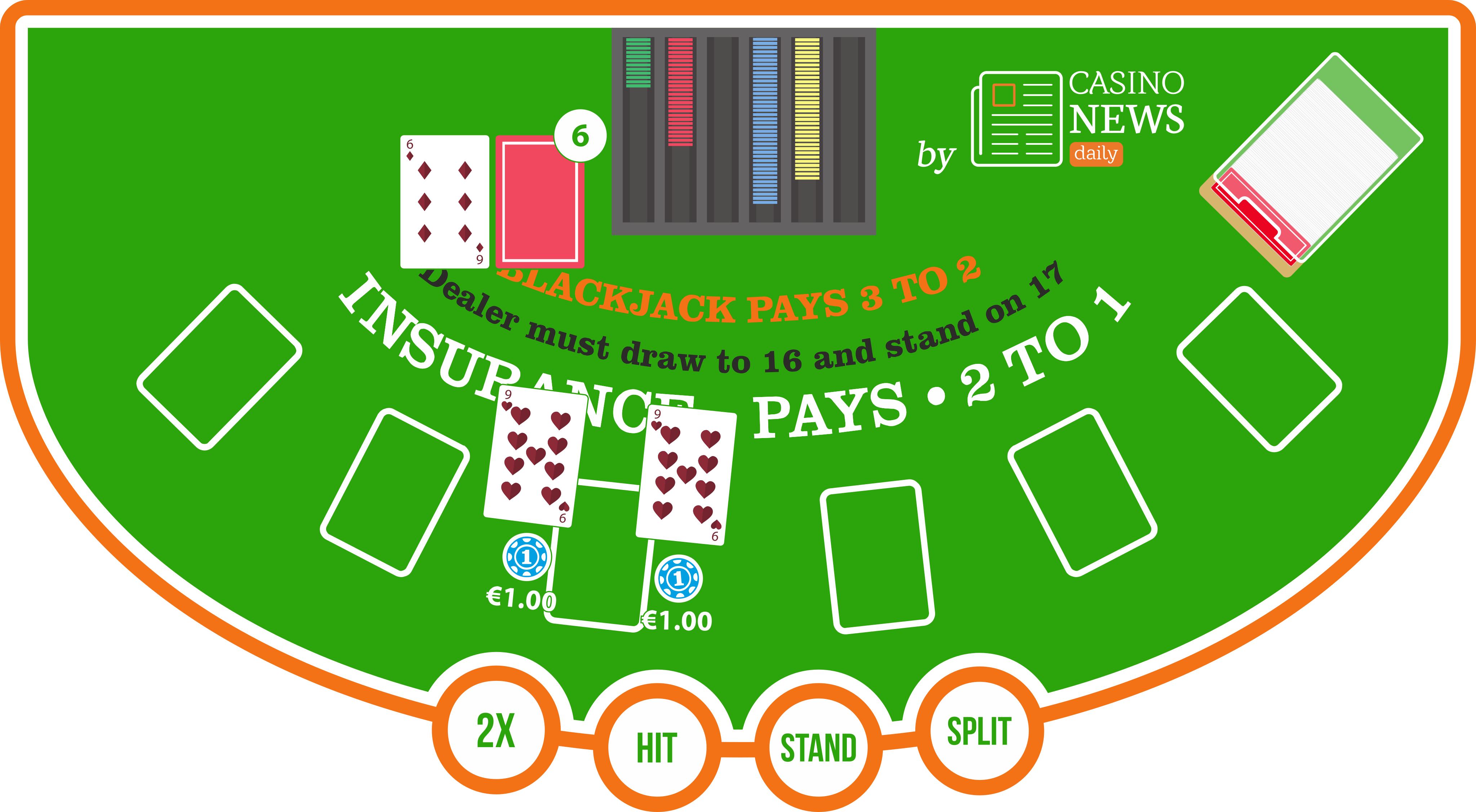
According to basic strategy, you should split nines against dealer 2 through 6, 8 and 9 in common multi-deck basic strategy, and stand against 7, 10 and ace. The reason is that if the dealer holds a seven, he stands a great chance of holding a 10 hole card and will stand on his hard 17, thus your 9-9 will win.
Even if the dealer’s hole card is not 10, he stands a significant chance of getting a stiff hand (with 9, 8, 7, 6, 5), presenting a high probability of going bust.
Splitting your 9s against the dealer’s 9 is a good choice because your 18 can easily be beaten by a 10 hole card.
Splitting 8s
A pair of eights makes a hard 16. Splitting is usually the basic-strategy choice in standard games because two hands beginning at eight can have a better expected result than keeping the pair together. It requires another wager and does not guarantee that either hand will win.
The decision can change with surrender and dealer-blackjack rules. Our guide to splitting eights in blackjack explains the reasoning and why “assume a ten” is not a sound way to derive basic strategy.

Splitting 7s and 6s
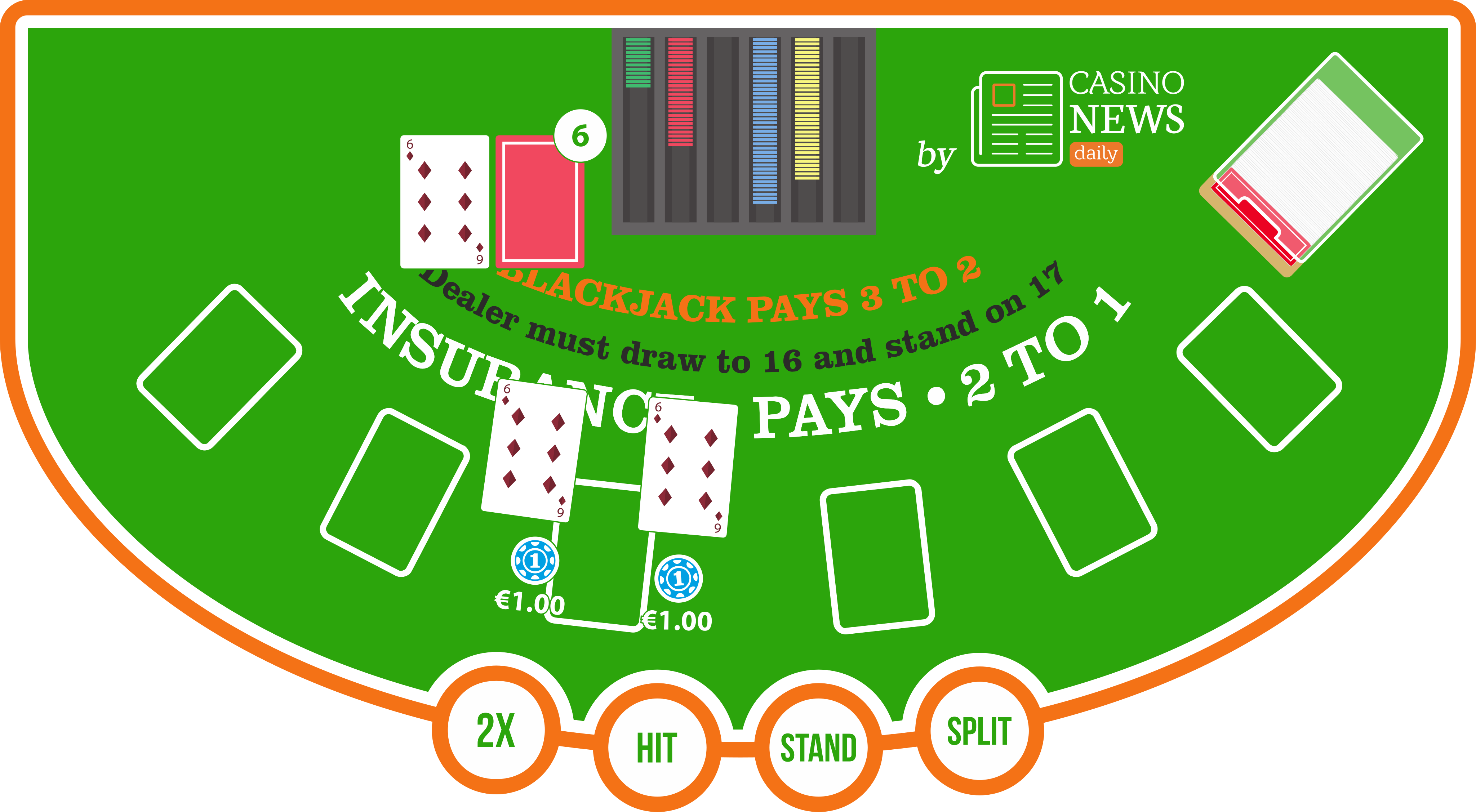
Sixes and sevens do not have identical splitting rules. In common multi-deck games with doubling after a split, split sixes against 2 through 6 and sevens against 2 through 7. Match the strategy to the table before applying these ranges. First, 7s and 6s are terrible starting hands (stiff) where you can easily get busted upon hitting. Meanwhile, if the dealer holds a 2 through 7, he stands an increased chance of getting a stiff hand. Thus, it would be wise to try your luck with a better hand, thus split, while also hoping for a dealer’s stiff.
Don’t split 5s
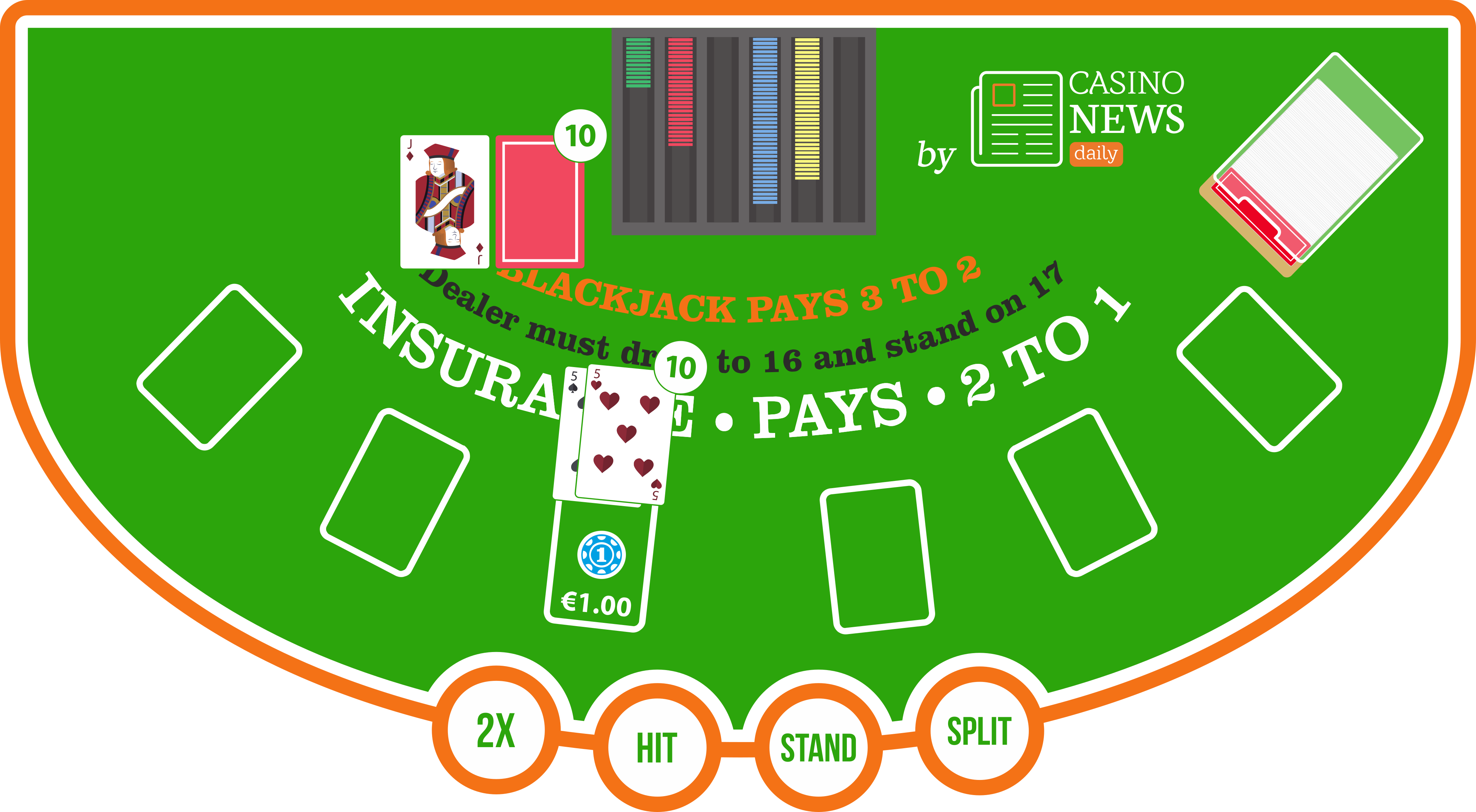
Splitting 5s, just as splitting 10s, should be avoided in all common basic-strategy situations. A 5-5 hand presents a good opportunity to double down as you stand a great chance of getting a high-range hand (18-21).
Meanwhile, if you split the 5s, you will be left with two hands that can easily become stiff (all 10s, all 9s, all 8s and all 7s will make a stiff hand). Also, the opportunity for those two hands to be doubled down will require another 5 or a 6 (for a total value of 10-11), and two 5s have already been drawn out of the deck.

Blackjack Rules
More Blackjack Rules/Variations

Blackjack Basic Strategy

Universal Strategy for Blackjack
Splitting Pairs
Splitting 4s is trickier
Splitting a 4-4 hand generally depends on whether doubling down after splitting is allowed. In common multi-deck games with DAS, split fours against a dealer 5 or 6; do not extend that rule automatically to a dealer 4. If after splitting you hit a 5, 6, 7 or an Ace, you are presented with a good opportunity to double down while the dealer is very likely to get a stiff hand. However, if double down after split is not permitted, a 4-4 hand should not be split since a starting hand of 8 is better than two starting hands of 4.

Splitting 2s and 3s
If double down after split is allowed, 2-2 and 3-3 hands are split against a dealer’s up-card of 2 through 7. There are a few reasons for that. First, hitting a 2 or a 3 provides a good chance of receiving a hand to double down against the dealer’s weak up-card. Second, a pair of 2s or 3s make for a terrible starting hand since hitting a 10 (or a 9 for 3s) will get you a stiff hand. Third, with an up-card of 2 through 7, the dealer stands a good chance of getting a stiff hand as well.