Legal casino gambling age in Costa Rica
Costa Rica has no single gambling statute and no general gambling regulator. A general prohibition of games of chance dates from 1922. Casinos are allowed as a complement to hotels under a 2008 regulation and are taxed under a 2012 law. Lotteries, sports betting and other games of chance, apart from casinos, are reserved by law to a public body, the Junta de Protección Social (JPS). There is no licence for online casinos or online sports betting. Even so, the country has long hosted companies that run betting and gaming websites for customers abroad. They operate under ordinary commercial and municipal permits and pay a special tax, which is not a gaming licence. This guide explains the statutes, the casino rules, the JPS monopoly, taxation, responsible gambling and the reform bills of 2025 and 2026.
Key points
- The Ley de Juegos (Law No. 3 of 31 August 1922) prohibits games in which loss or gain depends on chance, subject to later exceptions for casinos and for the state lottery body.
- Casinos may operate only inside hotels, with authorisation from the Ministry of Public Security, under Executive Decree 34581 of 2008. Law 9050 of 2012 restricts new casinos to hotels of four stars or more.
- Law 8718 of 2009 gives the JPS the exclusive right to run all lotteries, sports betting, video lotteries and other games of chance in Costa Rica, except casinos.
- There is no licence for online gambling. Law 9050 taxes casinos and companies that process electronic bets, but specialist lawyers stress that this tax is not a gaming licence.
- Two bills to make the JPS the regulator of all gambling and to create prison terms for illegal operators were filed in 2025 and 2026. The first received a negative committee report in January 2026. The second, filed in May 2026, was still pending when this guide was reviewed.
Last reviewed: 6 October 2026.

Top Rated Online Casinos for Costa Rica

Vegas Casino Online
Sign Up400% up to
$500

Liberty Slots Casino
Sign Up100% up to
$259

Sloto'Cash Casino
Sign Up100% up to
$500
Shazam Casino
Sign Up250% up to
$2,500
Red Stag Casino
Sign Up275% up to
$550
+ 100 Spins

Miami Club Casino
Sign Up100% up to
$100
Vegas Casino Online
Sign Up400% up to
$500
Liberty Slots Casino
Sign Up100% up to
$259
Sloto'Cash Casino
Sign Up100% up to
$500
Shazam Casino
Sign Up250% up to
$2,500
Red Stag Casino
Sign Up275% up to
$550
+ 100 Spins
Miami Club Casino
Sign Up100% up to
$100
Historical development
The starting point is the Ley de Juegos, Law No. 3 of 31 August 1922. The Office of the Attorney General (Procuraduría General de la República, PGR) summarised its structure in opinion C-151-98 of 30 July 1998. The law prohibits games in which “loss or gain depends on luck or chance” and permits card games played without stakes, together with games of physical skill such as billiards, dominoes and chess. Any later legal gambling activity therefore needed a specific legal basis.
Two such bases developed during the twentieth century. The first is the state lottery. The JPS, which has operated for more than 140 years according to a 2026 Bloomberg investigation summarised by Focus Gaming News, received its current legal framework in Law 8718, published on 18 February 2009. Earlier laws on the lottery include Law 1387 of 1951 and Law 7395 of 1994, as recalled in the explanatory statement of bill 21.632 of 2019. The same document notes that the Constitutional Chamber of the Supreme Court upheld the JPS monopoly in resolution 2003-00558.
The second is casino gaming linked to tourism. Law 7088 of 1987 introduced a tax on casinos and required them to be located in first-category hotels, according to the preamble of the Casino Gaming Regulation of 2008. Costa Rica also became a base for companies that took bets from customers in other countries, first by telephone, as the name of Law 9050 (“linking calls to electronic bets”) still reflects, and then over the internet. The law never created a licence for this activity. In 2012 the legislature chose to tax it instead, through Law 9050.
Legal framework

The main legal sources are:
- Ley de Juegos, Law No. 3 of 1922. Article 1 provides that “all games in which loss or gain depends on luck or chance are prohibited”. Article 2 permits card games “where there is no envite“, meaning no stake or raise. Article 4 punishes those who play prohibited games with a fine of 100 colones or 60 days’ arrest, doubled on a first repeat offence. Article 5 punishes whoever runs the game or acts as banker with 60 to 180 days’ arrest that cannot be commuted. Articles 8 to 11 have been repealed, and later amendments added rules on premises offering electronic and video games, including opening hours and municipal licences.
- Law 8718 of 2009, which renamed the Junta de Protección Social de San José as the Junta de Protección Social and set out its monopoly and the distribution of lottery profits (see below).
- Executive Decree No. 34581-MP-J-S-TUR-MSP-G of 16 June 2008, the Casino Gaming Regulation (Reglamento de Casinos de Juego).
- Law 9050 of 9 July 2012, the Law on the Tax on Casinos and Companies Linking Calls to Electronic Bets (Ley de Impuesto a Casinos y Empresas de Enlace de Llamadas de Apuestas Electrónicas). An implementing regulation was later issued by the Executive.
- Law 7786 on narcotics and money laundering, Article 15 bis. It lists casinos among the non-financial businesses that must register with the General Superintendency of Financial Entities (SUGEF) and apply anti-money laundering controls. SUGEF’s 2025 training material on Rule SUGEF 11-18 states that this covers casinos with games that require physical presence and those that “can be carried out by telematic or remote means”.
The Penal Code. We did not find a provision of the current Penal Code that specifically punishes the unauthorised organisation of games of chance. Bill 21.632, which would have created specific offences for unauthorised lotteries and games of chance, was archived in 2023 without being enacted (Delfino.cr). In June 2025 the then JPS president, Esmeralda Britton, described the applicable law as being “50 years old” with fines of about CRC 1,000 (around USD 2), according to Focus Gaming News. Both reform bills discussed below would create new criminal offences; bill 25.600 would add a new Article 249 bis to the Penal Code (G3 Newswire).
Regulator and licensing model
Costa Rica has no single gambling authority. Responsibility is split by product:
- Lotteries, sports betting and other games of chance: a legal monopoly of the JPS. A monopoly in this sense means that only the state body, or those it authorises, may lawfully offer the product.
- Casinos: authorised by the Minister of Public Security, with location limits under Law 9050 and tourism rules.
- Tax: collected by the General Directorate of Taxation of the Ministry of Finance under Law 9050.
- Local permits: issued by municipalities, which keep their powers to grant permits and licences under Article 6 of Law 9050.
The JPS monopoly
Article 2 of Law 8718 describes the JPS as a decentralised public body with its own legal personality and budget. It gives the JPS, “in exclusive form, the creation, administration, sale and commercialisation of all lotteries, both pre-printed and electronic, sports betting, games, video lotteries and other products of chance, in the national territory, except casinos”. Any concession or authorisation it grants to others needs a two-thirds board vote. It also has exclusive rights over raffles, except free promotional draws and raffles by charitable associations and foundations. Article 8 shares net lottery profits among social programmes.
The JPS reads this monopoly broadly. In November 2022 its president stated that “betting and every game of chance, except casinos, are exclusively the power of the JPS”, and warned the public against a betting website that was offering wagers on the football World Cup (Cibelae, 2022). The JPS sells the National Lottery and its Chances draws online through its own website, jpsenlinea.go.cr. Buyers must register with an identity document, and prizes are paid into a local bank account (El Financiero, December 2025). In 2021 the JPS announced a one-year pilot of online sports betting and digital games through private concessionaires (Semanario Universidad, March 2021). We could not confirm whether the pilot was implemented.
Casinos
The Casino Gaming Regulation defines a casino as premises authorised to offer permitted and duly approved games “as a service complementary to the hotel activity”. Its main rules are:
- Authorisation: the Minister of Public Security issues the operating authorisation, which specifies the gaming tables and machines allowed. The permit is issued in the name of the hotel (Article 5).
- Games: the regulation permits the games authorised by law rather than listing them (Article 3). Slot machines may operate only in casinos, must carry manufacturer certificates and must return at least 85% of stakes to players (Article 4).
- Location: the hotel must have at least 60 rooms. The casino may occupy no more than 15% of the hotel’s area, must be away from reception and the main entrance, and may have no direct access from the street (Article 12).
- Hours and access: casinos may open from 15:00 to 05:00 the next day (Article 10). Minors and intoxicated persons may not enter (Article 13).
The regulation’s three-star minimum was tightened by statute. Article 3 of Law 9050 allows casinos only in hotels rated four stars or more, with the casino again limited to 15% of the building. Article 7 protects casinos already operating in three-star hotels or outside hotels when the law came into force, provided they pay the tax. Operating an unauthorised table or machine carries a fine of ten base salaries per table or machine (Article 2). The base salary (salario base) is a statutory reference amount used to calculate fines and fees in Costa Rica.
Online gambling: what is permitted and how it is enforced
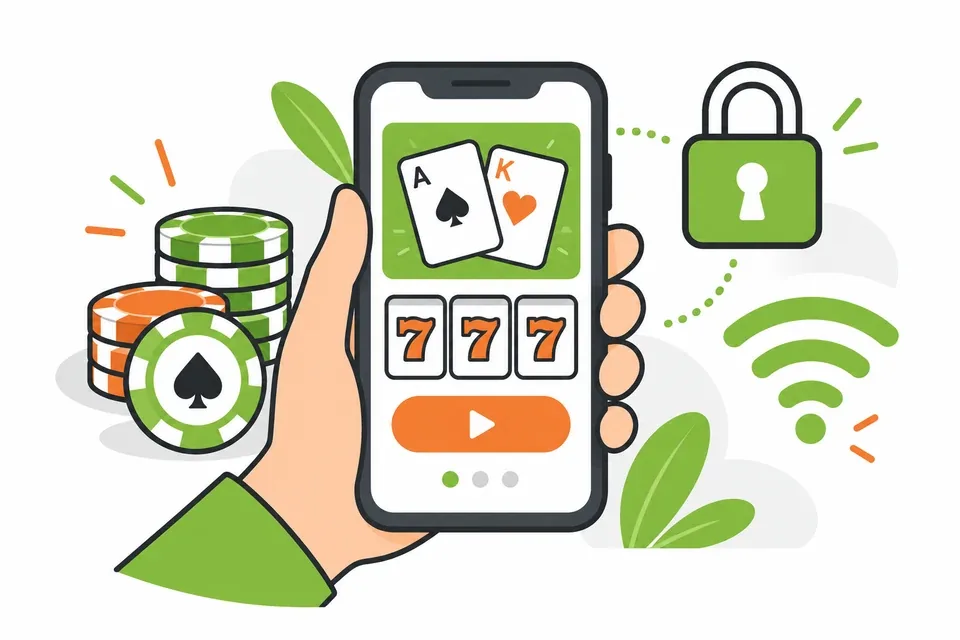
No Costa Rican authority issues a licence for online casinos or online sports betting. The Costa Rican law firm AG Legal stated in December 2025 that Costa Rica “does not offer a conventional online iGaming license comparable to major international licensing jurisdictions”. It added that Law 9050 “should not be presented as an online gaming license”. A Gambling Insider overview of 2025 reached the same conclusion: there is “no formal legal framework in Costa Rica that allows companies to operate online gambling or sports betting targeted at Costa Rican citizens”.
Companies based in Costa Rica
Many international betting and gaming companies have nonetheless based operations in Costa Rica. They typically incorporate a local company and obtain a municipal operating permit for data processing. According to Gambling Insider, these permits “do not explicitly authorise online sports betting or casino activities aimed at Costa Rican residents”. AG Legal describes the role of Costa Rican entities as support functions such as technology, operations and back office, with the regulated gaming activity carried on under licences from other jurisdictions.
Article 4 of Law 9050 taxes “companies engaged in the reception and processing of data that generate electronic bets”. As the Bufete de Costa Rica commentary of May 2026 points out, the law imposes a tax but neither authorises nor forbids service to Costa Rican residents. It does not legalise online gambling. The JPS takes the view that offering betting to people in Costa Rica breaches its monopoly. In a 2019 case, a locally based sports betting platform sued the JPS after the JPS told municipalities and media that the platform was illegal. The company relied on its Law 9050 tax status and municipal permits; the JPS on Laws 7395 and 8718 (Semanario Universidad, October 2019). We did not find a final judgment in that case.
Enforcement
Costa Rica has no statutory system for blocking gambling websites or payments. The JPS’s tools are largely public warnings and complaints to other authorities. The bill filed in May 2026 would allow geoblocking, meaning that internet providers would be required to stop users in Costa Rica from reaching unauthorised platforms (G3 Newswire). Casinos operating by remote means must register with SUGEF for anti-money laundering purposes (SUGEF). We found no specific rules on gambling advertising beyond the general prohibition on minors and the JPS warnings described above.
Position of players
The Ley de Juegos is the only statute we found that addresses players directly. Article 4 provides a fine of 100 colones or 60 days’ arrest for those who play prohibited games of chance (Ley de Juegos). The provision dates from 1922, its fine has not been updated, and we found no report of it being applied to anyone gambling online. Law 8718 and Law 9050 are addressed to operators and to the JPS, not to players. We found no record of players being prosecuted or fined for using foreign gambling websites. Equally, no Costa Rican law authorises such play, and the JPS describes unauthorised betting sites as illegal.
The practical consequence is a lack of protection. Gambling Insider notes that the consumer protection law (Law 7472) and the personal data protection law (Law 8968) cannot be enforced effectively against platforms that “fall outside national jurisdiction”. Lawful options are the JPS’s own products and casinos in authorised hotels.
Taxation
Operators
Law 9050 imposes three monthly taxes on casinos at the same time:
- 10% of the net income derived from operating the casino;
- 60% of one base salary for each authorised gaming table; and
- 10% of one base salary for each authorised slot machine.
Casinos must file and pay within the first 15 days of the following month. Companies that receive and process electronic bets pay an annual tax, in quarterly instalments, set by the number of employees: 57 base salaries for up to 50 employees, 85 base salaries for 51 to 99 employees, and 113 base salaries for 100 or more. The General Directorate of Taxation administers both taxes. The revenue is earmarked for citizen security, including prison infrastructure and police equipment.
Players
Costa Rica does not tax lottery prizes. La Nación reported in December 2024 that no tax is charged on lottery prizes, recalling that former president Carlos Alvarado had argued Costa Rica was one of the “few countries” not to tax them. In 2020 the government proposed bill 22.354, which would have imposed a 25% tax on prizes above a threshold. A revised text would have exempted casinos and electronic betting, which already pay their own tax (El Financiero, September 2021). The bill was archived in 2022, and the Finance Minister said in December 2024 that the current administration would not revive it. We found no specific tax on casino winnings or on winnings from foreign websites.
Consumer protection and responsible gambling
Responsible gambling is the least developed part of Costa Rica’s framework. In 2008 the Ministry of Health declared gambling disorder “a problem of health and national public interest” by executive decree (La Nación, July 2008). The same report noted that the National Psychiatric Hospital treated severe cases, that Gamblers Anonymous (Jugadores Anónimos) groups met in the country, and that prevalence data were lacking.
We found no national self-exclusion register and no dedicated national gambling helpline. Protection on the regulated side rests on specific rules: casinos must exclude minors and intoxicated persons, slot machines must return at least 85% of stakes, and JPS online accounts require identity checks. The JPS is working towards higher levels of the World Lottery Association’s responsible gaming certification and received training for this from Cibelae, the Ibero-American lottery association, in February 2026 (Yogonet, February 2026). The bill filed in May 2026 would add an absolute ban on players under 18 and identity verification across all regulated gambling (Focus Gaming News, May 2026). Our responsible gambling guide sets out general steps for keeping gambling under control.
Recent and upcoming developments
- 2019 to 2023: bill 21.632 archived. A bill to prohibit lotteries and games of chance not authorised by the JPS, with fines, prison terms of six months to two years for vendors and promoters, four to eight years for financiers and administrators, and up to ten years in aggravated cases, was archived on 2 October 2023 after the Legislative Assembly refused, by 29 votes to 16, to extend its four-year deadline (Delfino.cr).
- June 2025: bill 25.057. The JPS presented the “Law to strengthen the powers of the Junta de Protección Social and regulate games of chance in the framework of security and the fight against organised crime” on 24 June 2025 (Yogonet). It would regulate digital platforms, mobile applications and electronic gaming systems, require an enabling title (título habilitante) for authorised operators, and provide fines and prison terms of two to six years for illegal operators (Focus Gaming News; Delfino.cr, November 2025). A substitute text was approved in the Permanent Commission on Security and Drug Trafficking on 27 November 2025, according to Delfino.cr.
- January 2026: negative committee report. On 23 January 2026 the same commission voted five to three against bill 25.057, sending it to the plenary with a negative report (Yogonet). We found no report that the plenary revived it.
- May 2026: bill 25.600. After the new Legislative Assembly took office, Esmeralda Britton, now a deputy and a former JPS president, filed bill 25.600 on the strengthening and modernisation of the JPS. It would make the JPS the sole regulator and supervisor of all forms of gambling, while it continues to operate lotteries, sports betting and video lottery products itself. It provides for software audits, algorithm certification, geoblocking of unlicensed platforms, and a new Article 249 bis of the Penal Code with two to six years’ imprisonment for unauthorised operation (G3 Newswire, May 2026; Focus Gaming News). We found no report of committee progress up to the date of review.
- Scale of the illegal market. The JPS estimates that about 53% of lottery and betting activity takes place outside its framework, costing social programmes around CRC 297 billion a year (G3 Newswire). A Bloomberg investigation summarised by Focus Gaming News in May 2026 put the illegal lottery market at more than USD 500 million a year. Both are estimates, not official statistics.
Casino listings for players in Costa Rica
The listings below are generated automatically from our casino database. They do not show that an operator is authorised in Costa Rica. No Costa Rican authority licenses online casinos, the JPS holds the legal monopoly over betting and games of chance other than land-based casinos, and the listings must not be read as an indication that online casino play is lawful or protected in Costa Rica.
Vegas Casino Online
No Deposit Bonus
$ 20
Liberty Slots Casino
No Deposit Bonus
$ 18

Slots.lv
100% up to
$2,000
+ 20 Spins
Sloto'Cash Casino
100% up to
∞

Casino Extreme
200 Spins

Bovada Casino
100% up to
$1,000

Casino Brango
500% up to
$/€100
+ 500 Spins
Shazam Casino
Exclusive No Deposit Bonus
$ 50

Lucky Tiger Casino
No Deposit Bonus
$ 55
Red Stag Casino
25% up to
∞

Rich Palms Casino
250% up to
∞
Miami Club Casino
50 Spins

Highway Casino
$ 30

Lincoln Casino
No Deposit Bonus
$ 18

Yabby Casino
202% up to
∞

DuckyLuck Casino
500% up to
$/€2,500
+ 150 Spins
PlayCroco Casino
300% up to
∞
+ 60 Spins

Fair Go Casino
200% up to
∞

Uptown Aces
250% up to
∞

Las Vegas USA Casino
No Deposit Bonus
$ 20

Drake Casino
300% up to
$2,000

Sun Palace Casino
No Deposit Bonus
$ 20

Slots Plus
No Deposit Bonus
$ 20

Ignition Casino
200% up to
$100
.jpg?x83485)
Everygame Classic Casino
200% up to
∞
+ 50 Spins

Slots And Casino
500% up to
∞
+ 150 Spins

Slotsroom Casino
400% up to
∞
+ 20 Spins

Casino Max
400% up to
∞
+ 20 Spins

El Royale Casino
230% up to
∞
Black Lotus Casino
300% up to
$7,000
+ 45 Spins

Red Dog Casino

Slots Empire
230% up to
$7,500

Lucky Creek
50 Spins

Spinfinity Casino
400% up to
∞
+ 20 Spins

Jackpot Capital
25% up to
∞

Ripper Casino
25% up to
∞

Las Atlantis Casino
$ 2,500

Slotastic
250% up to
∞

Grand Eagle
200% up to
$5,500
+ 30 Spins

Cherry Jackpot
400% up to
∞
+ 20 Spins
Grande Vegas
150% up to
$300
LadyLuck Casino
100 Spins

Roaring 21 Casino
400% up to
∞
+ 20 Spins

Ozwin Casino
$ 10
Treasure Mile
200% up to
$/€4,000
+ 50 Spins

TropicanaCasino

Borgata Online Casino

BetOnline Casino
100 Spins

Grand Rush
200% up to
$4,000
+ 40 Spins

Jazz Casino
10% up to
$250

BetMGM Casino NJ
100% up to
$1,000
Sources and further reading
- Procuraduría General de la República, Dictamen C-151-98 (Ley de Juegos N.º 3 de 31 de agosto de 1922) (1998).
- Asamblea Legislativa (vLex Costa Rica), Ley N.º 3, Ley de Juegos (1922, as amended).
- Asamblea Legislativa (Imprenta Nacional, Alcance 9 a La Gaceta 34), Ley N.º 8718, Autorización para el cambio de nombre de la Junta de Protección Social y establecimiento de la distribución de rentas de las loterías nacionales (2009).
- Asamblea Legislativa (SCIJ), Ley N.º 9050, Ley de Impuesto a Casinos y Empresas de Enlace de Llamadas de Apuestas Electrónicas (2012).
- Instituto Costarricense de Turismo, Reglamento de Casinos de Juego, Decreto Ejecutivo N.º 34581-MP-J-S-TUR-MSP-G (2008).
- Superintendencia General de Entidades Financieras (SUGEF), Capacitación Acuerdo SUGEF 11-18 (2025).
- Asamblea Legislativa, Expediente 21.632: Prohibición de actividades relacionadas con loterías y juegos de azar no autorizados por la Junta de Protección Social (2019).
- Delfino.cr, Gobierno lamenta archivo de proyecto contra loterías ilegales (2023).
- Gutiérrez Acevedo, G. (AG Legal), Costa Rica Gambling License: What’s Possible (2025).
- Gambling Insider, Costa Rica: Effective regulation is the industry’s path forward (2025).
- Bufete de Costa Rica, Ley de Impuesto a Casinos y Empresas de enlace de llamadas a apuestas electrónicas (Ley N.º 9050) (2026).
- Cibelae, Costa Rica: la Junta de Protección Social advierte sobre páginas de apuestas ilegales (2022).
- Semanario Universidad, Sitio de apuestas deportivas y la Junta de Protección Social en pugna (2019).
- Semanario Universidad, Junta de Protección Social ofrecerá apuestas en línea (2021).
- El Financiero, Guía práctica: así puede comprar lotería de la JPS en línea (2025).
- Yogonet, Costa Rica: la JPS presenta un proyecto de ley para fortalecer la institucionalidad y combatir el juego ilegal (2025).
- Focus Gaming News, Costa Rica busca frenar la lotería ilegal con una reforma que endurece penas y habilita regularización (2025).
- Delfino.cr, JPS pide a la Asamblea priorizar proyecto para penalizar operación ilegal de loterías, juegos de azar y apuestas (2025).
- Yogonet, Costa Rica: rechazan el proyecto que busca fortalecer la JPS y combatir el juego clandestino (2026).
- G3 Newswire, Lawmaker files sweeping overhaul to criminalise illegal gambling in Costa Rica (2026).
- Focus Gaming News, Impulsan una reforma para modernizar la JPS de Costa Rica y endurecer controles contra el juego ilegal (2026).
- Focus Gaming News, Informe advierte sobre el crecimiento de las loterías clandestinas en Costa Rica (2026).
- La Nación, Costa Rica es una excepción en impuestos a premios de lotería (2024).
- El Financiero, Impuesto a premios por juegos de azar se cobraría cuando superen ¢462.200, con nueva propuesta (2021).
- La Nación, Costa Rica combatirá la adicción a los juegos de azar (2008).
- Yogonet, Cibelae capacita a la JPS de Costa Rica para fortalecer su certificación en Juego Responsable ante la WLA (2026).