Legal casino gambling age in El Salvador

El Salvador regulates lotteries, online games and sports betting through a single state body, the Lotería Nacional de Beneficencia (LNB, National Charity Lottery). Under an organic law adopted in December 2021, the LNB is both the country’s lottery operator and the authority that licenses, supervises and sanctions games of chance operated by others. Private companies may offer online games and sports betting to Salvadoran players only under an LNB licence, must use a website under the national .sv domain, and pay licence fees and an annual levy to the LNB. Before 2021 there was no comprehensive national gambling statute.
Key points
- The current legal basis is the Ley Orgánica de la Lotería Nacional de Beneficencia, Legislative Decree No. 251 of 21 December 2021, published in the Diario Oficial No. 244, Volume 433, on 22 December 2021, which replaced the LNB’s 1960 organic law (Executive Decree No. 16 of 2022).
- The LNB is regulator and operator at once: the law gives it regulatory, supervisory, inspection and sanctioning powers over games of chance, while municipalities may authorise only paper (cartón) lotteries (Focus Gaming News, December 2021).
- Licences run for up to ten years. The 2022 regulation sets an initial fee of US$100,000 to US$250,000 depending on investment, a US$25,000 renewal fee and, from the second year, an annual payment of up to 25% of gross income less prizes (Regulation of the LNB Organic Law).
- The law empowers the LNB to order internet service providers to block websites offering unauthorised games; no provision penalising players was found in the text reviewed.
- The LNB holds World Lottery Association Level II responsible gaming certification (2023), but no national self-exclusion register or gambling helpline was identified (LNB, responsible gaming).
Last reviewed: 7 October 2026.
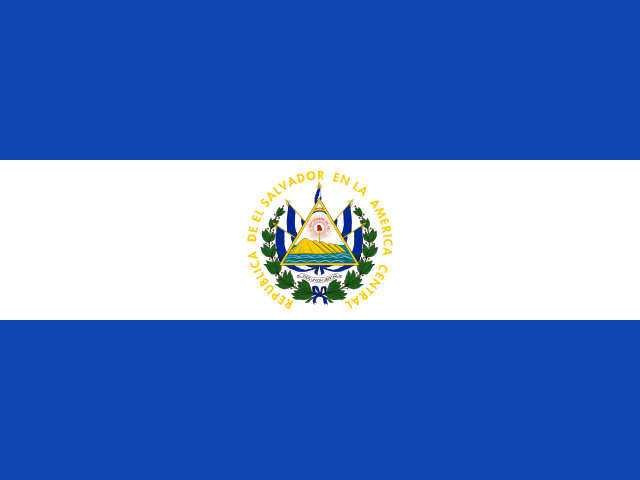
Online casinos for El Salvador
We may earn commission from links. Commission and paid placements do not affect casino ordering. Affiliate disclosure · How these listings work.

Vegas Casino Online
Sign Up400% up to
$500

Liberty Slots Casino
Sign Up100% up to
$259

Sloto'Cash Casino
Sign Up100% up to
$500
Shazam Casino
Sign Up250% up to
$2,500
Lucky Tiger Casino
Sign Up250% up to
$1,000
Casino Brango
Sign Up500% up to
$/€100
+ 500 Spins
Vegas Casino Online
Sign Up400% up to
$500
Liberty Slots Casino
Sign Up100% up to
$259
Sloto'Cash Casino
Sign Up100% up to
$500
Shazam Casino
Sign Up250% up to
$2,500
Lucky Tiger Casino
Sign Up250% up to
$1,000
Casino Brango
Sign Up500% up to
$/€100
+ 500 Spins
Historical development
Lawful gambling in El Salvador has long been associated above all with the national lottery. The LNB marked its 156th anniversary in July 2026, which places its origins in 1870 (Focus Gaming News, 2026). Its modern legal basis for six decades was the Ley Orgánica de la Lotería Nacional de Beneficencia, Decree No. 3129 of 12 September 1960, published in the Diario Oficial No. 176, Volume 188, on 23 September 1960, which defined the LNB as an autonomous public institution whose purpose was to raise funds to help the state, especially in public health and social assistance (1960 Organic Law, Supreme Court legal database). Ordinary draws are held every Wednesday, and a whole ticket costs US$30, divided into 20 portions of US$1.50 (LNB, FAQ). El Salvador uses the US dollar, so all figures in this guide are in dollars.
Outside the lottery, the legal position of casinos and gaming machines was long unsettled. In 2009 the trade outlet Yogonet reported that the San Salvador municipal authorities were pursuing a venue that operated slot machines while holding only a restaurant permit, and quoted the municipality’s position that casinos were prohibited (Yogonet, April 2009). In May 2016 Focus Gaming News reported that deputies from different parties considered the existing rules insufficient, that there was no comprehensive national gaming law, that decisions on casinos were being taken by individual municipalities, and that the Supreme Court of Justice had held decrees of the Legislative Assembly ordering casino closures to be unconstitutional because the matter fell to municipalities (Focus Gaming News, May 2016). In June 2017 the same outlet reported that the Assembly was analysing a 55% tax on the profits of the country’s 26 casinos; according to deputy Mario Ponce, the initiative stemmed from United States Embassy concerns about money laundering (Focus Gaming News, June 2017). No evidence was found that this proposal was enacted.
Some secondary sources refer to a national “Ley de Juegos de Azar” with a decree number and an outright ban on slot machines. This review could not locate any such statute in official sources, and the contemporaneous reporting cited above describes the absence of a national gaming law before 2021. Statements of that kind should therefore be treated with caution.
The path to the 2021 reform was contested. SBC Noticias’s El Salvador news archive records that in March 2021 the LNB launched an online casino and sports betting site that generated controversy, followed by a request to the Attorney General’s Office (Fiscalía General de la República) to cancel the launch. The bill for a new organic law was presented at the end of November 2021. Focus Gaming News reported on 30 November 2021 that it would give existing operators 90 days to register their establishments with the LNB and six months to obtain permits and licences, failing which they would face immediate closure (Focus Gaming News, November 2021). On 20 December 2021 the same outlet reported criticism from Ruth López of the human rights organisation Cristosal and from the lawyer Francisco Bertrand Galindo, who argued that a retroactivity clause would validate contracts the LNB had signed without legal authority, including a lottery contract that the Public Ministry had challenged in December 2020, and that the LNB would become “judge and party” by regulating competitors while competing with them (Focus Gaming News, 20 December 2021). The Assembly approved the law with the votes of Nuevas Ideas, GANA and PCN deputies (Focus Gaming News, 23 December 2021).
After 2021 the LNB expanded its product range. On 26 July 2022 the Assembly approved, by 64 votes to 4 with 11 abstentions, an agreement with the Canadian Commercial Corporation (a Canadian Crown corporation) for a National Electronic Lottery; 10% of proceeds were to go to municipalities and 10% to sellers and institutional strengthening (SBC Noticias, July 2022). Sales began on 11 August 2023 at about 1,800 retail points under an agreement with a ten-year term (El Diario de Hoy, August 2023).
Legal framework

The Ley Orgánica de la Lotería Nacional de Beneficencia (2021)
The central instrument is the Ley Orgánica de la Lotería Nacional de Beneficencia, Legislative Decree No. 251 of 21 December 2021, published in the Diario Oficial No. 244, Volume 433, on 22 December 2021. An organic law is the statute that creates a public institution and defines its functions and powers. The 2021 law goes further than its predecessor: Article 6 makes the LNB the highest national authority for the regulation, control, supervision, inspection (fiscalización) and sanctioning of gaming, and Article 7 assigns to the LNB the regulation, supervision, organisation and exploitation of the lottery, sports forecasts and online games. Article 7 also provides that municipal authorities may authorise only paper lotteries (loterías de cartón), which Article 5 excludes from the law’s scope. Article 3 defines terms such as online games (juegos en línea, games of chance played electronically through websites or mobile applications), electronic lottery and slot machine (máquina tragamonedas).
Other provisions relevant to this guide include:
- Article 31, which distinguishes games played in person from games offered through electronic or digital systems;
- Article 39(m), which requires operators to include responsible gaming content in their marketing and advertising;
- Article 40, which requires internet operators to use domain names under .sv and to redirect connections from Salvadoran territory to that site;
- Article 41, which prohibits operators from, among other things, operating without a licence, committing fraud, participating in their own games, locating within 100 metres of schools or hospitals, and failing to pay prizes;
- Articles 49 to 52, which require a licence before operations begin, describe licences as revocable privileges creating no acquired rights, allow terms of up to ten years, and provide for a fee (canon) calculated as a percentage of initial investment or of the balance sheet, which may not exceed 30%.
The copy of the law reviewed for this guide, from the government transparency portal, was incomplete beyond Article 84, so the infraction categories, fine amounts and the final transitional and repeal provisions could not be checked against the text.
The 2022 implementing regulation
The Reglamento de la Ley Orgánica de la Lotería Nacional de Beneficencia, Executive Decree No. 16, was signed on 29 June 2022 and published in the Diario Oficial No. 139, Volume 436, on 22 July 2022. It establishes a catalogue of games: traditional, instant and electronic lottery, online games and sports betting (probabilidades deportivas), the same list the LNB cites on its authorised operators page. It also sets the application procedure, fee scale and enforcement measures described below.
Casinos and gaming machines
The 2021 law defines slot machines and refers to casinos only incidentally; it does not contain a separate casino licensing regime. Because Article 7 bars municipalities from authorising any form of lottery other than paper lotteries, venues offering electronic gaming would appear to need an LNB licence rather than a municipal permit. This review found no official list of licensed land-based casinos or gaming halls, and the current number of such venues could not be verified.
Regulator and licensing model
El Salvador’s model combines a licensing system, in which private companies may offer certain products under authorisation from a public body, with a state operator that runs the national lottery itself. In many countries these roles are separated. In El Salvador both sit within the LNB, which the critics quoted above described as “judge and party”. The LNB’s president, Javier Milián, has described the institution as a “strategic ally” of online gaming and sports betting operators (SBC Noticias, July 2025).
Under the regulation, applicants must demonstrate technical, economic and financial solvency and submit, among other documents, a detailed report on their IT infrastructure and gaming platforms. The LNB’s authorised operators page states that applications are examined by its compliance and oversight unit and decided by its Board of Directors (Junta Directiva). Separate licence requirement forms exist for companies and for natural persons (LNB, Marco institucional).
The fee scale in the 2022 regulation is as follows:
- initial investment up to US$2 million: canon of US$100,000 (Article 14);
- initial investment up to US$5 million: canon of US$200,000;
- initial investment above US$5 million: canon of US$250,000;
- renewal: US$25,000 (Article 19);
- from the second year of the licence until it expires, an annual payment of up to 25% of the previous year’s gross income minus prizes paid (Article 14), which in substance is a levy on gross gaming revenue (GGR, stakes received minus winnings paid out).
When the authorised operators page was consulted in October 2026, it displayed roughly a dozen brands with online sales channels, some of them presented as online casinos. In line with this site’s editorial policy, individual brands are not named here. The LNB does not publish a formal register with licence numbers, dates, terms or the legal entity behind each brand, so the list is best treated as the regulator’s public statement of who is authorised rather than a complete licensing record.
Online gambling
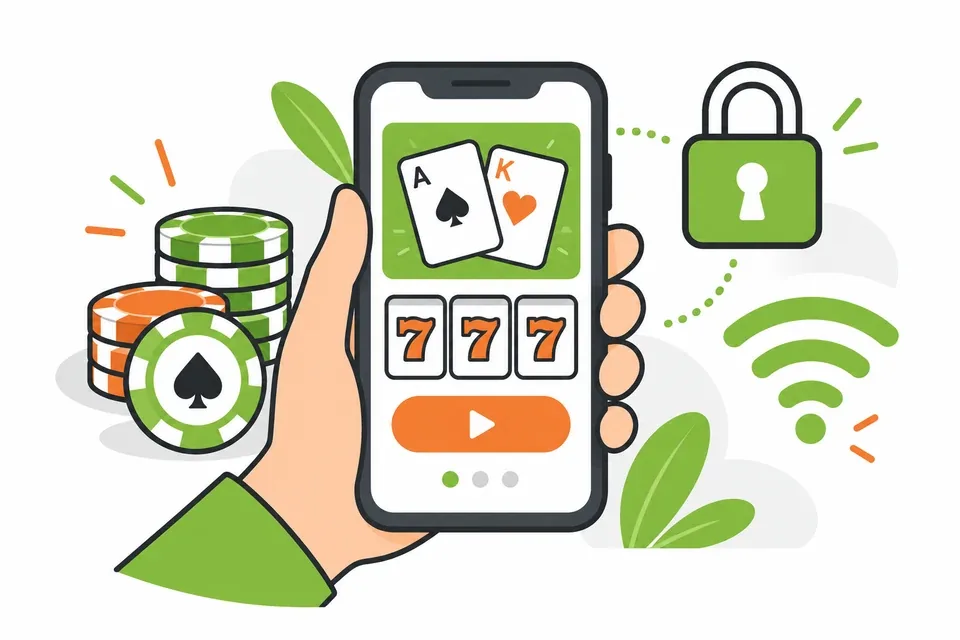
Online gambling is lawful in El Salvador when offered under an LNB licence. The law defines online games broadly as games of chance played through websites or mobile applications, and the regulation includes both online games and sports betting in its catalogue. The LNB list includes brands presented as online casinos, which indicates that casino-style games can be authorised, although the regulation’s game-by-game rules were not reviewed for this guide.
Offshore operators, meaning companies licensed elsewhere that accept Salvadoran players without an LNB licence, are outside the authorised market and fall within Article 41’s prohibition on operating without a licence. The legal framework provides several enforcement tools:
- ISP blocking. Article 16 of the law allows the Board of Directors to order internet service providers to block IP addresses and domain names (DNS) used to operate unauthorised games. Article 26 of the regulation channels such orders through the Superintendencia General de Electricidad y Telecomunicaciones (SIGET), the telecommunications regulator, which communicates them to providers.
- Provisional measures and sanctions. The regulation allows provisional measures such as temporary closure of establishments or blocking of websites, provisional seizure of assets, cessation orders and withdrawal or suspension of advertising; operators may seek reconsideration of a sanctioning decision within ten working days (Article 53).
- Domain requirement. Licensed online operators must use a .sv domain and redirect Salvadoran traffic to it (Article 40).
This review did not find a published blocklist, published blocking orders or published sanctions against offshore operators, so the extent to which these powers are used in practice could not be established. No rule requiring banks or payment providers to block payments to unlicensed operators (payment blocking) was identified.
On advertising, Article 39(m) requires licensed operators to include responsible gaming content. The LNB says its own promotional content is aimed only at people aged 18 and over, is not directed at children, and that public figures and influencers working with it must convey only educational and responsible gaming messages (LNB, Juego responsable). No separate statutory gambling advertising code was found.
Position of players
The 2021 law is directed at operators. Article 42 gives players rights to know the rules of the game, to collect prizes and to compensation in case of fraud, and Article 43 requires them to comply with payment rules and venue rules and to identify themselves when asked. Article 2(e) sets out a principle of protection under which minors and people with reduced intellectual capacity are to be prevented from gambling (LNB Organic Law). No article penalising a player for using an unlicensed operator was found in the text reviewed, and no reports of players being prosecuted or fined were located. Because the copy of the law consulted was incomplete, this cannot be stated as a definitive conclusion; it is accurate to say only that no player offence was identified.
A player using an unlicensed offshore site has no Salvadoran regulator to turn to in a dispute and may find the site blocked. The LNB operates a complaints channel (quejas o denuncias) and can be contacted on (503) 2261-5200 (LNB). The statutory minimum age as a number was not found in the text reviewed; the LNB applies 18 as the threshold for its own marketing.
Taxation
Gambling in El Salvador generates public revenue in three main ways:
- Licence fees and the annual levy. As described above, licensed operators pay a canon of US$100,000 to US$250,000, a US$25,000 renewal fee and, from the second year, an annual payment of up to 25% of the previous year’s gross income less prizes to the LNB (2022 regulation). The law caps the percentage-based canon at 30%.
- LNB surpluses. The LNB’s funds are destined by law for social purposes, in particular public health and social assistance. For the electronic lottery, 10% of proceeds go to municipalities and 10% to sellers and institutional strengthening (SBC Noticias, July 2022).
- Tax on prizes. A 2021 resolution of the Ministry of Finance (Ministerio de Hacienda) states that Article 168 of the Tax Code (Código Tributario) designates the LNB as the withholding agent for income tax on the prizes it pays, and that winners receive withholding certificates from the LNB (Ministerio de Hacienda, 2021).
The withholding rate on lottery prizes, the treatment of winnings from licensed private operators, and any obligations of operators under general corporate income tax and VAT could not be verified from primary sources for this review.
Consumer protection and responsible gambling
The LNB has a formal responsible gaming programme. In July 2023 it received Level II certification under the World Lottery Association’s (WLA) Responsible Gaming Framework (SBC Noticias, July 2023). At the World Lottery Summit in Paris in October 2024 it received a WLA award for leadership in responsible gaming (Public Gaming Research Institute, November 2024). Its responsible gaming statement of 25 November 2025 commits it to clear rules and verifiable odds, accessible information, no advertising directed at children and encouragement for players to “set limits, take breaks and self-exclude if necessary”.
During Responsible Gaming Week from 16 to 20 February 2026 the LNB ran a campaign under the slogans “El control también es parte del juego” (control is also part of the game) and “Jugá por entretenimiento, no por obligación” (play for entertainment, not out of obligation). It included materials at points of sale, psychologist-led workshops on budget management and early warning signs of gambling disorder, and messaging coordinated with licensed sports betting and online gaming operators (Focus Gaming News, March 2026).
No national self-exclusion register, meaning a central list of people barred at their own request from all licensed operators, was identified in the law extracts, the regulation or the LNB’s pages, and no national gambling helpline or specialist treatment service for gambling disorder was found. People affected by gambling can contact the LNB on (503) 2261-5200 and can find general guidance in our responsible gambling guide.
Recent and upcoming developments
- Organic law (December 2021). Decree No. 251 of 21 December 2021 made the LNB the regulator of all gaming except municipal paper lotteries (Focus Gaming News).
- Implementing regulation (July 2022). Executive Decree No. 16, published on 22 July 2022, set the licensing procedure, fee scale and blocking procedure (Regulation).
- National Electronic Lottery (2022–2023). Approved by the Assembly on 26 July 2022 and launched on 11 August 2023 (SBC Noticias; El Diario de Hoy).
- Institutional reporting (2026). The LNB’s most recent annual report listed covers June 2024 to May 2025 and was posted on 17 April 2026 (LNB, Memoria de labores). In September 2026 it announced US$2.3 million in prizes for its Christmas draw (LNB news).
- Pending questions. No bill to change the 2021 framework, no legislation on casinos linked to tourism projects and no court ruling on the 2021 law were identified for 2023 to 2026.
Casino listings for players in El Salvador
The listings below are generated automatically from our casino database. They do not by themselves show that an operator holds an LNB licence. Online games and sports betting may be offered to Salvadoran players only under a licence from the Lotería Nacional de Beneficencia, and readers should check the LNB’s list of authorised operators before playing.
Vegas Casino Online
No Deposit Bonus
$ 20
Liberty Slots Casino
No Deposit Bonus
$ 18

Slots.lv
100% up to
$2,000
+ 20 Spins
Sloto'Cash Casino
100% up to
∞

Casino Extreme
200 Spins

Bovada Casino
100% up to
$1,000
Casino Brango
500% up to
$/€100
+ 500 Spins
Lucky Tiger Casino
No Deposit Bonus
$ 55
Shazam Casino
Exclusive No Deposit Bonus
$ 50

Miami Club Casino
50 Spins

Lincoln Casino
No Deposit Bonus
$ 18

Highway Casino
$ 30
Rich Palms Casino
250% up to
∞
Red Stag Casino
25% up to
∞
Yabby Casino
202% up to
∞
PlayCroco Casino
300% up to
∞
+ 60 Spins
Uptown Aces
250% up to
∞

DuckyLuck Casino
500% up to
$/€2,500
+ 150 Spins
Fair Go Casino
200% up to
∞
Drake Casino
300% up to
$2,000
Las Vegas USA Casino
No Deposit Bonus
$ 20
Slots Plus
No Deposit Bonus
$ 20
Sun Palace Casino
No Deposit Bonus
$ 20
Ignition Casino
200% up to
$100
.jpg?x42924)
Everygame Classic Casino
200% up to
∞
+ 50 Spins
Slots Empire
230% up to
$7,500
Red Dog Casino
Slots And Casino
500% up to
∞
+ 150 Spins
Slotsroom Casino
400% up to
∞
+ 20 Spins
Black Lotus Casino
300% up to
$7,000
+ 45 Spins
El Royale Casino
230% up to
∞

Casino Max
400% up to
∞
+ 20 Spins
JacksPay
200% up to
$2,000
Spinfinity Casino
400% up to
∞
+ 20 Spins

Lucky Creek
50 Spins

Jackpot Capital
25% up to
∞
Slotastic
250% up to
∞
Ripper Casino
25% up to
∞
Las Atlantis Casino
$ 2,500
Ozwin Casino
$ 10

Grand Eagle
200% up to
$5,500
+ 30 Spins
Roaring 21 Casino
400% up to
∞
+ 20 Spins
LadyLuck Casino
100 Spins
Grande Vegas
150% up to
$300
Treasure Mile
200% up to
$/€4,000
+ 50 Spins
Cherry Jackpot
400% up to
∞
+ 20 Spins
Borgata Online Casino
TropicanaCasino
BetOnline Casino
100 Spins

Grand Rush
200% up to
$4,000
+ 40 Spins

Jazz Casino
10% up to
$250

BetMGM Casino NJ
100% up to
$1,000
Sources and further reading
- Asamblea Legislativa de El Salvador, Ley Orgánica de la Lotería Nacional de Beneficencia, Decreto Legislativo No. 251 (2021), via Portal de Transparencia (accessed 7 October 2026).
- Presidencia de la República, Reglamento de la Ley Orgánica de la Lotería Nacional de Beneficencia, Decreto Ejecutivo No. 16 (2022), via Portal de Transparencia (accessed 7 October 2026).
- Corte Suprema de Justicia, Centro de Documentación Judicial, Ley Orgánica de la Lotería Nacional de Beneficencia, Decreto No. 3129 (1960) (accessed 7 October 2026).
- Ministerio de Hacienda, Resolución UAIP-RES-188-2-2021 on income tax withholding on LNB prizes (2021) (accessed 7 October 2026).
- Lotería Nacional de Beneficencia, Marco institucional (accessed 7 October 2026).
- Lotería Nacional de Beneficencia, Operadores autorizados (accessed 7 October 2026).
- Lotería Nacional de Beneficencia, Juego responsable (25 November 2025) (accessed 7 October 2026).
- Lotería Nacional de Beneficencia, Preguntas frecuentes (accessed 7 October 2026).
- Lotería Nacional de Beneficencia, Memoria de labores (accessed 7 October 2026).
- Lotería Nacional de Beneficencia, Noticias (accessed 7 October 2026).
- Portal de Transparencia, Government of El Salvador, Lotería Nacional de Beneficencia (accessed 7 October 2026).
- Focus Gaming News, La ley del juego en El Salvador pide nueva regulación (17 May 2016) (accessed 7 October 2026).
- Focus Gaming News, Quitarían 55% de ganancias a casinos de El Salvador (19 June 2017) (accessed 7 October 2026).
- Focus Gaming News, El Salvador: La nueva ley de la Lotería permitiría cerrar establecimientos sin licencias (30 November 2021) (accessed 7 October 2026).
- Focus Gaming News, El Salvador: Críticas contra el proyecto de ley de la Lotería Nacional (20 December 2021) (accessed 7 October 2026).
- Focus Gaming News, Se aprobó la nueva Ley Lotería Nacional de Beneficencia de El Salvador (23 December 2021) (accessed 7 October 2026).
- Focus Gaming News, La LNB de El Salvador potencia su estrategia de prevención y educación en la Semana del Juego Responsable (4 March 2026) (accessed 7 October 2026).
- Focus Gaming News, La Lotería Nacional de Beneficencia de El Salvador cumplió 156 años (2026) (accessed 7 October 2026).
- Yogonet, Casino The Jolly sigue operando con máquinas tragamonedas en El Salvador (21 April 2009) (accessed 7 October 2026).
- El Diario de Hoy, Electronic lottery begins sales in El Salvador (12 August 2023) (accessed 7 October 2026).
- Public Gaming Research Institute, El Salvador’s National Charity Lottery: global recognition for responsible gaming (11 November 2024) (accessed 7 October 2026).
- SBC Noticias, Juegos con identidad: Cómo la Lotería de El Salvador impulsa la cultura y la educación (21 July 2025) (accessed 7 October 2026).
- SBC Noticias, La Lotería de El Salvador se certifica en juego responsable con la WLA (20 July 2023) (accessed 7 October 2026).
- SBC Noticias, La LNB de El Salvador se renovaría con la lotería electrónica, revisada por la Asamblea Legislativa (1 April 2022) (accessed 7 October 2026).
- SBC Noticias, El Salvador aprueba un acuerdo con la Canadian Commercial Corporation para crear una Lotería Electrónica Nacional (27 July 2022) (accessed 7 October 2026).
- SBC Noticias, El Salvador news archive, page 2 (accessed 7 October 2026).