Legal casino gambling age in Swaziland

Eswatini, a small landlocked kingdom between South Africa and Mozambique, has allowed casino gambling since the 1960s, when it began licensing hotel-casinos that drew visitors from South Africa. Its gambling law is now in transition. A Gaming Control Act passed in 2022 is described by the government as the law in force, but in October 2026 its implementing regulations had still not been adopted, and several statutes from the 1960s and 1970s remain on the official legislation portal. The Ministry of Tourism and Environmental Affairs and the Gaming Board license operators. Online betting is offered under bookmaker licences. The Gaming Board’s position is that online casino-style games, such as slots and virtual table games, remain illegal. This guide explains the legal framework, how online gambling is treated, and where the law is still unsettled.
Key points
- Land-based casinos have been licensed since the Casino Act, 1963 (Act 56 of 1963), which created a Gaming Board of Control and a casino levy on gross takings.
- The Gaming Control Act of 2022 is reported to be in force, but its regulations, including licence categories, fees and a self-exclusion system, were still in draft in October 2026. We could not obtain the Act’s official text.
- Online betting licences are issued under the “bookmaker provision”, in the minister’s words. In April 2026 the Gaming Board said four companies held bookmaker-only licences and that online casino-style gambling remains illegal (Focus Gaming News, April 2026).
- Police raids in 2026 on unlicensed online gambling operations run from Eswatini led to charges under the Gaming Control Act and the Money Laundering and Financing of Terrorism (Prevention) Act. The 2026 sources report no prosecution of individual players for playing online.
- The government reports a voluntary self-exclusion programme, but no dedicated national gambling helpline could be identified.
Last reviewed: 8 October 2026.
Online casinos for Swaziland
We may earn commission from links. Commission and paid placements do not affect casino ordering. Affiliate disclosure · How these listings work.

Vegas Casino Online
Sign Up400% up to
$500

Liberty Slots Casino
Sign Up100% up to
$259

Sloto'Cash Casino
Sign Up100% up to
$500
Lucky Tiger Casino
Sign Up250% up to
$1,000
Shazam Casino
Sign Up250% up to
$2,500
Casino Brango
Sign Up500% up to
$/€100
+ 500 Spins
Vegas Casino Online
Sign Up400% up to
$500
Liberty Slots Casino
Sign Up100% up to
$259
Sloto'Cash Casino
Sign Up100% up to
$500
Lucky Tiger Casino
Sign Up250% up to
$1,000
Shazam Casino
Sign Up250% up to
$2,500
Casino Brango
Sign Up500% up to
$/€100
+ 500 Spins
Historical development
The country was known internationally as Swaziland until April 2018, when King Mswati III announced during the celebrations of 50 years of independence that it would be called eSwatini (NPR, 20 April 2018). Older statutes and court decisions use the former name.
Under the general criminal law, commercial gambling is prohibited. The Crimes Act, 1889 (Act 6 of 1889) makes it an offence for “any person who keeps or visits a gambling house or gaming table” (section 2). It also prohibits keeping a betting house (section 14). The Casino Act, 1963 created an exception: gaming rooms in a licensed casino are exempt from the gaming and betting provisions of the Crimes Act (section 3). Lotteries were dealt with in the Lotteries Act, 1963 (Act 40 of 1963), and betting on races in the Licensing of Bookmakers and Taxation Act, 1970 (Act 27 of 1970).
The resort economy grew from this framework. The Royal Swazi Spa complex in the Ezulwini Valley opened in 1965 and was the region’s first casino-hotel. It drew visitors mainly from South Africa and Mozambique (Royal Swazi Spa overview). Sun International held a 51% stake in Swazispa, its Eswatini business. In 2021 Sun International placed its Eswatini operation into liquidation after Swazispa could not raise additional funding or pay its creditors (Inter Gaming, September 2021). We could not verify from an official source which land-based casinos currently hold licences.
Eswatini also played a part in the early history of online gambling in southern Africa. An internet casino trading as Piggs Peak was run from the country and, according to the South African Supreme Court of Appeal, was “duly licensed there”. In Casino Enterprises (Pty) Ltd v Gauteng Gambling Board [2011] ZASCA 155
Legal framework

Eswatini is a unitary state, so gambling is regulated nationally and there are no regional regulators. The framework consists of one modern statute and several older ones. The relationship between them is not fully clear from the public record.
The Gaming Control Act, 2022
Government statements to Parliament from 2025 and 2026 refer to the Gaming Control Act of 2022 as the governing law. In a ministerial statement to the House of Assembly in December 2025, the Minister of Tourism and Environmental Affairs, Jane Mkhonta-Simelane, cited the Act together with the Children’s Protection and Welfare Act of 2012 as the basis for protecting minors (Eswatini Observer, 5 December 2025). According to reports of that period, the Act:
- prohibits gambling by anyone under 18, and requires licensed operators to verify age through know-your-customer (KYC) checks and to provide self-exclusion mechanisms (Focus Gaming News, August 2026);
- creates a Gaming Addiction Fund, which in August 2025 was still not operational because the supporting regulations had not been made (Focus Gaming News, August 2025);
- according to the Eswatini Observer, is the basis on which land-based casinos and lotteries are licensed, while no regulations yet govern online gambling platforms (Eswatini Observer, November 2025).
We could not obtain the official text of the 2022 Act. It is not listed on the EswatiniLII legislation portal. Reports call it either the Gaming Control Act or the Gaming Act. The minister and most reports date it to 2022, but one trade report (Parameter, June 2026) gives 2021. For this reason we do not state its section numbers, penalties, or which earlier statutes it repeals. The minister herself told Parliament in December 2025: “I am dealing with an Act from 2022 that does not have gambling regulations, so we are starting afresh” (Eswatini Observer, 18 December 2025).
Older statutes still on the portal
The consolidated texts published on EswatiniLII, which are current to 1 December 1998, contain the following:
- Casino Act, 1963. The Act allows a casino to be “provided and operated” as part of a resort with a licensed residential hotel. The Minister may grant an exclusive licence for 15 years to an applicant who shows integrity, adequate finances and suitable premises (section 9). The Act establishes the Swaziland Gaming Board of Control, with four members, to supervise casino operations and ensure that the government receives the amounts due (sections 6 to 8). Licensees must keep under-21s out of the open gaming rooms, and casino staff and public officers commit an offence if they play (section 18). EswatiniLII does not record the Act as repealed.
- Lotteries Act, 1963. Any lottery that is neither an exempt small society lottery nor licensed as a public lottery is unlawful. A first offence carries a fine of up to E1,000, imprisonment for up to one year, or both. The Minister may grant an exclusive public lottery licence for 15 years. The offences concern running, promoting and selling lotteries, and the Act does not expressly make buying a ticket an offence.
- Licensing of Bookmakers and Taxation Act, 1970. Bookmakers’ licences are annual and granted by the Minister. They are available only to members of Tattersalls. “Betting” is defined broadly, covering staking on “any race, fight, game, sport or exercise” or any event or contingency. Accepting bets from under-18s is an offence.
- Crimes Act, 1889. Outside licensed premises, keeping or visiting a gaming house, betting or gaming for stakes in a public place, and keeping a betting house remain offences.
Anti-money laundering law
The Money Laundering and Financing of Terrorism (Prevention) Act, 2011 (Act 6 of 2011) places customer due diligence and reporting duties on “accountable institutions” and established a financial intelligence unit. A representative of the Eswatini Financial Intelligence Centre said in February 2026 that amendments made in 2024 embedded risk-based obligations directly in the law (Eswatini Observer, February 2026). Eswatini is a member of the Eastern and Southern Africa Anti-Money Laundering Group (ESAAMLG) (FATF country page). ESAAMLG’s 2022 mutual evaluation report recorded that the national risk assessment rated casinos as having “medium/high vulnerabilities” to money laundering and identified casinos as one of the main channels for laundering proceeds of crime.
Regulator and licensing model
Eswatini uses a ministerial licensing model. Licences are not awarded through an independent regulator or a single state monopoly. The Ministry of Tourism and Environmental Affairs is responsible for the sector, and the Gaming Board administers licensing and, under the draft regulations, would process applications and renewals and run the self-exclusion system (Focus Gaming News, July 2026). In April 2026 the Board’s chairperson, Mandla Dlamini, confirmed that four registered gaming companies held licences limited to bookmaker activities (Focus Gaming News, April 2026).
The licensing basis for online operators is disputed. In December 2025 the minister told the House of Assembly: “We are currently using the bookmaker provision for issuing licences” (Eswatini Observer). The chair of the Portfolio Committee on Tourism, Welcome Dlamini, argued that some online operators had been “wrongly licensed”, because bookmaker licences were meant for horse and dog racing and not for interactive gaming (Focus Gaming News, January 2026). Other MPs, including Marwick Khumalo, called for an independent regulator in place of direct government control.
No public register of licensees was found. The draft regulations are expected to add a fee schedule. The ministry’s legal adviser said the lack of prescribed fees had delayed applications and renewals, and that the draft would not create new licence categories (Focus Gaming News, July 2026). According to iGaming Business, the ministry paused new applications in 2026 and renewed only four existing licences under strict oversight. In June 2026 the National Commissioner of Police recommended a temporary suspension of licensing (iGaming Business, August 2026).
Online gambling
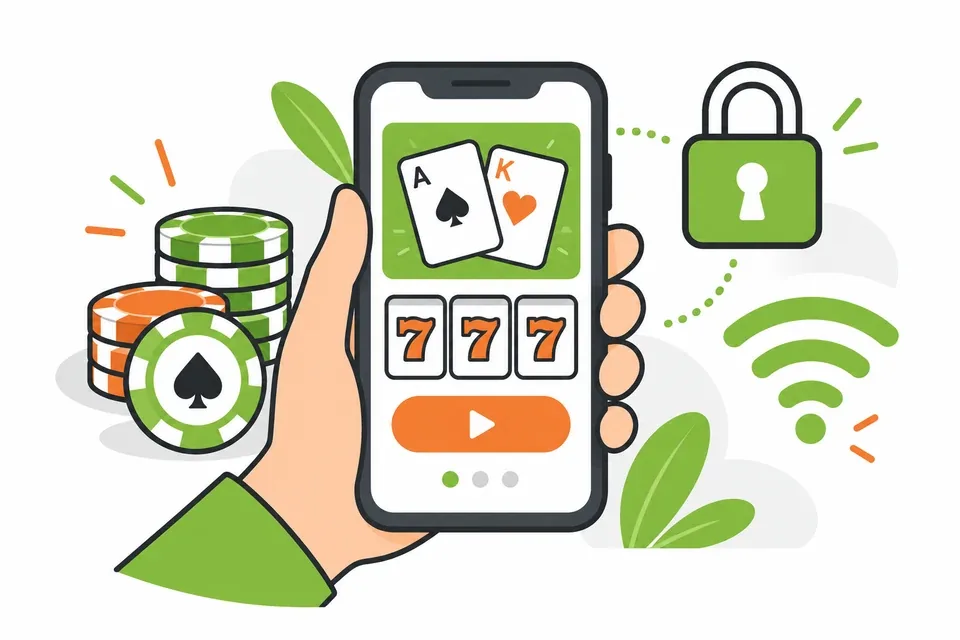
Online gambling is widespread in Eswatini, mainly through mobile phones and mobile money wallets. In November 2025 the Eswatini Observer reported an estimate of around 380,000 registered online gamblers (Eswatini Observer, November 2025). MPs singled out crash games such as Aviator as a particular concern (Eswatini Observer, December 2025). The current position, as stated by officials, is:
- Online betting is offered by companies licensed under the bookmaker provision.
- Online casino-style games, including slots and virtual table games, are not licensed. The Gaming Board chairperson said in April 2026 that online casino-style gambling “remains illegal in the country”, and that no timeline exists for introducing it (Focus Gaming News).
- Offshore operators hold no Eswatini licence. Trade reports say players use offshore or unregulated platforms (Focus Gaming News, April 2026). We found no published blocklist, ISP-blocking or payment-blocking regime aimed at offshore sites.
Measures announced since late 2025 focus on age verification rather than on offshore sites. In December 2025 the minister said the government would work with operators and the country’s two telecoms providers to block secondary mobile money wallets registered to people under 18, which guardians often open for children (Focus Gaming News, December 2025). In September 2025 the House of Assembly passed a motion, introduced by MP Charles Ndlovu, calling for a centralised system to monitor online operators, and the ministry later told betting operators to register customers with national identity documents (iGaming Today, October 2025). In 2026 the ministry said it was procuring a central monitoring system for the industry (Focus Gaming News, August 2026). We found no gambling-specific advertising rules adopted by October 2026.
Enforcement against unlicensed operators
The largest enforcement action so far targeted operators running unlicensed online gambling from Eswatini for customers abroad. In 2026 police raided several sites in and around Mbabane and Ezulwini, and in the March 2026 phase 146 foreign nationals were arrested. In a High Court affidavit, the Royal Eswatini Police Service described the case as an international fraud and organised crime investigation, carried out with INTERPOL assistance. According to the affidavit, the operation targeted victims in Brazil and India. Suspects face charges under the Gaming Control Act, the Money Laundering and Financing of Terrorism (Prevention) Act and the Immigration Act. In June 2026, 84 of those arrested were convicted of immigration offences, not gambling offences, and sentenced to six months’ imprisonment with the option of an E500 fine (iGaming Business, August 2026). The case was continuing at the time of review.
Position of players
Because the text of the 2022 Act could not be verified, the legal position of players cannot be stated with full precision. What the sources show is the following:
- Playing at a licensed land-based casino, entering a licensed lottery, and betting with a licensed bookmaker are lawful for adults. The minimum age reported under the Gaming Control Act is 18. The 1963 Casino Act separately requires casinos to keep under-21s out of open gaming rooms, and it is not clear which age rule applies to casino floors today.
- Section 2 of the Crimes Act, 1889 makes it an offence to visit a gambling house. The fines for a visitor are small: up to E10 for a first offence. That provision was written for physical premises, and we found no case applying it to online play.
- The Gaming Board describes online casino-style gambling as illegal. Its public statements are about what operators may offer. We found no statement that an individual who plays on an offshore site commits an offence, and no record of any player being prosecuted or fined for doing so.
- According to a trade report, the draft regulations would penalise a person who gambles while on the exclusion register with a fine of up to E2,000 or up to two years’ imprisonment (Parameter, June 2026). This is a draft provision and is not yet law.
In practice, a resident who uses an unlicensed online casino has no access to Eswatini’s complaint channels, its exclusion system or its age checks. The Lotteries Act also provides that a subscriber cannot sue to recover a prize from an unlawful lottery.
Taxation
The older statutes impose levies on operators rather than on players. The consolidated texts on EswatiniLII provide that:
- the casino licensee pays an annual licence fee and a levy on gross gaming takings after winnings. The levy rises in stages to 4.5% from the seventh year of the licence, and the licensee is exempt from income tax (Casino Act, section 9);
- bookmakers pay a tax on the gross amount staked on races. The consolidated text gives this as 10%, though the rate and the licence fee were amended in 1985 (Licensing of Bookmakers and Taxation Act, 1970);
- a public lottery licensee is exempt from income tax on lottery earnings (Lotteries Act, 1963).
It is not clear how far these rates still apply under the 2022 Act. Officials have, however, published revenue figures. In the 2023/24 financial year, bookmakers paid over E9 million in levies and E48,000 in annual licence fees (Focus Gaming News, January 2026). Levies from licensed operators in July and August 2025 were E7.5 million, up from E6.48 million in the same period of 2024. The ministry described this as a 17% rise in gaming revenue (Eswatini Observer, November 2025). We could not verify from an official source how players’ winnings are treated for income tax. Readers should consult the Eswatini Revenue Service.
Consumer protection and responsible gambling
Eswatini’s protections are still being built. The ministry runs a voluntary self-exclusion programme, under which a person asks to be barred from gambling venues for a set period. It reported 11 self-exclusions in July and August 2025 (16 a year earlier), for periods of 12 months to two years. The minister described the programme as offering counselling and recovery support alongside exclusion (Eswatini Observer). Only three people enrolled between April and June 2026 (Focus Gaming News, August 2026).
The draft regulations would replace venue-by-venue arrangements with a central exclusion database run by the Gaming Board. Individuals and authorised third parties could apply to the Board, and operators would have to act immediately on its notifications. Operators have asked for minimum exclusion periods to be set, because the draft leaves the length open (Parameter, June 2026). The Gaming Addiction Fund created by the 2022 Act was not operational in 2025. The government said in 2026 that it planned to set up a fund for counselling and public awareness before the end of the 2026/27 financial year (Focus Gaming News, August 2026).
We could not identify a dedicated national gambling helpline in Eswatini. People seeking help can ask a licensed operator or the Ministry of Tourism and Environmental Affairs about self-exclusion. General guidance is in our responsible gambling guide.
Recent and upcoming developments
- Draft Gaming Regulations (2025 to 2026). In December 2025 the minister said the draft regulations had been completed and were undergoing stakeholder review (Eswatini Observer). Validation workshops with industry were held in June and July 2026. On 1 July 2026 the minister told Parliament the regulations would be tabled in the third quarter of the financial year (Focus Gaming News, July 2026). As of 8 October 2026 we found no report that they had been tabled or gazetted.
- Calls for a licensing freeze (December 2025 to 2026). In December 2025, at the last House of Assembly sitting of the year, MPs called for no new licences to be issued until the regulations are presented to Parliament (Focus Gaming News, January 2026). In June 2026 the police commissioner recommended a temporary suspension, and the ministry reportedly paused new applications.
- Organised crime investigation (2026). The High Court case arising from the March 2026 raids was continuing, and police said a full forensic report would follow. The Ministry of Finance told the court that the unregulated environment risked placing Eswatini on international financial-crime grey lists (iGaming Business).
- Online casino games. The Gaming Board said in April 2026 that there is no timeline for licensing them, and any change would require legislative action.
Casino listings for players in Eswatini
The listings below are generated automatically from our casino database. They do not show that an operator is licensed in Eswatini. Eswatini licenses online betting only through bookmaker licences, and the Gaming Board states that online casino-style gambling is illegal. The listings must therefore not be read as an indication that playing online casino games from Eswatini is lawful. No public register of licensees is available, so readers should check an operator’s status with the Ministry of Tourism and Environmental Affairs or the Gaming Board.
Vegas Casino Online
No Deposit Bonus
$ 20
Liberty Slots Casino
No Deposit Bonus
$ 18

Slots.lv
100% up to
$2,000
+ 20 Spins
Sloto'Cash Casino
100% up to
∞

Casino Extreme
200 Spins

Bovada Casino
100% up to
$1,000
Casino Brango
500% up to
$/€100
+ 500 Spins
Lucky Tiger Casino
No Deposit Bonus
$ 55
Shazam Casino
Exclusive No Deposit Bonus
$ 50

Miami Club Casino
50 Spins

Lincoln Casino
No Deposit Bonus
$ 18

Highway Casino
$ 30
Rich Palms Casino
250% up to
∞
Red Stag Casino
25% up to
∞
Yabby Casino
202% up to
∞
Uptown Aces
250% up to
∞
PlayCroco Casino
300% up to
∞
+ 60 Spins

DuckyLuck Casino
500% up to
$/€2,500
+ 150 Spins
Fair Go Casino
200% up to
∞
Drake Casino
300% up to
$2,000
Las Vegas USA Casino
No Deposit Bonus
$ 20
Slots Plus
No Deposit Bonus
$ 20
Sun Palace Casino
No Deposit Bonus
$ 20
Ignition Casino
200% up to
$100
.jpg?x75995)
Everygame Classic Casino
200% up to
∞
+ 50 Spins
Slots Empire
230% up to
$7,500
Red Dog Casino
Slots And Casino
500% up to
∞
+ 150 Spins

Slotsroom Casino
400% up to
∞
+ 20 Spins
Black Lotus Casino
300% up to
$7,000
+ 45 Spins
El Royale Casino
230% up to
∞

Casino Max
400% up to
∞
+ 20 Spins
JacksPay
200% up to
$2,000

Spinfinity Casino
400% up to
∞
+ 20 Spins

Lucky Creek
50 Spins

Jackpot Capital
25% up to
∞
Slotastic
250% up to
∞
Ripper Casino
25% up to
∞

Las Atlantis Casino
$ 2,500
Ozwin Casino
$ 10

Grand Eagle
200% up to
$5,500
+ 30 Spins
Roaring 21 Casino
400% up to
∞
+ 20 Spins
LadyLuck Casino
100 Spins
Grande Vegas
150% up to
$300
Treasure Mile
200% up to
$/€4,000
+ 50 Spins
Cherry Jackpot
400% up to
∞
+ 20 Spins
Borgata Online Casino

TropicanaCasino

BetOnline Casino
100 Spins

Grand Rush
200% up to
$4,000
+ 40 Spins

Jazz Casino
10% up to
$250

BetMGM Casino NJ
100% up to
$1,000
Sources and further reading
- EswatiniLII, Casino Act, 1963 (Act 56 of 1963), consolidated to 1 December 1998 (accessed 8 October 2026).
- EswatiniLII, Lotteries Act, 1963 (Act 40 of 1963), consolidated to 1 December 1998 (accessed 8 October 2026).
- EswatiniLII, Licensing of Bookmakers and Taxation Act, 1970 (Act 27 of 1970) (accessed 8 October 2026).
- EswatiniLII, Crimes Act, 1889 (Act 6 of 1889) (accessed 8 October 2026).
- EswatiniLII, Money Laundering and Financing of Terrorism (Prevention) Act, 2011 (Act 6 of 2011) (accessed 8 October 2026).
- ESAAMLG, Anti-money laundering and counter-terrorist financing measures: Eswatini, Mutual Evaluation Report (2022).
- FATF, Eswatini: country page (accessed 8 October 2026).
- Supreme Court of Appeal of South Africa (via SAFLII), Casino Enterprises (Pty) Ltd v Gauteng Gambling Board and Others [2011]
ZASCA 155
(2011). - Eswatini Observer, Eswatini Govt moves to block underage access to online gambling (5 December 2025).
- Eswatini Observer, MPs push to stop gambling licences as addiction and underage gambling fears grow (18 December 2025).
- Eswatini Observer, Govt’s 17% rise in gambling revenue at social cost (24 November 2025).
- Eswatini Observer, Eswatini making progress in strengthening financial crime controls (26 February 2026).
- Focus Gaming News, Eswatini Gaming Board reaffirms ban on online casino-style betting (24 April 2026).
- Focus Gaming News, Eswatini government targets third-quarter tabling of long-awaited Gaming Act Regulations (9 July 2026).
- Focus Gaming News, Eswatini reports three self-exclusions in first quarter (27 August 2026).
- Focus Gaming News, Eswatini MPs push for gambling licence halt until regulations are ready (5 January 2026).
- Focus Gaming News, Eswatini online gambling on the rise: minister’s response on gaming addiction fund delay (4 August 2025).
- Focus Gaming News, Eswatini announces new plan to keep children out of online betting (8 December 2025).
- iGaming Business, Eswatini gambling probe expands as police investigate organised crime (28 August 2026).
- Parameter, Eswatini gaming industry demands clarity on self-exclusion duration in 2026 regulatory framework (26 June 2026).
- Inter Gaming, Sun International closes Swaziland casino (5 September 2021).
- iGaming Today, Eswatini betting operators must now request national ID before players can sign up (22 October 2025).
- Wikipedia, Royal Swazi Spa (accessed 8 October 2026).
- NPR, Swaziland gets a name change: call it eSwatini now (20 April 2018).