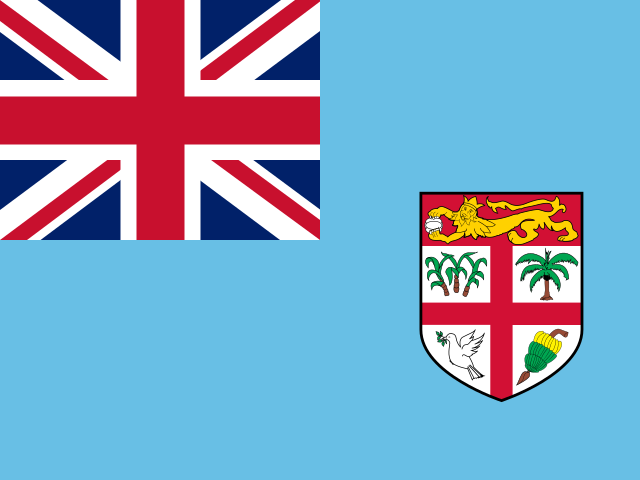
Legal casino gambling age in Fiji
Fiji permits some forms of gambling, such as lotteries, betting and charitable gaming, under a licensing system set up by the Gaming Decree 2009, now cited as the Gaming Act 2009. Licences are granted by the Attorney-General, and licensed gambling is taxed through the Gambling Turnover Tax. The country has never had an operating casino. An exclusive casino licence granted in 2011 for a resort on Denarau Island was revoked in 2015, a second licence announced for the Fiji National Provident Fund in 2017 never took effect, and since December 2023 the government has said that no casino licence will be issued until it adopts a casino policy after public consultation. Public sources on Fiji’s gambling law are thin, and this guide notes where a point could not be verified.
Key points
- The Gaming Act 2009 (originally the Gaming Decree 2009) is the main gambling statute. According to the Prime Minister’s statement of 28 December 2023, casino applications have been made to the Attorney-General for a Class 2 gaming licence.
- No casino has ever operated in Fiji. The One Hundred Sands licence for Denarau was revoked on 9 February 2015, and the Court of Appeal dismissed the company’s appeal in February 2017.
- In April 2023 Cabinet deferred a proposal to license a casino for the Fiji National Provident Fund (FNPF). Since December 2023 the government’s stated position has been that no casino licence will be issued until a policy has been adopted after consultation. We found no report of such a policy by October 2026.
- Licensed gambling services pay Gambling Turnover Tax at 15% of the stake or ticket price (since 1 August 2021), collected from players by the operator and paid to the Fiji Revenue and Customs Service (FRCS).
- The tax authority lists “remote interactive gaming” among the Class 2 licence types, but we found no public register of licensed online operators, no website-blocking programme and no official guidance on offshore online gambling.
Last reviewed: 6 October 2026.
Top Rated Online Casinos for Fiji

Vegas Casino Online
Sign Up400% up to
$500

Liberty Slots Casino
Sign Up100% up to
$259

Sloto'Cash Casino
Sign Up100% up to
$500
Shazam Casino
Sign Up250% up to
$2,500
Lucky Tiger Casino
Sign Up250% up to
$1,000
Casino Brango
Sign Up500% up to
$/€100
+ 500 Spins
Vegas Casino Online
Sign Up400% up to
$500
Liberty Slots Casino
Sign Up100% up to
$259
Sloto'Cash Casino
Sign Up100% up to
$500
Shazam Casino
Sign Up250% up to
$2,500
Lucky Tiger Casino
Sign Up250% up to
$1,000
Casino Brango
Sign Up500% up to
$/€100
+ 500 Spins
Historical development
Fiji regulated gaming before 2009 under an earlier Gaming Act (Cap. 273), to which the Gambling Turnover Tax law still referred in its 2010 revised text. The Gambling Turnover Tax Decree (No. 57 of 1991), as revised to 29 January 2010, taxed “prescribed gambling services”, namely the acceptance of bets under a gaming licence and the sale of lottery tickets, including tickets in external lotteries. A 2007 promulgation set the rate at 15 cents for every complete dollar of turnover from 1 January 2008.
The current law was made as the Gaming Decree 2009, the name used in reports of the 2015 licence revocation. Official sources now cite it as an Act: the consolidated legislation portal lists the Gaming Act 2009, alongside the Gaming (Forms and Fees) Regulations 2009, and the FRCS refers to the Gaming Act 2009. The new framework opened the way for a casino. In December 2011 the government granted One Hundred Sands Limited, a company working with the Snoqualmie Tribe of Washington State, an exclusive gaming licence for a planned US$290 million casino resort and convention centre on Denarau Island near Nadi (Asia Travel Tips, December 2011). The government’s own account describes the licence as a 15-year “Exclusive Gaming Licence” (Fiji Government, 2023).
The project did not proceed. Construction was due to be completed by 1 October 2013, with penalties of US$100,000 a month for delay (World Casino Directory, May 2015). On 9 February 2015 the Attorney-General, Aiyaz Sayed-Khaiyum, revoked the licence under the Gaming Decree 2009, finding that construction had not started, the site had not been secured and penalties were unpaid (Fijivillage, February 2017). G3 Newswire reported that the company had accumulated about US$1.1 million in fines and had held a second licence for Suva (G3 Newswire, February 2015). The High Court dismissed the company’s application, and in February 2017 the Court of Appeal unanimously dismissed the company’s appeal, holding that the Attorney-General had power to revoke the licence and that the High Court had lacked jurisdiction to hear the judicial review (Fiji Times, February 2017).
In its 2017–2018 budget the government announced an exclusive casino licence for the Fiji National Provident Fund, the state pension fund, linked to its convention centre at Momi Bay in western Viti Levu (Gambling Insider, June 2017). According to the government, this “did not eventuate”, and the COVID-19 pandemic delayed matters further (Fiji Government, 2023). The People’s Coalition Government led by Sitiveni Rabuka has since kept the question open but undecided.
Legal framework

The Gaming Act 2009
The Gaming Act 2009 is the principal statute. Its consolidated text is published on the official Laws of Fiji portal, but the portal could not be read by our research tools at the time of review, and we were unable to obtain another copy of the text. The description below therefore relies on how the government and the tax authority describe the Act, rather than on the statute itself. Readers who need the detail of offences, exemptions and penalties should consult the official text.
Two official sources describe the structure of the Act. The FRCS Standard Interpretation Guideline 2021-40 (effective 7 January 2022) explains that gaming activities fall into two licensed classes:
- Class 1 gaming is gaming for charitable purposes. The guideline adds that charitable gaming that is specifically exempt from licensing under the Act does not need a Class 1 licence.
- Class 2 gaming is gaming that is neither prohibited by the Act nor exempt from licensing, and is carried on for non-charitable purposes. The guideline gives as examples non-charitable lotteries, overseas lotteries, “remote interactive gaming” and betting shops.
The Act thus appears to follow a familiar pattern: certain gaming is prohibited outright, some low-risk or charitable gaming is exempt, and everything else may be carried on only under a licence. We could not verify which activities the Act prohibits or exempts, or the penalties it sets.
Regulations and related laws
The Gaming (Forms and Fees) Regulations 2009 are listed on the official portal as subsidiary legislation under the Act; we were unable to read them. Gambling tax is imposed by a separate statute, the Gambling Turnover Tax Act 1991, administered by the FRCS (see Taxation below). Charitable lotteries also involve local administration: the FRCS states that a lottery promoter must obtain a permit number from the District Commissioner’s Office before the lottery is run (FRCS, Gambling Turnover Tax).
Regulator and licensing model
Fiji has no independent gambling regulator or gaming commission. The licensing authority under the Gaming Act is the Attorney-General. The Prime Minister’s statement of December 2023 described the process that had been followed for casino applications (Fiji Government, 2023):
- the applicant applied to the Attorney-General for a Class 2 gaming licence;
- an initial fee was payable of 1% of the estimated annual gross gaming turnover, followed from the second year by an annual fee of 1% of gaming proceeds;
- fees could be waived or varied on reasonable grounds; and
- the duration and conditions of the licence were set at the Attorney-General’s discretion.
This is a licensing model rather than a state monopoly, but in practice casino licences have been granted as exclusive concessions by government decision. The One Hundred Sands licence was described as exclusive for 15 years, and the 2017 FNPF licence was also announced as exclusive (InterGame, July 2017). One Hundred Sands challenged its revocation in the courts, but the Court of Appeal’s 2017 ruling held that the High Court lacked jurisdiction to hear the judicial review and that the Attorney-General had power to revoke the licence for material breaches of its conditions.
We found no public register of gaming licences and no published count of licensees. Information on who holds Class 1 and Class 2 licences appears to be held by the Office of the Attorney-General and, for tax purposes, by the FRCS, which requires licence details when operators file their returns (Fiji Times).
Casino projects and their status
Three casino proposals have been public since 2011:
| Proposal | Location | Status (October 2026) |
|---|---|---|
| One Hundred Sands Limited: exclusive 15-year licence granted 2011 | Denarau Island, Nadi (a Suva licence was also reported) | Revoked 9 February 2015; appeal dismissed by the Court of Appeal, February 2017 |
| Fiji National Provident Fund: exclusive licence announced in the 2017–2018 budget | Momi Bay, western Viti Levu | Not issued; Cabinet deferred a decision in April 2023 |
| David Group (Macau): FJ$2 billion casino and 1,000-room hotel proposed December 2023 | Southern Denarau or Wailoaloa, Nadi | No licence; government says none will be issued until a casino policy is adopted |
Sources: Fiji Government (2023); Fijivillage (2017); Fiji Times (December 2023). Fijivillage dated the One Hundred Sands Casino Gaming Licence to 15 March 2012, while the government and contemporary trade press refer to December 2011; the difference may reflect an announcement followed by a formal licence, but we could not confirm this.
The David Group proposal was presented by its project head, Sandeep Singh, as a two-phase development: a stand-alone casino and hotel with a shopping mall and marina in the first phase, and an amusement park, indoor rugby stadium and residential subdivision in the second. He told the Fiji Times that the group could not buy land “without having a licence in our hand” and that construction could begin in 2026 if approved (Fiji Times, December 2023; AGB, January 2024). SiGMA reported in April 2024 that local residents would be barred from entering the proposed casino (SiGMA, April 2024). We found no report that construction or land acquisition had started.
Lotteries and betting
Lotteries and betting operate under Class 2 licences, with charitable raffles under Class 1. The FRCS guideline’s worked examples include a betting club offering bets on a “chance to win” and an association selling raffle tickets (FRCS, SIG 2021-40). Tickets for Australian lottery draws are sold in Fiji. The Pacific Lottery Network, operated by Australian companies in the Jumbo Interactive group, lists Fiji among the Pacific territories where it sells Oz Lotto, Powerball and TattsLotto tickets. In 2018 the Consumer Council of Fiji reported a complaint about delayed payment of a FJ$30,000 “scratch and win” jackpot sold by Fiji Tattslotto, noting that jackpot cards were sent to Australia for verification (Consumer Council of Fiji, 2018). We found no official list of licensed lottery or betting operators and do not name private betting businesses here.
Online gambling
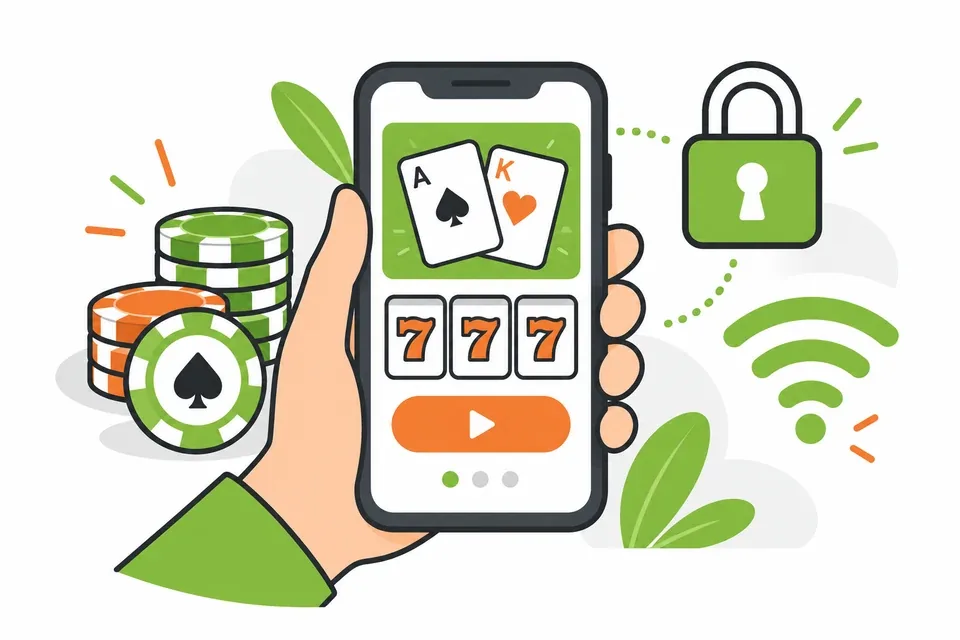
The legal position on online gambling in Fiji is uncertain, and the available sources do not settle it. The one official reference we found is the FRCS guideline, which lists “remote interactive gaming” as an example of a Class 2 licence for non-charitable purposes (FRCS, SIG 2021-40). That suggests the Gaming Act allows the Attorney-General to license some form of remote gaming. It does not show that any such licence has been issued, what games it may cover, or whether it may be used to serve players in Fiji or only abroad.
We found no official statement on offshore online casinos and no published register of online licences. Several commercial websites make specific claims about Fiji, for example that online gambling was “legalised” in 2009, that only telephone, radio and television betting is allowed, or that residents who play on unlicensed sites face a fine of FJ$5,000 and two years’ imprisonment. These claims contradict one another, none cites a section of the Act, and we could not verify any of them. They are not repeated as fact here.
Blocking, payments and advertising
We found no evidence that Fiji maintains a blocklist of gambling websites, requires internet service providers to block them, or instructs banks and payment providers to refuse transactions with offshore operators. We also found no gambling-specific advertising code or published advertising restrictions under the Gaming Act. Because the Act itself could not be read, it remains possible that it contains advertising or remote-gaming offences, and readers should not take the absence of reported enforcement as evidence that offering online gambling in Fiji without a licence is lawful.
Position of players
We could not establish from a primary source whether it is an offence under the Gaming Act for an individual to take part in unlicensed gambling, in Fiji or online. No prosecution of a player for online gambling was found in the news reports and official statements reviewed for this guide. Penalty figures for players quoted on commercial websites could not be traced to the statute.
What is clear is that players pay the Gambling Turnover Tax. The 2010 revised text of the tax law places the legal liability on “the person to whom the prescribed gambling service is provided”, while the operator, as the “accountable person”, collects it (Gambling Turnover Tax Decree, revised 2010). In other words, the 15% charge is built into the price of every licensed bet or lottery ticket.
On age limits, we found no verified statutory minimum age for gambling in Fiji. The Pacific Lottery Network states that a player must be at least 18 to claim a ticket (Pacific Lottery Network), but that is the operator’s own rule. For casinos the question has not yet arisen in practice, since none has opened. The SiGMA report that residents would be excluded from the David Group casino describes a proposal, not a legal requirement.
Taxation
Gambling is taxed through the Gambling Turnover Tax (GTT), a tax on the amount staked rather than on the operator’s profit. Its main features, as set out by the FRCS guideline and the FRCS service page, are:
| Feature | Position |
|---|---|
| Taxable service | Any gambling service licensed under the Gaming Act 2009 |
| Tax base | The stake money for a bet, or the price of a lottery ticket |
| Rate | 15% of the consideration paid or payable, effective 1 August 2021 |
| Who collects | The licensed operator (“accountable person”); under the 2010 revised text, legal liability rests with the player |
| Filing: Class 1 (charitable) | Within 14 days of the lottery draw (the FRCS service page refers to payment within 7 days of the draw) |
| Filing: Class 2 (commercial) | By the last day of the month after the month in which services were provided |
| Penalty | An accountable person who fails to apply for registration as required is liable to a fine of up to FJ$25,000, according to the guideline |
The FRCS service page and the guideline give different deadlines for charitable lotteries (7 and 14 days respectively); operators should confirm the current deadline with the FRCS. Returns have been filed online through the FRCS Taxpayer Online Services system since April 2021 (Fiji Times).
Licensed operators also pay corporate income tax. PwC’s tax summary gives a standard rate of 25% from the 2023 tax year and does not mention any special rate for gambling businesses (PwC, last reviewed June 2024). We found no authoritative source on whether individual players’ winnings are subject to income tax in Fiji; the GTT is levied on the stake, not on prizes. Readers should check with the FRCS.
There is no casino tax in force because there is no casino. The only published figures on casino licence fees are the 1% of estimated gross turnover and 1% of annual gaming proceeds described in the Prime Minister’s 2023 statement.
Consumer protection and responsible gambling
We found no national self-exclusion scheme in Fiji, no gambling-specific helpline and no public responsible gambling code issued under the Gaming Act. Responsible gambling measures we could identify were operator-level ones, such as the Pacific Lottery Network’s 18+ rule; its site displays an Australian gambling helpline number rather than a Fijian one (Pacific Lottery Network).
Social concern about gambling has instead shaped the policy debate on casinos. In January 2024 the Minister for Trade, Manoa Kamikamica, said there was “no policy on casinos” and that the government could not engage until one was in place. The same report recorded that the President of the Fiji Council of Churches, Archbishop Peter Loy Chong, had expressed disappointment that the government had not attended a church-organised consultation on casinos (FBC News, January 2024). Consumer complaints about lottery products can be raised with the Consumer Council of Fiji, which has published cases involving delayed prize payments (Consumer Council of Fiji, 2018). General guidance on setting limits and recognising warning signs is available in our responsible gambling guide.
Recent and upcoming developments
- FNPF proposal deferred (April 2023). Cabinet considered a proposal to issue a casino licence to the FNPF and deferred its decision (Fiji One News, December 2023).
- Casino policy statement (28 December 2023). Prime Minister Sitiveni Rabuka said that the People’s Coalition Government had “not considered or approved any policy guideline on the issuance of casino license” and that no licence would be issued until clear guidelines had been developed after comprehensive stakeholder consultation. He added that no casino application had been formally received (Fiji Government; Fijivillage).
- David Group proposal (December 2023 to April 2024). A Macau-based group announced a FJ$2 billion casino and hotel project for Nadi, with construction proposed from 2026 subject to approval (Fiji Times; SiGMA).
- Government stance restated (January 2024). The Trade Minister confirmed that the government would not engage on casinos until a policy was in place (FBC News).
- 2024 to October 2026. We found no report of a casino policy being adopted, a casino licence being issued, or an amendment to the Gaming Act. Our news search for this period was limited, and readers should check for later announcements, particularly after the next general election.
Casino listings for players in Fiji
The listings below are generated automatically from our casino database and do not show that an operator is licensed in Fiji. No public register of Fijian online gaming licences exists, the legal position of offshore online gambling is unclear, and the listings must not be read as an indication that offering or playing online casino games in Fiji is lawful.
Vegas Casino Online
No Deposit Bonus
$ 20
Liberty Slots Casino
No Deposit Bonus
$ 18

Slots.lv
100% up to
$2,000
+ 20 Spins
Sloto'Cash Casino
100% up to
∞

Casino Extreme
200 Spins

Bovada Casino
100% up to
$1,000
Casino Brango
500% up to
$/€100
+ 500 Spins
Shazam Casino
Exclusive No Deposit Bonus
$ 50
Lucky Tiger Casino
No Deposit Bonus
$ 55
Red Stag Casino
25% up to
∞
Rich Palms Casino
250% up to
∞

Miami Club Casino
50 Spins

Highway Casino
$ 30

Lincoln Casino
No Deposit Bonus
$ 18
Yabby Casino
202% up to
∞

DuckyLuck Casino
500% up to
$/€2,500
+ 150 Spins
PlayCroco Casino
300% up to
∞
+ 60 Spins
Fair Go Casino
200% up to
∞
Uptown Aces
250% up to
∞

Las Vegas USA Casino
No Deposit Bonus
$ 20
Drake Casino
300% up to
$2,000
Sun Palace Casino
No Deposit Bonus
$ 20
Slots Plus
No Deposit Bonus
$ 20
Ignition Casino
200% up to
$100
.jpg?x83485)
Everygame Classic Casino
200% up to
∞
+ 50 Spins
Slots And Casino
500% up to
∞
+ 150 Spins

Slotsroom Casino
400% up to
∞
+ 20 Spins

Casino Max
400% up to
∞
+ 20 Spins
El Royale Casino
230% up to
∞
Black Lotus Casino
300% up to
$7,000
+ 45 Spins
Red Dog Casino
Slots Empire
230% up to
$7,500

Lucky Creek
50 Spins

Spinfinity Casino
400% up to
∞
+ 20 Spins

Jackpot Capital
25% up to
∞
Ripper Casino
25% up to
∞

Las Atlantis Casino
$ 2,500
Slotastic
250% up to
∞

Grand Eagle
200% up to
$5,500
+ 30 Spins

Cherry Jackpot
400% up to
∞
+ 20 Spins
Grande Vegas
150% up to
$300
LadyLuck Casino
100 Spins

Roaring 21 Casino
400% up to
∞
+ 20 Spins
Ozwin Casino
$ 10
Treasure Mile
200% up to
$/€4,000
+ 50 Spins

TropicanaCasino
Borgata Online Casino

BetOnline Casino
100 Spins

Grand Rush
200% up to
$4,000
+ 40 Spins

Jazz Casino
10% up to
$250

BetMGM Casino NJ
100% up to
$1,000
Sources and further reading
- Fiji Government, Office of the Prime Minister, PM Sitiveni Rabuka’s statement on Fiji’s position on casino license (2023).
- Laws of Fiji, Gaming Act 2009 (official consolidated text; accessed 6 October 2026).
- Laws of Fiji, Gaming (Forms and Fees) Regulations 2009 (accessed 6 October 2026).
- Fiji Revenue and Customs Service, Standard Interpretation Guideline 2021-40: Gambling Turnover Tax Act 1991 (2022).
- Fiji Revenue and Customs Service, Gambling Turnover Tax (accessed 6 October 2026).
- Fiji Revenue and Customs Service, Gambling Turnover Tax Decree, Decree No. 57 of 1991, revised to 29 January 2010 (2010).
- The Fiji Times, Gambling Turnover Tax (accessed 6 October 2026).
- Fijivillage, Fiji Court of Appeal dismisses appeal against AG’s decision to revoke casino licence (2017).
- The Fiji Times, One Hundred Sands Limited’s appeal application dismissed (2017).
- Fijivillage, No issuance of casino license until Govt does comprehensive consultations – PM (2023).
- Fiji One News, Cabinet considered FNPF casino license proposal in April but deferred decision, says PM (2023).
- FBC News, Government clarifies stance on casino (2024).
- The Fiji Times, Plans for $2billion casino and 1000-room hotel in Fiji (2023).
- Asia Travel Tips, Fiji Issues Gaming License to One Hundred Sands (2011).
- G3 Newswire, Fiji pulls the plug on One Hundred Sands’ project (2015).
- World Casino Directory News, One Hundred Sands wants Fiji casino license back (2015).
- InterGame, Fiji still keen for casino (2015).
- Gambling Insider, Fiji awards casino licence to FNPF after revoking another (2017).
- InterGame, Fiji casino licence awarded (2017).
- AGB (Asia Gaming Brief), $895 million casino and 1,000-room hotel project unveiled in Fiji (2024).
- SiGMA, Macau’s David Group announces new casino resort in Fiji (2024).
- Consumer Council of Fiji, When scratching the winning card is not enough (2018).
- Pacific Lottery Network, Check your lottery ticket and claim your prize (accessed 6 October 2026).
- PwC, Fiji: Corporate – Taxes on corporate income (last reviewed 4 June 2024) (accessed 6 October 2026).