

WATCH THE COUNTRY GUIDE · ENGLISH CAPTIONS
Online gambling in Italy: laws and player risks
Elodie explains online casino rules in Italy, the evidence on player enforcement, offshore risks and how to assess available options. Checked 8 November 2026.
Video transcript and official sources → · Country video guides →

In short: Online casino games are legal in Italy only when offered under a concession from the Customs and Monopolies Agency (ADM). Under Legislative Decree 41/2024, new nine-year online concessions costing EUR 7 million each, limited to one .it website, took effect on 13 November 2025; unlicensed sites are blacklisted and playing on them can itself be an offence.
Italy has one of the largest regulated gambling markets in Europe. It also has one of the most centralised. Gambling is, in principle, a state reserve. The Criminal Code prohibits games of chance in public places unless they are run under state authority. The Customs and Monopolies Agency (Agenzia delle Dogane e dei Monopoli, ADM) grants concessions to private operators, who run lotteries, betting, gaming machines, bingo, poker and online casino games on behalf of the state. Online gambling has been licensed for many years. In 2024 the concession system for online gambling was rebuilt by Legislative Decree 41/2024, and the new nine-year concessions took effect in November 2025. This guide explains the legal basis of the system, how online gambling is permitted and policed, the position of players, taxation and player protection.
Key points
- Online casino games, poker, bingo, betting and lotteries are lawful only when offered under an ADM concession. A licence from another country does not authorise an operator to serve Italian residents.
- Under Legislative Decree 41/2024, ADM awarded 52 online concessions to 46 concessionaires in 2025. Each concession runs for nine years from 13 November 2025, costs €7 million and is limited to one website with a .it domain.
- Unlicensed websites are placed on an ADM blacklist and blocked by internet service providers. Payment providers may also be required to block transactions.
- Unlike many European laws, Italian law also penalises participation in unlicensed gambling. Article 4(3) of Law 401/1989 provides for arrest of up to three months or a fine of €51 to €516.
- Gambling advertising and sponsorship have been banned since 2019. Players can self-exclude from all concessionaires through a national register.
Regional overview: Gambling laws in the EU and the rest of Europe puts all 55 countries and territories on one map, grouped by how they regulate gambling.
Read our Italian-language guide on CasinoNewsDaily.it: Leggi sul gioco in Italia: ADM, concessioni e RUA.
Last reviewed: 20 October 2026.
Historical development

Italian gambling law developed from a general prohibition with exceptions controlled by the state. Articles 718 to 722 of the Criminal Code prohibit organising and taking part in games of chance in public places or places open to the public. Over time, lawful gambling grew out of the exceptions that the state created for itself. The state lottery, betting on sport and horse racing, and later gaming machines were all run through state monopolies or through concessionaires acting for the state.
Law 401 of 13 December 1989 added criminal offences specific to the gambling sector. Its main target was illegal betting and lottery operations. Article 4 was later extended to cover the collection of bets by telephone or online without authorisation.
Online casino games and poker were brought within the concession system by Law 88/2009, according to a 2025 practice guide by Stefano Sbordoni of Sbordoni & Partners, published in the Chambers Gaming Law 2025 guide. Responsibility for gambling lay for many years with the Autonomous Administration of State Monopolies (AAMS). Under Article 23-quater of Decree-Law 95/2012, AAMS was merged into the Customs Agency on 1 December 2012, which became the Agenzia delle Dogane e dei Monopoli.
Legal framework
Several layers of law govern gambling in Italy.
- The Criminal Code. Articles 718 to 722 contain the general prohibitions on games of chance. The Chambers guide notes that Article 718 punishes organising gambling with imprisonment of at least three months and a fine of at least €260.
- Law 401/1989. This law sets out the offences of unlawful gambling. Under Article 4(1), anyone who unlawfully organises lottery games or betting reserved to the state, or to authorised operators, faces three to six years’ imprisonment and a fine of €20,000 to €50,000. Paragraphs 4-bis and 4-ter apply the same penalties to those who collect bets by telephone or online without ADM authorisation. Paragraph 3 covers participants (see “Position of players” below).
- Law 88/2009. This law brought online poker and casino games into the concession system.
- Legislative Decree 41/2024. Legislative Decree 41 of 25 March 2024, published in the Official Gazette on 3 April 2024, reorganised the online sector. It is now the main framework for remote gambling.
- Decree-Law 87/2018 (the “Dignity Decree”). Decree-Law 87 of 12 July 2018, converted into law by Law 96 of 9 August 2018. Article 9 bans gambling advertising.
Below national level, regions and municipalities regulate where gambling venues may be located and when they may open. Many have set minimum distances from schools and other sensitive places. These local rules apply to physical venues. Online gambling is regulated nationally.
As an EU member state, Italy must exercise its powers consistently with EU law. The European Commission explains that there is no sector-specific EU legislation on gambling. Member states may organise their gambling services as they choose, provided they respect the fundamental freedoms of the EU Treaties. The Court of Justice reviews national frameworks for compliance with these principles.
Regulator and licensing model
ADM is the single national authority for gambling. It is responsible for:
- awarding concessions;
- approving games and technical platforms;
- collecting gambling taxes;
- maintaining the blacklist of illegal websites;
- operating the national self-exclusion register.
Italy uses a concession model. Concessions are awarded through public tender procedures, and each concessionaire operates on behalf of the state. This differs from an open licensing model, where any qualified applicant may obtain a licence at any time.
The Chambers guide summarises the 2024 reform of the online sector as follows:
- 52 online concessions were awarded in 2025 to 46 concessionaires after a public tender, as SBC News also reported;
- each concession runs for nine years from 13 November 2025;
- each concession carries a one-off fee of €7 million, payable as €4 million on award and €3 million when operations begin, with no more than five concessions per corporate group (Article 6 of the decree);
- concessionaires also pay an annual fee of 3% of net gaming revenue, and must invest 0.2% of their net revenue each year, up to €1 million, in responsible gambling campaigns;
- each concession may operate a single website with a “.it” domain.
The single-website rule ended the earlier practice of running many branded “skins” under one concession. Yogonet reported in October 2025 that the change would cut the number of licensed online gambling sites from 407 to 52. The previous online concessions were extended until 12 November 2025, while the new tender was completed. Concessions for land-based betting, bingo and gaming machines were extended separately while their own reform is prepared.
ADM publishes an official register of authorised remote-gambling operators. It shows the concession numbers, company names and websites.
Online gambling: what is permitted and how it is enforced
The Chambers guide lists the remote gambling products authorised under Legislative Decree 41/2024:
- fixed-odds and pool betting on sporting events;
- bingo;
- skill games, including poker tournaments and cash games;
- casino games;
- national number games;
- instant and deferred-draw lotteries.
The Italian market is large. The Chambers guide reports that in 2024 total amounts staked across all forms of gambling reached €157.45 billion, 6.59% more than in 2023. Gross gaming revenue, meaning stakes minus winnings, was €21.577 billion, an increase of 4.38%. Online betting and remote skill games were among the fastest-growing segments.
The Chambers guide describes the main tools used against illegal gambling sites:
- The blacklist. ADM keeps a list of unauthorised domains. With the state IT company SOGEI it monitors the web daily for illegal sites; it reported 491 domains blocked in 2023 by mid-November of that year. Internet service providers must block these domains through DNS and IP blocking. “DNS blocking” means that a provider stops resolving the website’s name. “IP blocking” means that it refuses to route traffic to the server’s network address. Users who try to reach a blocked site are redirected to an ADM warning page.
- Payment blocking. Payment service providers can be required to stop processing transactions for illegal operators.
- Seizures. Criminal investigations can lead to the seizure of servers and domain names.
Advertising is a further area of enforcement. Since 1 January 2019, Article 9 of the Dignity Decree has banned all direct and indirect advertising of gambling, including sponsorship. The ban covers television, radio, print, the internet, social media, influencers, banners and paid search advertising. The communications regulator AGCOM, which investigates and sanctions breaches, adopted guidelines on the ban (Resolution 132/19/CONS) in April 2019. They exclude communications whose sole purpose is to describe, inform or identify the lawful gambling offer. Breaches carry administrative fines of €50,000 to €500,000 per violation, and at least 20% of the value of the sponsorship or advertising concerned.
Position of players
Italian law is unusual in Europe because it penalises players as well as operators. Article 4(3) of Law 401/1989 provides that anyone who takes part in contests, games or betting run in the unlawful manner described in paragraph 1 faces arrest of up to three months or a fine of €51 to €516. This offence is a contravvenzione, the least serious category of criminal offence in Italian law.
The provision has been applied in practice. In October 2025, Assopoker reported on an investigation by the Milan public prosecutor’s office into professional footballers who had bet on unlicensed platforms. It was resolved by oblazione, a procedure in which the accused pays a sum in place of trial. Each defendant paid €250, half of the maximum fine. The prosecutors stressed that the case concerned participation in illegal gambling, not match-fixing.
Commentators differ on how far the provision is enforced against ordinary players. The Chambers guide observes that casual participation on unlicensed sites is not, in practice, the focus of enforcement. The risks are nevertheless real. A player using an unlicensed site has no access to ADM’s protections or complaint mechanisms. The site may be blocked at any time. And the player may, at least in principle, commit an offence.
Players must be at least 18. Concessionaires must verify a player’s identity when the account is opened. The Chambers guide notes that an account must be suspended or closed if verification is not completed within 30 days.
Taxation
The Chambers guide gives the main operator taxes after the 2024 reform:
- Remote casino-type games are taxed at 25% of the amounts not returned to players.
- Online fixed-odds betting is taxed at 24% of gross gaming revenue.
- Gaming machines in physical venues pay a separate single levy known as PREU, calculated on the amounts wagered. The rate is 24% for AWP amusement-with-prize machines and 8.6% for video lottery terminals.
The 2025 Budget Law added a 0.5% levy on betting operators’ revenue to help fund stadium renovation. It also allocated €94 million a year to the national fund for pathological gambling. The 2027 budget bill, approved by the Council of Ministers on 28 October 2026 and not yet law, would raise the PREU on AWP machines and on VLTs by one percentage point each from 1 January 2027, and double the maximum slot stake and prize (iGB, 2 November 2026).
For players, winnings from games run by concessionaires are generally paid net of tax, because the tax is collected from the operator. The main exception is a withholding on large wins in certain games, sometimes called the “luck tax”. The Chambers guide reports that it applies at rates of 6% to 20% to individual winnings above €500.
Consumer protection and responsible gambling
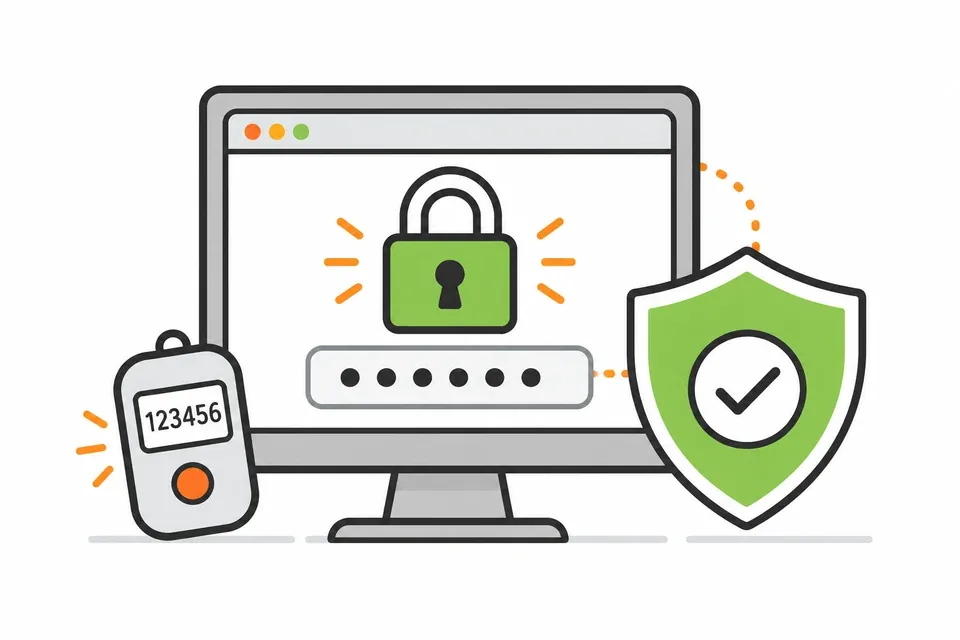 Italy runs a national, centralised self-exclusion register, the Registro Unico delle Autoesclusioni (RUA). It is managed by ADM with the state IT company SOGEI. Self-exclusion through the RUA applies to every authorised online concessionaire. It blocks access to existing accounts, deposits and the opening of new accounts. Concessionaires must also offer:
- deposit limits set by the player;
- session-time limits and spending limits;
- cooling-off periods.
Self-exclusion is activated with SPID, the national digital identity. SiGMA reported in November 2025 that the new concession agreements allow players to choose a period of 7 to 270 days or an indefinite exclusion, and that partial self-exclusion from particular types of game was scheduled to begin on 1 February 2026.
The national public helpline for gambling problems is the Telefono Verde Nazionale per le problematiche legate al Gioco d’Azzardo, on 800 558822. It is run by the National Institute of Health (Istituto Superiore di Sanità) through its National Centre on Addiction and Doping. The service helps callers to find treatment services across Italy. The Institute also runs a national observatory on gambling and carries out national surveys of gambling behaviour. Our responsible gambling guide contains further general advice.
Recent and upcoming developments
The new online concessions took effect on 13 November 2025. The 52 one-off fees brought the state €364 million. They mark the largest change to Italian remote gambling since online casino games were introduced. Because each concession now supports only one “.it” website, the reform limits the number of brands each concessionaire can run. The €7 million fee also raises the cost of entering the market.
Reform of the land-based sector is still to come. The Chambers guide notes that the 2025 Budget Law extended the existing concessions for land-based betting, bingo and gaming machines. Those extensions run until 31 December 2026, pending a new framework for physical gambling. That framework has stalled. In late July 2026 the Prime Minister’s office rejected the final terms of the draft decree after the Ministry of Economy and Finance and the regions failed to agree, chiefly on minimum distances from sensitive places, and the delegated power for the reform expired on 29 August 2026. In September 2026 the Ministry was reported to be considering a further three-year extension of the land-based concessions, to the end of 2029, in the 2027 Budget. The extension is now in the budget bill approved by the Council of Ministers on 28 October 2026 (iGB, 2 November 2026), but the bill is not yet law.
The Council of Ministers approved the 2027 budget bill on 28 October 2026. The certified text was published on 30 and 31 October and goes to the Chamber of Deputies first, with hearings expected from about 5 November and amendments due by 17 November. Parliament must pass it by 31 December 2026 (Finanza & Fisco, 31 October 2026; iGB, 2 November 2026). From 1 January 2027 the bill would:
- extend the betting, slot, VLT and bingo concessions that expire on 31 December 2026 to 31 December 2029 (article 26), against fees of €14,250 a year per betting right where gambling is the main business (€8,550 where it is secondary), €150 per AWP permit, €7,500 per VLT right and €6,500 to €14,500 a month for bingo, linked to card sales;
- raise the single levy on gaming machines (PREU) on AWP slot machines from 24% to 25% of turnover, with AWPs paying out at least 70% paying 20%, and on VLTs from 8.6% to 9.6%;
- double the maximum slot stake from €1 to €2 and the maximum prize from €100 to €200;
- extend the Gratta e Vinci concession to 2029 for €188 million and add a weekly Lotto and SuperEnalotto draw; and
- create an ADM licensing regime for LAN and esports halls offering skill games without cash prizes.
The bill contains no new levy on online gambling. The technical report puts the expected revenue at about €952 million in 2027 and about €2.6 billion over 2027 to 2029 (Agimeg). Amendments in Parliament could still change any of these measures.
Enforcement against illegal gambling continues to draw public attention. The investigation into footballers’ use of unlicensed platforms, closed in 2025, showed that participation offences are pursued in at least some cases. The total ban on gambling advertising under the Dignity Decree remained in force when this guide was reviewed.
Sources and further reading
- S. Sbordoni (Sbordoni & Partners), Gaming Law 2025: Italy, Chambers and Partners (2025).
- Ministero dell’Interno, Osservatorio nazionale sulle manifestazioni sportive, Legge 13 dicembre 1989, n. 401: testo coordinato (2022).
- Agenzia delle Dogane e dei Monopoli, Remote gaming concessionaires (accessed 5 October 2026).
- Istituto Superiore di Sanità, Gioco d’azzardo (accessed 5 October 2026).
- Assopoker, L’inchiesta sulle scommesse illegali dei calciatori: multa, niente processo (2025).
- European Commission, Online gambling in the EU (accessed 5 October 2026).
- L. Laperuta, Dal 1° dicembre incorporati i Monopoli nell’Agenzia delle dogane, Diritto.it (2012).
- Gazzetta Ufficiale, Decreto legislativo 25 marzo 2024, n. 41: riordino del settore dei giochi, a partire da quelli a distanza (2024).
- Gazzetta Ufficiale, Decreto-legge 12 luglio 2018, n. 87 (Decreto Dignità) (2018).
- Autorità per le Garanzie nelle Comunicazioni (AGCOM), Delibera n. 132/19/CONS: linee guida sul divieto di pubblicità del gioco (2019).
- Agenzia delle Dogane e dei Monopoli, ADM dispone l’inibizione di altri 76 siti illegali di gioco on line (2023).
- Yogonet, Italy to slash online gambling licenses from 407 to 52 (2025).
- SBC News, Italy dice benvenuto to new online gambling era (2025).
- SiGMA, Gioco online, scatta la nuova stagione delle concessioni. Le autoesclusioni parziali arriveranno nel 2026 (2025).
- SBC News, Meloni rejects final terms of Italy’s retail reorganisation (2026).
- SBC News, Italy weighs “gambling options” for Budget 2027 (2026).
Casino listings for players in Italy
The listings below are generated from our casino database. Their appearance here does not by itself show that an operator holds an ADM concession or may lawfully accept players resident in Italy. Check the exact website address and company against the ADM register of authorised remote-gambling operators. Bear in mind that playing with an unlicensed operator may itself be an offence under Italian law.
888 Casino
100% up to
€500
+ 100 Spins

Videoslots.com
100% up to
$/€200

NetBet Casino
100 Spins
William Hill Casino
200 Spins

Star Casinò
50% up to
€2,000
Sisal
50% up to
€50

StarVegas.it

SNAI Casino
100% up to
€1,000
Betfair Casino

 UK Gambling Review Puts Racing Funding in Focus
 Gambling Regulation Roundup: Brazil’s Top Court Freezes Betting Cases, CFTC Targets Geoblocks and More
 Malta Examines AI Risks in Gaming
 Gambling Regulation Roundup: Nebraska Rejects Online Betting, Haiti Creates a Regulator and More
 Pragmatic Play Rolls Out Smart Studio Tables for Rank Group