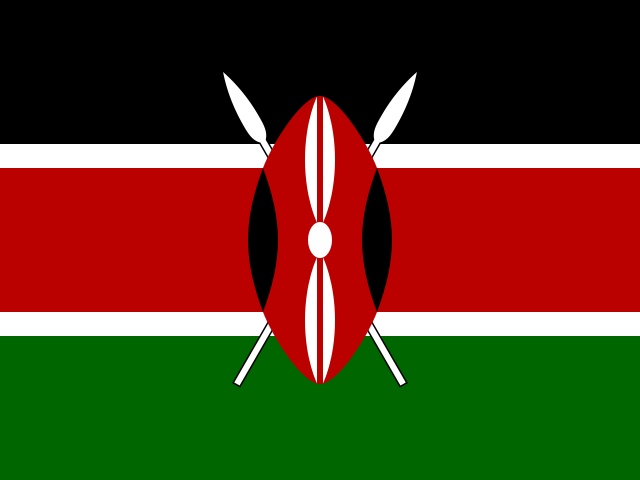
Legal casino gambling age in Kenya
Kenya has one of the most active betting markets in Africa, built largely on football betting through mobile phones and mobile money. For almost six decades the sector was governed by the Betting, Lotteries and Gaming Act (Cap. 131) of 1966 and its regulator, the Betting Control and Licensing Board (BCLB). In August 2025 that framework was replaced by the Gambling Control Act, 2025 (Act No. 14 of 2025). The new Act created the Gambling Regulatory Authority (GRA) and introduced, for the first time, an express licensing category for online casinos. Kenya is therefore a licensing jurisdiction: online gambling, including casino games, is lawful only when offered by an operator holding a Kenyan licence. The first licensing cycle under the new Act opened in July 2026 and has been disrupted by litigation over licence fees.
Key points
- The Gambling Control Act, 2025 received presidential assent on 7 August 2025. Its published text gives 26 August 2025 as the date of commencement. Section 120 repeals Cap. 131.
- The Gambling Regulatory Authority replaced the BCLB. Section 28 of the Act lists online gambling among the activities it may license, the 2026 Licensing Regulations create a separate online casino licence, and section 29 requires at least 30% of a licensee’s shares to be held by Kenyan citizens.
- The Gambling Control (Licensing) Regulations, 2026 (Legal Notice No. 111) were published on 30 June 2026. A High Court challenge to their fees is pending, and reports differ on how far the fees can currently be enforced.
- Since 1 July 2025 players have paid 5% excise duty on money deposited for betting or gaming and 5% withholding tax on withdrawals. From 1 July 2026 a 20% withholding tax again applies to lottery and prize competition winnings.
- Gambling advertising needs the GRA’s prior approval and may not be broadcast between 6 am and 10 pm except during live sporting events. The GRA runs a self-exclusion scheme under section 115 of the Act.
Last reviewed: 6 October 2026.
Top Rated Online Casinos for Kenya

Vegas Casino Online
Sign Up400% up to
$500

Liberty Slots Casino
Sign Up100% up to
$259

Sloto'Cash Casino
Sign Up100% up to
$500

Lucky Tiger Casino
Sign Up250% up to
$1,000
Shazam Casino
Sign Up250% up to
$2,500
Casino Brango
Sign Up500% up to
$/€100
+ 500 Spins
Vegas Casino Online
Sign Up400% up to
$500
Liberty Slots Casino
Sign Up100% up to
$259
Sloto'Cash Casino
Sign Up100% up to
$500
Lucky Tiger Casino
Sign Up250% up to
$1,000
Shazam Casino
Sign Up250% up to
$2,500
Casino Brango
Sign Up500% up to
$/€100
+ 500 Spins
Historical development
Modern gambling regulation in Kenya dates from the Betting, Lotteries and Gaming Act, enacted in 1966 and published in the Laws of Kenya as Chapter 131. According to the revised text, Part II came into force on 1 November 1966 and the rest of the Act on 1 January 1967. Its long title describes its purpose as the “control and licensing of betting and gaming premises”, “the imposition and recovery of a tax on betting and gaming” and “the authorizing of public lotteries”. Section 3 established the Betting Control and Licensing Board. Section 15 made it an offence to act as a bookmaker “otherwise than under and in accordance with the terms of a licence”.
Cap. 131 was written for racecourses, betting premises and casinos and had no specific regime for internet gambling, even as Kenyan betting moved onto mobile phones and mobile money. Regulation relied on BCLB licences, frequent tax changes and administrative directives. In July 2019, for example, the BCLB declined to renew the licences of several of the largest sports betting operators in a dispute over tax, an episode summarised in the Wikipedia entry on the BCLB.
Proposals for a replacement statute circulated for several years. The Gambling Control Bill, 2023 was reported on by the National Assembly’s Departmental Committee on Sports and Culture on 28 November 2023, according to a legal alert by ALN Kenya (April 2024). The Bill was finally signed into law by President William Ruto on 7 August 2025, as reported by Citizen Digital.
Legal framework

The Gambling Control Act, 2025
The principal statute is the Gambling Control Act, 2025 (No. 14 of 2025), published in Kenya Gazette Supplement No. 141 on 12 August 2025. The published text records the date of assent as 7 August 2025 and the date of commencement as 26 August 2025. Law firm Bowmans gives the same commencement date. A GRA public participation notice of March 2026, however, states that the Act became operational on 20 August 2025. The gazetted text is the more authoritative source.
The provisions most relevant to online gambling are:
- Sections 5 and 6 give county governments a role, including trade permits for premises, and establish the Gambling Regulatory Authority of Kenya.
- Section 28 lists the activities the Authority may license, including public gambling, the national lottery, bookmaking, totalisators, bingo, pool betting, public lotteries, online gambling, gambling software and platforms, and gambling equipment.
- Section 29 limits eligibility to a body corporate in which “a minimum of thirty per cent of shares are held by Kenyan citizens”.
- Sections 67 to 79 deal with online gambling: licensing and control, player registration, player accounts, restrictions on credit and inducements, and restrictions on foreign operators. Section 71 sets a minimum online stake of twenty shillings, and section 72 requires operators to ensure that a child is not registered and to obtain “proof of age of majority” before registering a player.
- Section 87 governs advertising (see below).
- Section 98 makes it an offence to operate any form of gambling without a valid licence.
- Section 115 provides for self-exclusion, and section 120 repeals Cap. 131.
Subsidiary legislation
The Act is operated through regulations made by the Cabinet Secretary. The GRA published drafts of six sets of regulations for public comment between 25 March and 13 April 2026, covering licensing, the conduct of gambling operations, the national lottery, advertising, the Gambling Appeals Tribunal and foreign-facing operators (GRA notice). Several were then gazetted on 30 June 2026, including the Gambling Control (Licensing) Regulations, 2026 (Legal Notice No. 111), the foreign-based operator regulations (Legal Notice No. 113) and the Gambling Control (Advertising) Regulations, 2026 (Legal Notice No. 114).
Regulator and licensing model
The Gambling Regulatory Authority licenses operators, supervises their conduct, handles complaints and runs the self-exclusion process. It took over from the BCLB. Kenya follows a licensing model. Licensing means that any qualifying company may apply, and there is no state monopoly. A national lottery licence is a separate category.
Licence types and requirements
Legal Notice No. 111 sets out fifteen licence categories. They include separate online licences for bookmakers, lotteries and casinos, and licences for gambling software and platform providers. A summary by CM Advocates (July 2026) gives the following figures for the main online categories:
| Licence | Application fee (KES) | Licence fee (KES) | Annual operating fee (KES) | Minimum gambling capital (KES) |
|---|---|---|---|---|
| Online casino | 5,000,000 | 50,000,000 | 5,000,000 | 100,000,000 |
| Online bookmaker | 5,000,000 | 50,000,000 | 5,000,000 | 100,000,000 |
| Online public lottery (long-term) | 5,000,000 | 20,000,000 | 2,500,000 | 150,000,000 |
Applicants must also lodge security with the Authority under the Third Schedule to the Act or the regulations, and must disclose beneficial owners, sources of funding and shareholders holding 25% or more. Online applicants must propose a gambling control system compatible with the Authority’s central monitoring system and give it real-time access. Reports differ on licence duration: CM Advocates’ table lists one year, while trade press reports describe three-year terms. The regulations refer the point to their Fourth Schedule, which we were unable to read in full.
Further requirements come from the Act and the regulations:
- Local incorporation and ownership. Section 79 requires a foreign gambling operator to be registered in Kenya with a registered physical address there, and section 29 imposes the 30% Kenyan shareholding rule.
- Banking. Licensees must hold accounts with an authorised financial institution registered in Kenya (section 29; Bowmans).
- Servers and data. The draft Conduct of Gambling Operations Regulations (regulation 42(2)) required data to be stored and processed “on servers located within Kenya” unless the Authority grants an exemption. SiGMA reported in July 2026 that the gazetted framework retains this rule. We were not able to confirm the final wording from the gazetted text.
A separate regime covers “foreign-based operators”, meaning Kenyan-licensed companies that serve only players outside Kenya. Under Legal Notice No. 113 they need paid-up capital of KES 100 million and a security bond or bank guarantee of KES 200 million. They must use IP geo-blocking and identity verification “to ensure that persons resident in Kenya cannot access their gambling platforms”. This licence does not authorise offering games to Kenyan residents.
The GRA’s licensed operators page did not display a usable list at the time of review. Trade publication NEXT.io reported in June 2026 that more than 100 companies held online betting licences under the old regime, of which about 30 were meaningfully active. These are press estimates.
Online gambling: what is permitted and how it is enforced
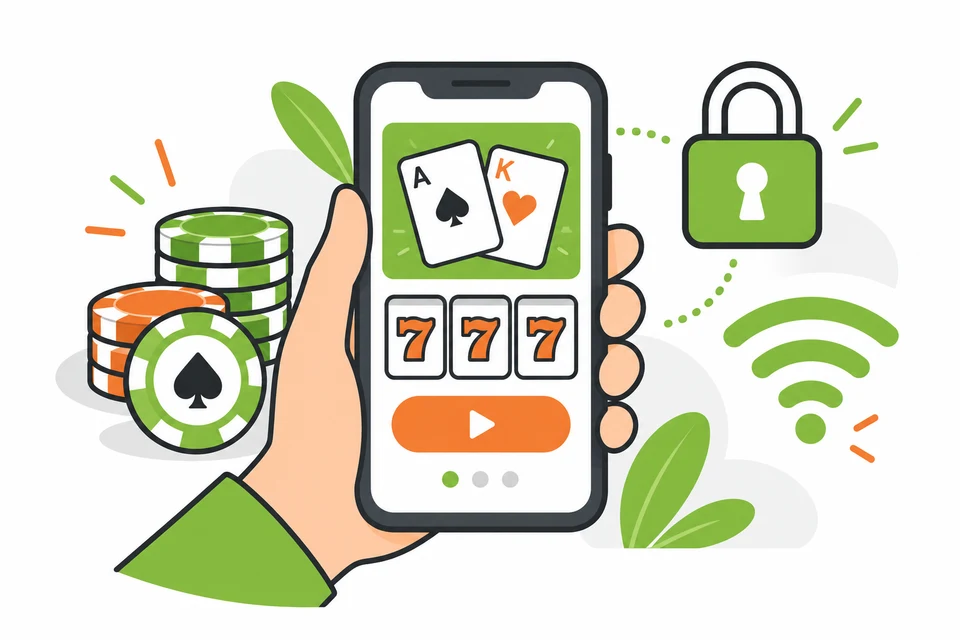
Under the 2025 Act, online betting, online lotteries and online casino games are lawful when offered by an operator holding the relevant GRA licence. Any form of gambling offered without a licence is unlawful. The draft conduct regulations required geolocation, electronic identity and age checks, deposit-limit tools and “reality checks” showing how long a person has been playing.
Enforcement against unlicensed and offshore operators
The Act relies mainly on criminal penalties, licensing control and monitoring:
- Unlicensed operation (section 98): a fine of up to KES 3 million, up to three years’ imprisonment or both for a first offence, and up to KES 5 million, five years or both for a second or subsequent offence.
- Foreign operators (section 79): a foreign operator that provides gambling services without meeting the Act’s requirements faces a fine of up to KES 2 million, two years’ imprisonment or both if it is a natural person, and a fine of up to KES 50 million if it is a body corporate.
- Monitoring (section 68): the Authority must establish a framework for real-time monitoring of online gambling, accessible to other agencies including the Communications Authority.
- Payments: the draft conduct regulations require licensees to use payment providers licensed by the Central Bank of Kenya.
We did not find in the sources reviewed a published GRA blocklist of unlicensed websites, or a statutory duty on internet service providers or payment providers to block unlicensed operators, comparable to those in some European licensing systems.
Advertising
Section 87 provides that no person may advertise a gambling activity on any medium “without the approval of the Authority”. Approved advertisements must state that gambling is addictive, must not target children, must not be false or misleading, may not be placed near learning institutions, and may not be broadcast between 6 am and 10 pm except during live sporting events. Twenty per cent of airtime must be devoted to responsible gambling messages. The Advertising Regulations, 2026 add more detail. Advertisements must be submitted at least seven days in advance, with an application fee of KES 50,000 plus 6% of the advertising budget. They may not associate gambling with celebrities or social success, use endorsements by “persons of public trust”, use testimonials or calls to action, or depict anyone who appears to be under 18. Roadshows are banned and a 200-metre buffer applies around learning institutions. Breaches carry fines of up to KES 1 million, up to six months’ imprisonment or both.
These rules build on earlier action by the BCLB. After a 30-day moratorium on gambling advertising from 29 April 2025, the BCLB issued guidelines in May 2025 that banned celebrity and influencer endorsements (Capital FM, 30 May 2025).
Position of players
The Act’s offences are aimed at operators, promoters and facilitators. We reviewed the offence provisions in sections 92 to 109. They cover unlicensed operation, unlicensed bookmaking, unauthorised lotteries and pool betting, touting, games of chance in unlicensed premises and betting with a child. None of them makes it an offence for an adult simply to place a bet with an unlicensed operator. We found no record of an adult player being prosecuted for using an offshore gambling website. That does not make such play lawful or safe. An unlicensed operator is outside the GRA’s dispute resolution process under section 80, outside the self-exclusion scheme and outside the protections attached to player accounts and funds in sections 73 to 77. A player has no regulatory route to recover unpaid winnings. Children may not take part in gambling at all, and operators commit an offence by betting with a child (section 109).
Taxation
Gambling tax in Kenya has changed almost every year. The table summarises the main taxes borne by players, as confirmed by the Kenya Revenue Authority (KRA) and professional advisers:
| Tax | Rate and base | In force from |
|---|---|---|
| Excise duty on betting and gaming | 12.5% raised to 15% of the amount wagered or staked | 27 December 2024 (KRA) |
| Excise duty on betting and gaming | 5% of the amount deposited into a betting or gaming wallet | 1 July 2025 (KRA) |
| Excise duty on betting and gaming | 5% of amounts deposited for betting or gambling, whether or not held in a wallet; horse-racing exemption removed | 1 July 2026 (Finance Act, 2026) |
| Withholding tax on withdrawals | 5% of amounts withdrawn from betting or gaming accounts | 1 July 2025 (Finance Act, 2025) |
| Withholding tax on winnings | 20% of payouts from lotteries and prize competitions | 1 July 2026 (Finance Act, 2026) |
Before July 2025, a 20% withholding tax applied to betting and gaming winnings (KRA). The Finance Act, 2025 replaced it with the 5% tax on withdrawals and moved excise duty from stakes to deposits. Bowmans noted possible constitutional challenges, because both apply even when no bet is placed. The Finance Act, 2026 received assent on 26 June 2026. It widened “withdrawals” to cover non-cash benefits and reintroduced a 20% withholding tax on “winnings”, now defined as payouts from lotteries and prize competitions (PwC; Afriwise). According to Afriwise, payouts from betting and gaming remain in the 5% withdrawals category. PwC notes uncertainty over whether the 20% applies to gross payouts or only to net gains.
For operators, the KRA’s taxpayer guidance lists a betting tax and a gaming tax of 15% of revenue (gross turnover less winnings paid) and a lottery tax of 15% of turnover. The Gambling Control Bill had proposed a single 15% gambling tax on gross gambling revenue and a levy of up to 1% (ALN). We could not confirm from the enacted text which statutory provision now imposes the operator-level tax following the repeal of Cap. 131, so readers should check the current position with the KRA. Trade publication Focus Gaming News reported in July 2026 that KRA collected KSh 16.5 billion in betting tax in the 2025/26 financial year, 24.9% more than the previous year.
Consumer protection and responsible gambling
Section 115 of the Act provides for self-exclusion. The GRA’s self-exclusion page explains that a person can exclude themselves by visiting the Authority’s office in Nairobi or by email, with proof of identity, a photo and proof of address. Periods typically run from six months to five years, during which the person may not gamble on operators’ premises, websites or apps and is removed from marketing databases. Exclusion cannot be ended early. The GRA states that it is “a legal requirement for gambling companies to provide the self-exclusion option”. The draft conduct regulations go further. They provide for a national self-exclusion register that all licensees can check in real time, a minimum of three years before a permanent exclusion can be lifted, and a duty on operators to refund deposits from excluded persons and report attempted play within 24 hours. These provisions should be checked against the final gazetted text.
Other statutory protections include the ban on registering children (section 72), the KES 20 minimum online stake (section 71), the restrictions on credit and inducements (section 74) and the rules on player accounts and inactive accounts (sections 73 to 77). The GRA operates a toll-free line, 0800 723 770, for enquiries and complaints, listed on its website. We did not find a dedicated, publicly funded national gambling-treatment helpline in the sources reviewed. See also our responsible gambling guide.
Social concern about youth betting
Youth participation is a recurring theme of public debate in Kenya. The most widely cited data come from a GeoPoll survey of March 2017. It questioned 3,879 people aged 17 to 35 in six African countries through a mobile app. In Kenya, 76% of respondents said they had gambled, the highest share among the countries surveyed, and most of those bets were on football. As an app-based survey from 2017, it is an indication rather than a representative national estimate.
Recent and upcoming developments
- Transition to the GRA (2025 to 2026). The Act commenced in August 2025. Draft regulations were consulted on in March and April 2026, and five sets of regulations were gazetted on 30 June 2026, launching the first licensing cycle (SiGMA). Licences issued under Cap. 131 remained valid for 60 days from publication of the Licensing Regulations.
- Director General petition (2026). NEXT.io reported in June 2026 a constitutional petition challenging the appointment of the GRA’s Director General because of his previous industry role. We found no reported outcome.
- Licensing fee litigation (2026). In July 2026 the High Court (Justice W. Musyoka) suspended the Licensing Regulations in a judicial review brought by two individual petitioners against the Prime Cabinet Secretary, the GRA and the Attorney General. The Association of Gaming Operators Kenya and Safaricom were interested parties (Yogonet). The petitioners argued that fees had risen by between 200% and almost 50,000% without adequate public participation. In August 2026 the court partly lifted the stay so that applications could be processed. iGaming Business reported that the higher fees and capital requirements remained suspended. The Business Daily reported on 24 August 2026 that the court had varied its order to let the GRA implement the regulations, including the contested fees. iGaming Business reported that judgment was scheduled for 2 October 2026. As of 6 October 2026 we had not found a reported judgment, so the status of the fee schedule should be treated as unsettled.
Casino listings for players in Kenya
The listings below are generated automatically from our casino database. They do not show that an operator holds a licence from Kenya’s Gambling Regulatory Authority. Online casino games may lawfully be offered to people in Kenya only by operators licensed under the Gambling Control Act, 2025. Readers should check an operator’s status with the GRA before relying on its claims.
Vegas Casino Online
No Deposit Bonus
$ 20
Liberty Slots Casino
No Deposit Bonus
$ 18

Slots.lv
100% up to
$2,000
+ 20 Spins
Sloto'Cash Casino
100% up to
∞

Casino Extreme
200 Spins

Bovada Casino
100% up to
$1,000
Casino Brango
500% up to
$/€100
+ 500 Spins
Shazam Casino
Exclusive No Deposit Bonus
$ 50
Lucky Tiger Casino
No Deposit Bonus
$ 55
Red Stag Casino
25% up to
∞
Rich Palms Casino
250% up to
∞

Miami Club Casino
50 Spins

Highway Casino
$ 30

Lincoln Casino
No Deposit Bonus
$ 18

Yabby Casino
202% up to
∞

DuckyLuck Casino
500% up to
$/€2,500
+ 150 Spins
PlayCroco Casino
300% up to
∞
+ 60 Spins
Fair Go Casino
200% up to
∞

Uptown Aces
250% up to
∞

Las Vegas USA Casino
No Deposit Bonus
$ 20
Drake Casino
300% up to
$2,000
Sun Palace Casino
No Deposit Bonus
$ 20
Slots Plus
No Deposit Bonus
$ 20
Ignition Casino
200% up to
$100
.jpg?x83485)
Everygame Classic Casino
200% up to
∞
+ 50 Spins
Slots And Casino
500% up to
∞
+ 150 Spins

Slotsroom Casino
400% up to
∞
+ 20 Spins

Casino Max
400% up to
∞
+ 20 Spins
El Royale Casino
230% up to
∞
Black Lotus Casino
300% up to
$7,000
+ 45 Spins
Red Dog Casino
Slots Empire
230% up to
$7,500

Lucky Creek
50 Spins

Spinfinity Casino
400% up to
∞
+ 20 Spins

Jackpot Capital
25% up to
∞
Ripper Casino
25% up to
∞

Las Atlantis Casino
$ 2,500
Slotastic
250% up to
∞

Grand Eagle
200% up to
$5,500
+ 30 Spins

Cherry Jackpot
400% up to
∞
+ 20 Spins
Grande Vegas
150% up to
$300
LadyLuck Casino
100 Spins
Roaring 21 Casino
400% up to
∞
+ 20 Spins

Ozwin Casino
$ 10
Treasure Mile
200% up to
$/€4,000
+ 50 Spins

TropicanaCasino
Borgata Online Casino

BetOnline Casino
100 Spins

Grand Rush
200% up to
$4,000
+ 40 Spins

Jazz Casino
10% up to
$250

BetMGM Casino NJ
100% up to
$1,000
Sources and further reading
- Republic of Kenya (published by the Gambling Regulatory Authority), The Gambling Control Act, 2025 (No. 14 of 2025), Kenya Gazette Supplement No. 141 (2025).
- Republic of Kenya, Betting, Lotteries and Gaming Act, Chapter 131 (revised edition 2012) (copy hosted by COFEK; accessed 6 October 2026).
- Gambling Regulatory Authority, The Gambling Control (Licensing) Regulations, 2026, Legal Notice No. 111 (2026).
- Gambling Regulatory Authority, The Gambling Control (Advertising) Regulations, 2026, Legal Notice No. 114 (2026).
- Gambling Regulatory Authority, Foreign-Based Operator Regulations, Legal Notice No. 113 (2026).
- Gambling Regulatory Authority, Draft Gambling Control (Conduct of Gambling Operations) Regulations, 2026 (2026).
- Gambling Regulatory Authority, Notice for Public Participation on Regulations under the Gambling Control Act, 2025 (2026).
- Gambling Regulatory Authority, Self-Exclusion Process (accessed 6 October 2026).
- Gambling Regulatory Authority, Home page and Licensed operators (accessed 6 October 2026).
- Kenya Revenue Authority, Adjustment of Excise Duty Rates by the Tax Laws (Amendment) Act, 2024 (2024).
- Kenya Revenue Authority, Adjustment of Excise Duty Rates by the Finance Act, 2025 (2025).
- Kenya Revenue Authority, Betting, Gaming and Lottery Tax: FAQs (accessed 6 October 2026).
- Mwathe, D. and Kamanthe, P. (Bowmans), Kenya: The Gambling Control Act, 2025 – Key Provisions (2025).
- Bowmans, Kenya: The Finance Act, 2025 (2025).
- PwC Kenya, Tax Alert: Highlights of the Finance Act, 2026 (2026).
- Afriwise, Analysis of the Tax Changes Introduced by the Finance Act 2026 (2026).
- Chepkwony, C. (CM Advocates LLP), Kenya Gazettes the Gambling Control (Licensing) Regulations, 2026 (2026).
- ALN Kenya, Recent Developments Shaping Kenya’s Betting and Gaming Sector (2024).
- Citizen Digital, President Ruto signs Gambling Control and Kenya Roads Bill into law (2025).
- Capital FM, BCLB unveils strict gambling advertisement guidelines to promote responsible betting (2025).
- Yogonet, High Court halts Kenya gambling licensing rules days after launch (2026).
- iGaming Business, Kenya gambling licensing set to proceed following High Court ruling (2026).
- Business Daily, High Court allows gambling regulator to implement contested fees (2026).
- SiGMA, Kenya launches first licensing cycle under new gambling rules (2026).
- NEXT.io, Kenya’s licensing deadline arrives as court challenge clouds new regulator (2026).
- Focus Gaming News, Kenya betting tax revenue jumps 24.9% to KSh16.5bn in FY2025/26 (2026).
- GeoPoll, Mobile Gambling among Youth in Sub-Saharan Africa (2017).
- Wikipedia, Betting Control and Licensing Board (accessed 6 October 2026; used as a pointer only).