Legal casino gambling age in Malaysia
Malaysia follows a prohibition model with narrow, state-controlled exceptions. Gambling is an offence unless it falls within a licence or exemption granted by the federal Minister of Finance under one of a small group of statutes, most of them older than the country itself: the Lotteries Act 1952, the Common Gaming Houses Act 1953, the Betting Act 1953, the Racing Club (Public Sweepstakes) Act 1965 and the Pool Betting Act 1967. Under this system one casino, Resorts World Genting, a handful of number-forecast lottery operators and the race clubs trade lawfully. No law licenses online casinos or online betting, and the Court of Appeal has held that online gambling can be prosecuted under the 1953 Act. A second, parallel layer applies to Muslims, who make up a majority of the population: Islamic (Syariah) criminal law, enacted state by state, forbids them to gamble at all.
Key points
- Gambling is prohibited except where licensed or exempted under federal law. Licences are issued at the discretion of the Minister of Finance, and there is no independent regulator.
- Resorts World Genting in Pahang holds the only casino licence, first granted in 1969. Muslims are barred from entering, and the minimum age is 21.
- There is no licence for online casinos or online betting. In October 2023 the Court of Appeal held that online gambling is an offence under the Common Gaming Houses Act 1953. The Malaysian Communications and Multimedia Commission (MCMC) blocks gambling websites and has social-media gambling content removed.
- Muslims are additionally prohibited from all gambling by state Syariah criminal law; in the Federal Territories the penalty is a fine of up to RM3,000, up to two years’ imprisonment, or both.
- Budget 2019, tabled in November 2018, raised casino duty to 35% of gross gaming revenue and the annual casino licence fee to RM150 million. Lottery winnings are generally not taxed.
- In February 2026 the government said it was drafting a new law on illegal and online gambling. We found no record that it had been tabled in Parliament by 6 October 2026.
Last reviewed: 6 October 2026.
Top Rated Online Casinos for Malaysia

Liberty Slots Casino
Sign Up100% up to
$259
Casino Brango
Sign Up500% up to
$/€100
+ 500 Spins
Shazam Casino
Sign Up250% up to
$2,500
Rich Palms Casino
Sign Up250% up to
∞

Lincoln Casino
Sign Up100% up to
$100
+ 25 Spins

Miami Club Casino
Sign Up100% up to
$100
Liberty Slots Casino
Sign Up100% up to
$259
Casino Brango
Sign Up500% up to
$/€100
+ 500 Spins
Shazam Casino
Sign Up250% up to
$2,500
Rich Palms Casino
Sign Up250% up to
∞
Lincoln Casino
Sign Up100% up to
$100
+ 25 Spins
Miami Club Casino
Sign Up100% up to
$100
Historical development
According to an overview in BJPsych International by Balan Rathakrishnan and Sanju George (2021), gambling was brought to the Malay peninsula by Chinese merchants in the nineteenth century, and horse racing was introduced by the British during the same period. The legal response was a general prohibition with licensed exceptions, and the Lotteries Act 1952, the Common Gaming Houses Act 1953 and the Betting Act 1953 all pre-date independence in 1957.
After independence Parliament added statutes that allowed specific, controlled forms of betting. According to a summary prepared for the Law Commission of India (Report No. 276), the Racing Club (Public Sweepstakes) Act 1965 allows the race clubs to run sweepstakes in which non-members may take part. The Racing (Totalizator Board) Act 1961 (Act 494) established the Totalizator Board, which the Betting Act exempts from its prohibitions. The Pool Betting Act 1967 was first enacted as Act No. 72 of 1967 and revised in 1989 (Act 384, reprint on the Attorney General’s Chambers portal).
The most important single decision came in 1969, when the government granted a casino licence to the Genting group for its development in the Genting Highlands, Pahang. Fortune (September 2024) reports that the licence has been renewed every three months since. No second casino licence has been issued. Number-forecast lotteries (popularly called “4D”) grew alongside it; the BJPsych overview counted six legal lottery operators, all privately owned, three horse-racing venues and one land-based casino in 2021.
Two later themes shaped the present position. The first is fiscal: casino duty rose from 22% to 25% in 1998 and from 25% to 35% in 2018 (The Edge Malaysia, November 2018). The second is political and religious. States governed by the Islamic party PAS have tried to remove licensed gambling outlets, with limited legal success (see below).
Legal framework

Under the Federal Constitution, gambling is regulated mainly by federal statutes, which define offences and leave exceptions to the Minister of Finance. In addition, each state’s Islamic criminal law applies to Muslims.
Common Gaming Houses Act 1953 (Act 289)
The Common Gaming Houses Act (CGHA) is the central prohibition. In the text published by CommonLII, a “common gaming house” includes any place kept for gaming to which the public has access, a place used habitually for gaming, and a place where a public lottery is conducted. Gaming means playing a game of chance, or of mixed chance and skill, for money or money’s worth. The main offences are:
- Operating a common gaming house (section 4). In 2024 prosecutors cited the penalty under section 4(1)(g) as a fine of RM5,000 to RM50,000 and imprisonment of up to three years (Malay Mail, July 2024).
- Gaming machines (section 4B): dealing in, supplying or operating gaming machines. The CommonLII text sets a fine of RM10,000 to RM100,000 for each machine, with imprisonment of up to five years.
- Gaming in a common gaming house (section 6) and gaming in a public place (section 7): each punishable by a fine of up to RM5,000, imprisonment of up to six months, or both.
- Lotteries: section 4A penalises promoting an unlawful lottery, and section 9 penalises buying tickets in one.
Section 27A allows the Minister of Finance to license a company to promote and organise gaming in specified premises for a period of up to three months at a time, renewable. This is the provision that makes a casino lawful. In October 2023 the Court of Appeal unanimously confirmed that online gambling falls within the Act. It held that “there is no requirement in the law for the equipment to exist physically on the premises” and that computers and laptops can be gaming machines.
The penalties are widely considered low. In October 2019 the then Finance Minister announced that fines and mandatory prison terms under the CGHA would be raised sharply, to RM100,000 and six months for illegal gamblers and RM1 million and twelve months for illegal operators. In October 2020 The Star reported lawyers’ view that the operator penalty remained a fine of up to RM50,000, three years’ imprisonment or both. We could not confirm that the 2019 proposals were enacted; the 2024 charges cited above use the lower range.
Betting, pool betting, lotteries and racing
- Betting Act 1953 (Act 495). Its long title is “An Act to suppress betting houses and betting in public places”. In the official reprint, keeping a common betting house carries a fine of up to RM200,000 and up to five years’ imprisonment. Betting in such a place carries a fine of up to RM5,000 or up to six months. Bookmaking and betting-information centres (places that pass on betting information by telephone or other means) are also offences. The Totalizator Board and recognised turf clubs are exempt.
- Pool Betting Act 1967 (Act 384). The basis of the number-forecast operators. The Act gives the Minister of Finance full discretion: he “may refuse to issue or renew a licence to any person without assigning any reason and his decision shall be final”. Pool betting duty is set by the Minister.
- Lotteries Act 1952 (Act 288). The Act lets the Minister of Finance permit lotteries for philanthropic, religious, educational or welfare purposes, but not for purposes connected with Islam. Unlicensed promotion carries up to three years’ imprisonment, a fine of up to RM10,000, or both.
- Racing Club (Public Sweepstakes) Act 1965 and Racing (Totalizator Board) Act 1961. These allow betting on horse racing through the race clubs and the Totalizator Board.
Islamic law and Muslims
Islamic law is a state matter, and every state has its own Syariah criminal enactment. In the Federal Territories, section 18 of the Syariah Criminal Offences (Federal Territories) Act 1997 (Act 559) makes gambling an offence for Muslims, punishable by a fine not exceeding RM3,000, imprisonment of up to two years, or both. According to the Law Commission of India summary, it also covers being found in a gaming place. A 2025 comparative study by Tuan Ibrahim, Nor Muhamad and Baharuddin notes parallel provisions in other states, including section 37 of the Kelantan Syariah Criminal Code (I) Enactment 2019. A federal licence does not override this prohibition: the Genting casino does not admit Muslims (BJPsych overview), and lotteries under the 1952 Act cannot be run for Islamic purposes.
States have also used their control of local business licences. Kelantan and Terengganu have phased out gambling outlets (Malay Mail, June 2023). Perlis decided not to renew the licences of its six lottery outlets, with closure by March 2024. Kedah announced in November 2021 that it would stop issuing and renewing such licences, and its outlets closed on 1 January 2023 (The Rakyat Post). The pool betting operators challenged the policy. The High Court quashed it on 20 June 2024. The Court of Appeal upheld that decision by a 2–1 majority on 12 December 2025, finding the state’s action an “impermissible state-wide prohibition”. On 12 August 2026 the Federal Court refused Kedah leave to appeal (The Star, 12 August 2026). The rulings do not affect the Syariah prohibition on Muslims.
Regulator and licensing model
Malaysia has no independent gambling regulator. Licensing is in the hands of the Minister of Finance under each statute, and enforcement against illegal gambling is a matter for the Royal Malaysia Police. The model is best described as a closed, discretionary system. We found no published process for applying for a new licence, and the Pool Betting Act expressly allows the Minister to refuse without reasons.
The licensed sector is small and stable. The casino licence held by the Genting group has been renewed on a three-monthly basis since 1969 (Fortune). In an August 2026 statement rebutting claims by Kedah’s chief minister, the Ministry of Finance said that the MADANI Government, in office since late 2022, had “never issued any new gambling licences or permits”, and that the licences in force rest on approvals dating back to the 1990s. It also said that special lottery draws had been cut from 22 to eight a year from January 2023.
There is no public register of gambling licences. Any online casino or online sportsbook accepting Malaysian residents is unlicensed in Malaysia.
Online gambling: prohibition and enforcement
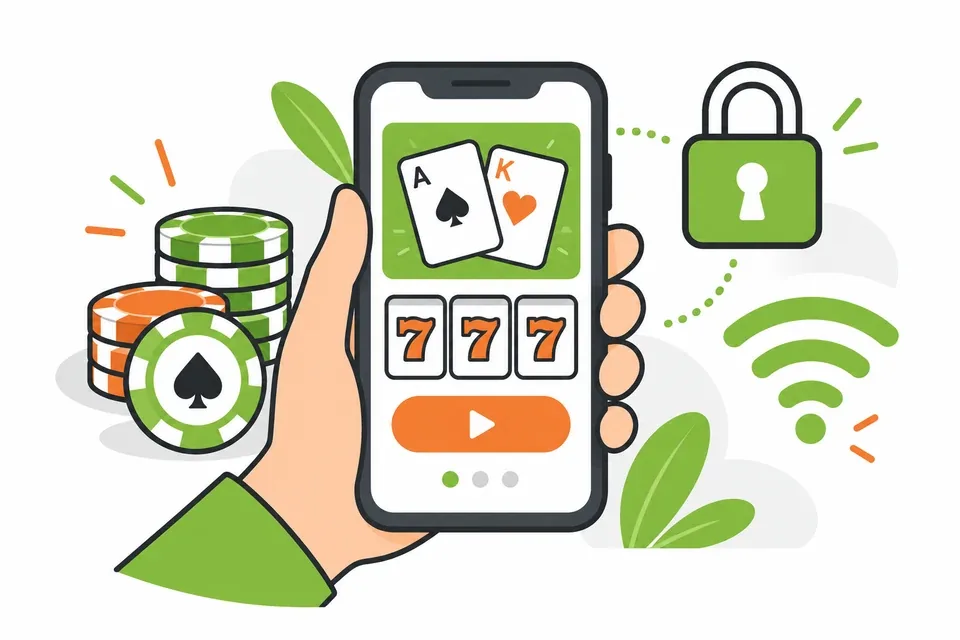
No Malaysian statute provides a licence for online casino games, online betting or online poker, and the Minister’s powers under section 27A of the CGHA relate to gaming on specified premises. Online gambling offered to people in Malaysia is therefore unlawful.
Police enforcement. Prosecutions have mostly targeted the premises from which online gambling is run or sold. In January 2023 a magistrates’ court in Kuching sentenced an operator to five months’ imprisonment under section 4B(a) of the CGHA after a raid on premises used for online gambling (Malay Mail). National operations continue: in the “Op Dadu Mega” operation of 20–23 December 2025, police detained 85 people at 21 premises, most of them call centres promoting gambling websites. They reported 117 premises raided and 713 people detained in 2025 up to 23 December (The Star, December 2025).
Blocking and content removal. The MCMC acts under the Communications and Multimedia Act 1998. According to the Communications Minister, Fahmi Fadzil, replying to a parliamentary question in February 2025, 5,026 gambling websites had been blocked since 2022, and 224,403 gambling items removed from social media by 1 February 2025, 209,006 from Facebook (RTM). Written replies reported by The Star in July 2026 gave 457,562 items of gambling content removed and 1,778 websites blocked between 1 January 2025 and 31 May 2026. They also cited the Online Safety Act 2025 (Act 866), and noted that gambling itself falls to the police under the CGHA. Between 1 January and 19 April 2026 the MCMC sent 203,918 takedown requests, 61% of them about gambling (Bernama). Blocking has limits: in 2023 the Home Minister said blocked sites were quickly replaced by mirror sites (Malay Mail, June 2023).
Advertising. Promoting gambling can itself be charged. In July 2024 five social-media influencers pleaded not guilty in Kuala Lumpur to charges of promoting online gambling, under section 4(1)(g) of the CGHA and, in one case, section 8(1), which carries a fine of RM20,000 to RM200,000 and up to five years’ imprisonment (Malay Mail). We did not find a reported outcome.
Position of players
Playing with an unlicensed operator is not lawful. The CGHA penalises taking part in gaming in a common gaming house (section 6) or in a public place (section 7), with a fine of up to RM5,000, up to six months’ imprisonment, or both. Buying a ticket in an unlawful lottery is a separate offence (section 9). The Betting Act likewise penalises betting in a common betting house.
In practice, the reported cases we found were brought against operators, agents, call-centre staff and promoters, and against people found on raided premises. We found no reported prosecution of a person solely for gambling online from home, though the risk cannot be ruled out. Muslims are in a different position: gambling in any form, licensed or not, is a Syariah offence for them, and they cannot lawfully enter the casino. According to the Law Commission of India summary, the Contracts Act 1950 makes wagering agreements void, so winnings from unlicensed sites cannot be recovered in court.
Non-Muslim adults may lawfully buy tickets from licensed number-forecast operators, bet with the race clubs and the Totalizator Board, and play at Resorts World Genting, where the minimum age is 21.
Taxation
Operators
The casino and the licensed operators pay specific gaming duties on top of general taxes. Budget 2019, tabled in November 2018, made the following changes, which GGRAsia described as the first increase in gaming duties since 1998:
| Charge | Before Budget 2019 | From Budget 2019 |
|---|---|---|
| Casino duty | 25% of gross gaming revenue | 35% of gross gaming revenue |
| Annual casino licence fee | RM120 million | RM150 million |
| Gaming machine duty | 20% of gross collection | 30% of gross collection |
| Gaming machine dealer’s licence | RM10,000 a year | RM50,000 a year |
Gross gaming revenue (GGR) means stakes less winnings paid out. Number-forecast operators pay pool betting duty, which the Pool Betting Act leaves to be prescribed by the Minister, and a separate gaming tax. We could not verify the current rates of either from an official source. Gaming is also subject to service tax, calculated by formula. After the Goods and Services Tax was abolished in 2018, analysts described the formula for the casino as GGR less casino duty, multiplied by 6/106 (Borneo Post, July 2018). Budget 2024 raised the general service tax rate from 6% to 8%. Nomura analysts noted that gaming companies have historically absorbed this tax (The Edge, October 2023).
Players
According to Lee Hishammuddin Allen & Gledhill (2025), “lottery winnings are generally not subject to tax” in Malaysia, and the capital gains tax introduced from 1 January 2024 does not apply to lottery prizes. The firm cautions that the Inland Revenue Board may still examine wealth or spending that does not match declared income.
Consumer protection and responsible gambling
Malaysia has no national self-exclusion register and no statutory responsible-gambling code, and the gambling-specific support available is limited. The BJPsych overview found that “there are no structured gambling treatment facilities in the public sector” and that most people with gambling problems “go unrecognised and untreated”.
Protection is concentrated at the single casino. Resorts World Genting offers permanent self-exclusion from its gaming areas, which can be revoked only after six months and a review, and a seven-day temporary exclusion. It also offers a “Set My Limit” tool for Genting Rewards members aged 21 and over, round-the-clock responsible-gaming staff and a hotline (+603 6105 9557). It refers players to the Malaysian Mental Health Association (03-2780 6803), Befrienders (03-7627 2929) and Life Line Association Malaysia (03-4265 7995). Nationally, the Ministry of Health’s HEAL 15555 mental-health helpline, launched on 21 October 2022, handled 90,981 calls in 2025 (Malay Mail, January 2026); it is a general service, not gambling-specific.
Because online gambling is unlicensed, players who use offshore sites have no complaint route in Malaysia. Our responsible gambling guide sets out general steps for keeping gambling under control.
Recent and upcoming developments
- Reform of the 1953 Acts (2023 onwards). In June 2023 the Home Minister, Saifuddin Nasution Ismail, said the ministry would push to amend the CGHA and the Betting Act, because “in 1953, gambling was probably cockfightings but now it’s online gambling, and we are still using the same Acts” (Malay Mail).
- Draft illegal gambling bill (February 2026). On 15 February 2026 Deputy Prime Minister Fadillah Yusof said a law to curb illegal and online gambling was being drafted. The government had not decided whether to amend the CGHA, adopt a standalone Act or include the provisions in a proposed Cyber Crime Bill. It might be tabled as early as the next sitting of the Dewan Rakyat (Free Malaysia Today; iGaming Business). The stated aims include clearer police powers and coverage of social-media marketing and e-wallet payments. We found no record that the bill had been tabled by 6 October 2026, but could not consult Parliament’s bills list directly; its status should be rechecked.
- Kedah litigation (2024–2026). With the Federal Court’s refusal of leave on 12 August 2026, the state’s ban on licensed outlets is finally invalid (see Legal framework).
- Pressure on the casino licence. In September 2024 PAS leaders in Pahang said they would close gambling premises if they won the state at the next general election, while acknowledging that federal co-operation might be needed (Fortune).
Casino listings for players in Malaysia
The listings below are generated automatically from our casino database. Malaysia does not license any online casino, so no operator in these listings is licensed in Malaysia, and the listings must not be read as an indication that playing online casino games from Malaysia is lawful. Online gambling is an offence under the Common Gaming Houses Act 1953, and all gambling is prohibited for Muslims under Syariah law.

Vegas Casino Online
No Deposit Bonus
$ 20
Liberty Slots Casino
No Deposit Bonus
$ 18

Slots.lv
100% up to
$2,000
+ 20 Spins

Sloto'Cash Casino
100% up to
∞

Casino Extreme
200 Spins

Bovada Casino
100% up to
$1,000
Casino Brango
500% up to
$/€100
+ 500 Spins
Shazam Casino
Exclusive No Deposit Bonus
$ 50

Lucky Tiger Casino
No Deposit Bonus
$ 55
Red Stag Casino
25% up to
∞
Rich Palms Casino
250% up to
∞
Miami Club Casino
50 Spins

Highway Casino
$ 30
Lincoln Casino
No Deposit Bonus
$ 18

Yabby Casino
202% up to
∞

DuckyLuck Casino
500% up to
$/€2,500
+ 150 Spins

PlayCroco Casino
300% up to
∞
+ 60 Spins
Fair Go Casino
200% up to
∞

Uptown Aces
250% up to
∞

Las Vegas USA Casino
No Deposit Bonus
$ 20
Drake Casino
300% up to
$2,000
Sun Palace Casino
No Deposit Bonus
$ 20
Slots Plus
No Deposit Bonus
$ 20
Ignition Casino
200% up to
$100
.jpg?x83485)
Everygame Classic Casino
200% up to
∞
+ 50 Spins
Slots And Casino
500% up to
∞
+ 150 Spins

Slotsroom Casino
400% up to
∞
+ 20 Spins

Casino Max
400% up to
∞
+ 20 Spins
El Royale Casino
230% up to
∞
Black Lotus Casino
300% up to
$7,000
+ 45 Spins
Red Dog Casino
Slots Empire
230% up to
$7,500

Lucky Creek
50 Spins

Spinfinity Casino
400% up to
∞
+ 20 Spins

Jackpot Capital
25% up to
∞
Ripper Casino
25% up to
∞

Las Atlantis Casino
$ 2,500

Slotastic
250% up to
∞

Grand Eagle
200% up to
$5,500
+ 30 Spins

Cherry Jackpot
400% up to
∞
+ 20 Spins
Grande Vegas
150% up to
$300
LadyLuck Casino
100 Spins

Roaring 21 Casino
400% up to
∞
+ 20 Spins

Ozwin Casino
$ 10
Treasure Mile
200% up to
$/€4,000
+ 50 Spins

TropicanaCasino
Borgata Online Casino

BetOnline Casino
100 Spins

Grand Rush
200% up to
$4,000
+ 40 Spins

Jazz Casino
10% up to
$250

BetMGM Casino NJ
100% up to
$1,000
Sources and further reading
- CommonLII, Common Gaming Houses Act 1953 (Act 289), revised text (accessed 6 October 2026).
- Attorney General’s Chambers of Malaysia, Betting Act 1953 (Act 495), reprint (accessed 6 October 2026).
- Attorney General’s Chambers of Malaysia, Pool Betting Act 1967 (Act 384), reprint (accessed 6 October 2026).
- Attorney General’s Chambers of Malaysia, Lotteries Act 1952 (Act 288), reprint (accessed 6 October 2026).
- T. M. F. H. Tuan Ibrahim, N. H. Nor Muhamad and A. S. Baharuddin, Online Gambling: A Comparative Analysis under Civil and Syariah Law in Malaysia (2025).
- B. Rathakrishnan and S. George, BJPsych International, Gambling in Malaysia: an overview (2021).
- Law Commission of India, Report No. 276 (via AdvocateKhoj), Legal Framework: Gambling and Sports Betting – Malaysia (accessed 6 October 2026).
- Fortune, Malaysia’s only casino targeted by Islamic political party (2024).
- GGRAsia, Casino tax hike to hurt GEN Malaysia: analysts (2018).
- The Edge Malaysia, Higher gaming duties hit Genting group (2018).
- The Edge Malaysia, Service tax hike to have negative impact on Genting Malaysia, Nomura says (2023).
- Borneo Post, Transition of tax will be largely neutral on gaming industry (2018).
- Lee Hishammuddin Allen & Gledhill, Beyond the Jackpot: Strategies for Effective Wealth Preservation (2025).
- Malay Mail, Appeals court rules online gambling an offence under Common Gaming Houses Act 1953 (2023).
- Malay Mail, Indonesian woman in Sarawak jailed five months for illegal online gambling (2023).
- Malay Mail, In KL, five social media influencers plead not guilty to promoting online gambling (2024).
- Malay Mail, Saifuddin Nasution: Home Ministry will push to amend outdated legislations to fight online gambling (2023).
- Free Malaysia Today, Higher penalties will get punters to bet legally, says lawyer (2019).
- The Star, Current gambling laws lack bite (2020).
- Free Malaysia Today, New law being drafted to curb online gambling (2026).
- iGaming Business, Malaysia deputy prime minister: draft bill on illegal iGaming heading to parliament (2026).
- RTM (Radio Televisyen Malaysia), 5,026 gambling websites blocked since 2022 (2025).
- The Star, Over 450,000 online gambling posts removed, 1,778 websites blocked since January 2025 (2026).
- Bernama, MCMC receives 203,918 takedown requests, 91 per cent related to gambling, scams (2026).
- The Star, Nearly 100 detained in nationwide crackdown on gambling call centres (2025).
- The Star, Federal Court upholds ruling on Kedah gaming licence ban (2026).
- The Rakyat Post, Kedah spent five years and three courts trying to ban 4D, it lost all three (2026).
- Malay Mail, No more lottery outlets in Perlis by March 2024 as state govt won’t renew licences (2023).
- The Vibes, MOF rebuts Kedah MB, saying MADANI Government never issued new gambling licences (2026).
- Resorts World Genting, Responsible Gaming (accessed 6 October 2026).
- Malay Mail, About 80 Malaysians a day turn to HEAL 15555 mental health hotline for help (2026).