Legal casino gambling age in Paraguay
Paraguay regulates gambling through a concession model: games of chance may be operated only by companies that win a public tender or receive an authorisation from the competent public body, and they pay a fee, known as a canon, in return. The founding statute is Law No. 1016/1997 on the legal regime for the operation of games of luck or chance, which created the National Gaming Commission (Comisión Nacional de Juegos de Azar, CONAJZAR). For most of the law’s life, the main national games, notably the numbers game known as quiniela and sports betting, were each awarded to a single exclusive operator, in effect a legal monopoly. Law No. 7438/2025 changed this. It allows up to three concessionaires for those games, lists online casinos as a recognised category, places CONAJZAR within the national tax authority (DNIT) and gives the regulator power to have unauthorised websites blocked.
Key points
- Gambling is lawful only under a concession or authorisation granted under Law No. 1016/1997, as amended by Law No. 7438/2025 (promulgated 3 January 2025) and regulated by Decree No. 3846/2025.
- CONAJZAR, now a deconcentrated body of the National Directorate of Tax Revenue (DNIT), awards national concessions by public tender. Departments and municipalities authorise certain local games.
- Law No. 7438/2025 ended the single-operator model: up to three concessionaires are allowed for quiniela and for sports betting. In April 2026 two quiniela concessions were awarded; the sports betting concession remains exclusive until 2028.
- “Casino online” is a recognised category of national game that requires a concession. Since September 2025 CONAJZAR has ordered the blocking of unauthorised gambling websites.
- Law No. 1016/1997 makes it an offence to operate clandestine games (up to five years’ imprisonment or a fine) and also to take part in them knowingly (up to two years or a fine).
- Cash prizes of PYG 500,000 or more are subject to an 8% final withholding of personal income tax (IRP).
Last reviewed: 6 October 2026.
Top Rated Online Casinos for Paraguay

Vegas Casino Online
Sign Up400% up to
$500

Liberty Slots Casino
Sign Up100% up to
$259

Sloto'Cash Casino
Sign Up100% up to
$500

Lucky Tiger Casino
Sign Up250% up to
$1,000
Shazam Casino
Sign Up250% up to
$2,500

Casino Brango
Sign Up500% up to
$/€100
+ 500 Spins
Vegas Casino Online
Sign Up400% up to
$500
Liberty Slots Casino
Sign Up100% up to
$259
Sloto'Cash Casino
Sign Up100% up to
$500
Lucky Tiger Casino
Sign Up250% up to
$1,000
Shazam Casino
Sign Up250% up to
$2,500
Casino Brango
Sign Up500% up to
$/€100
+ 500 Spins
Historical development
Paraguay’s present system dates from Law No. 1016/1997, which completed its passage through Congress in May 1997 and is dated July 1997 in the consolidated text. The law created CONAJZAR as a collegiate body bringing together central government, the departmental governments and the municipalities.
The original law set out the core features that still define the market. National games had to be awarded by public tender (licitación pública), concessions were granted for fixed terms, and the winning bidder paid a monthly canon to the state. In practice, the major national games were awarded on an exclusive basis. Sports betting, for example, was tendered in 2022 as a licence “with exclusivity throughout the national territory”, covering in-person, electronic and online betting, for a term of 60 months, according to Focus Gaming News. Industry figures quoted by Yogonet at the time complained that the tender conditions, including a requirement for 100 physical outlets, favoured the incumbent. The incumbent retained the concession, and its contract runs until 2028 (Focus Gaming News, 2025).
Online gambling developed on the margins of this framework. A 2024 analysis in the Asunción daily Crónica noted that the 1997 law addressed physical premises and gave online casinos no clear statutory basis, although CONAJZAR had authorised some concessionaires to operate online. In November 2024 President Santiago Peña and Economy Minister Carlos Fernández Valdovinos sent Congress a bill described as “a liberalisation of the gambling market, removing existing legal monopolies” at national, departmental and municipal levels, according to Yogonet. The Chamber of Deputies gave the bill final approval on 17 December 2024 (Focus Gaming News), and the Executive promulgated it as Law No. 7438/2025 on 3 January 2025. It was published on 14 January 2025, according to the DNIT.
Legal framework

Paraguay is a unitary republic, and the basic rules on gambling are national. Departments and municipalities, however, have their own powers to authorise certain games. The principal instruments are:
- Law No. 1016/1997, “which establishes the legal regime for the operation of games of luck or chance”, as amended. It defines the permitted games, creates CONAJZAR, sets the concession procedure, allocates games between the national, departmental and municipal levels, distributes the canon and defines the offence of clandestine gambling.
- Law No. 7438/2025, which “modifies and extends” Law No. 1016/1997. According to the DNIT, it places CONAJZAR under the DNIT, removes the sector’s monopolies and widens the range of authorised games.
- Decree No. 3846/2025, issued on 7 May 2025, which regulates Law No. 7438/2025. It sets out CONAJZAR’s structure and powers, technical requirements, enforcement procedures and transitional rules.
- Law No. 6380/2019 on the modernisation of the national tax system, and Decree No. 4661/2020, which regulates the withholding of personal income tax on gambling prizes.
The amended Article 3 of Law No. 1016/1997 lists thirteen categories of game: casinos; lotteries (deferred and instant); raffles; bingo; quiniela; promotional random draws; electronic games of chance; sports betting; horse racing; telebingo; casino online; quiniséis; and lotto. The definition of casino online is “a form of operation through an internet platform” on which roulette, blackjack, poker, baccarat and other games can be played, “always within the Republic of Paraguay”. Under Article 2, every form of game must be operated in accordance with a regulation issued by CONAJZAR.
The law divides jurisdiction by level of government. Under Article 20, games of national scope require a concession from CONAJZAR. These include casinos, quiniela, bingo, lotteries, national raffles, telebingo, horse-racing tracks, lotto, sports betting, quiniséis and casino online. Departmental governments may authorise bingo halls and racecourses in their territory. Municipalities may authorise bingo, premises for electronic games of chance, local raffles and lotteries, and racecourses.
Regulator and licensing model
Paraguay follows a concession model. This differs both from a state monopoly, in which a public body runs the games itself, and from an open licensing system, in which any qualified applicant may obtain a licence at any time. Here the state does not operate games directly; it grants time-limited rights to private companies through competitive tenders, and the number of rights for some games is capped. According to the DNIT, its General Directorate of Games of Chance (DGJA) prepares tender specifications, runs public tenders, awards concessions and calculates the distribution of the canon.
Under the amended law, CONAJZAR is “a deconcentrated body of the National Directorate of Tax Revenue” with functional autonomy. According to Decree No. 3846/2025, it comprises a representative of the DNIT, who presides, and representatives of the departmental governments, the municipalities, the Ministry of the Interior and the social welfare directorate (DIBEN). It authorises games, issues regulations, approves new modalities, runs tenders, hears administrative appeals and imposes sanctions, including fines and revocation of concessions.
The main features of the concession regime, according to the consolidated text of Law No. 1016/1997, are:
- Tender. National concessions are awarded exclusively by public tender. Bids are assessed on the canon offered, financial capacity, legal standing, experience and guarantees. Bidders must provide a bank guarantee or surety insurance covering the offer.
- Number of operators. Article 20 allows a maximum of three concessionaires each for quiniela and for sports betting.
- Duration. The standard term is five years. Casino concessions may run for up to 20 years, according to the investment made, and cannot be extended.
- Canon. The canon is paid monthly, with a surcharge of 1% for every ten days of delay. Where it is calculated as a percentage of takings or profits, the concessionaire’s accounts must be certified by an external auditor registered with the DNIT (Ferrere).
- New modalities. A new form of game may be operated under a provisional authorisation; after three years it becomes subject to public tender. Provisional authorisations granted before Law No. 7438/2025 remain valid for their contractual term or three years, whichever ends first, and cannot be extended (Decree No. 3846/2025).
- Technical controls. Operators must keep their systems connected to CONAJZAR in real time. Devices and systems must be certified by an inspection body accredited by the National Accreditation Body (ONA). Gaming premises must be at least 200 metres from schools and universities, subject to reasoned exceptions set by CONAJZAR (Decree No. 3846/2025).
CONAJZAR does not publish a single consolidated licence register in the form used by some regulators; the DNIT’s DGJA pages provide concessionaire reports and registers of auditors, laboratories and monitoring firms. According to ABC Color (February 2025), 50 companies held national authorisations in January 2025: 9 obtained through public tender, 32 provisional or new-modality authorisations, 5 awaiting start of operations and 4 awaiting contract signature.
Online gambling: what is permitted and how it is enforced
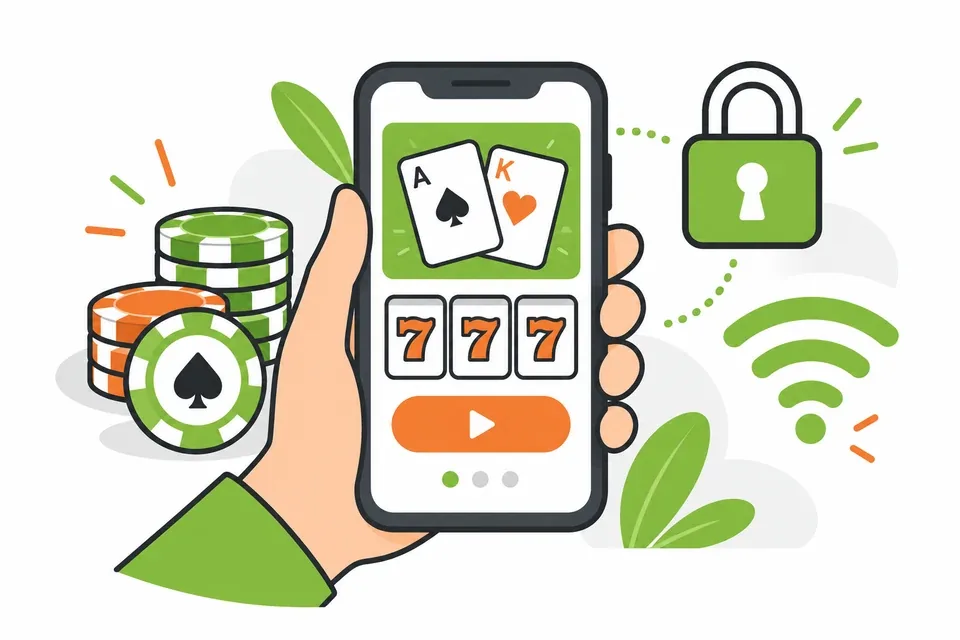
Online gambling is lawful in Paraguay only when it is offered by a company holding a concession or authorisation from CONAJZAR. Two categories are relevant. Sports betting may be offered online by the national sports betting concessionaire, whose 2022 concession expressly covers online channels. “Casino online” is listed as a national game requiring a concession under Article 20. An operator licensed in another country has no right to offer games to Paraguayan residents on that basis.
The status of online casino concessions is less clear than the law itself. Before Law No. 7438/2025, some online offerings were operated under CONAJZAR authorisations granted as new modalities; reports cite 16 concessionaires authorised to operate online by 2020 (Crónica, 2024), and ABC Color (2025) reported that online casinos account for the largest share of the local market. Under the transitional rules described above, such authorisations expire at the latest three years after the law took effect, after which the modality must be tendered. We found no official record of a completed public tender for casino online concessions as of October 2026, and no published CONAJZAR resolution that sets a specific canon for the online casino category. An industry overview by SOFTSWISS states that no online casino concession is active and that a tender is expected; that claim could not be confirmed from an official source.
Law No. 7438/2025 gave the regulator new enforcement tools:
- Website blocking. Blocking means requiring the bodies that manage internet addresses to make a website unreachable. On 19 September 2025 CONAJZAR director Carlos Liseras signed a resolution ordering “the blocking and cancellation of transmission” of domains, websites and platforms used for unauthorised gambling, including online casinos and sports betting, across domain variants such as .net, .org and .info (La Nación). The order is addressed to the National Computing Centre (CNC) of the National University of Asunción, which provides DNS services, and followed complaints from licensed concessionaires (Yogonet).
- Closure and seizure. CONAJZAR may order the immediate preventive closure of illegal premises, seize machines and equipment and refer clandestine operations to the Public Prosecutor (Decree No. 3846/2025).
- Advertising. The regulation prohibits advertising for unauthorised gambling and advertising that is misleading or improperly located. We did not find a detailed advertising code for licensed operators.
- Criminal law. Article 17 of Law No. 1016/1997 punishes anyone who owns or commercially operates clandestine games of chance with imprisonment of up to five years or a fine.
Operators and the industry body APOJA (Paraguayan Association of Gaming Operators) argue that enforcement remains weak. In August 2025 its president said that on illegal websites “there is no control whatsoever”: no identity checks to keep out minors, no self-exclusion and no guarantee that prizes will be paid. APOJA proposed a dedicated .bet.py domain to help players identify lawful sites (Yogonet).
Position of players
Paraguay’s gambling statute expressly penalises players. Article 17 of Law No. 1016/1997 provides that a person who knowingly takes part in clandestine games of chance may be punished with imprisonment of up to two years or a fine. A clandestine game is one operated without the concession or authorisation the law requires.
It is not clear from the sources reviewed whether, or how, this provision applies to a Paraguayan resident who plays on a foreign website without a Paraguayan concession. The enforcement measures announced since 2025 have targeted operators, websites and illegal premises rather than players, and we found no reported prosecution or fine of a player for online gambling. The risk should not be overstated, but playing on unauthorised sites cannot be described as lawful, and it offers none of the safeguards of the regulated market.
Taxation
Operators
The principal charge on operators is the canon. Its amount is set by the winning bid, subject to any minimum in the tender specifications, rather than by a single statutory rate. In the 2026 quiniela tender, for example, both bidders offered 19% of gross monthly takings, the minimum allowed, and a minimum guaranteed canon of about PYG 9,500 million applied (Focus Gaming News). The previous monthly canon for quiniela was reported at PYG 9,337 million, adjusted each year in line with consumer prices (SBC Noticias).
Under Article 30 of Law No. 1016/1997, after an administrative deduction of 0.7%, the canon from national games is shared: 30% to the municipalities, 30% to the departmental governments, 30% to the social welfare directorate (DIBEN) and 10% to the National Treasury. The Ministry of Economy and Finance distributes the funds, and departments and municipalities receive their share only if they report the authorisations they issue: existing ones within 30 days of the decree, new ones within 15 days (Decree No. 3846/2025).
According to ABC Color, canon revenue rose from PYG 89,751 million in 2020 to PYG 175,768 million in 2024, an increase of 95.8%, equal to about 0.5% of central government revenue. In the first quarter of 2026 gaming revenue reached PYG 55,043 million, 16% more than a year earlier (Focus Gaming News). Operators also pay ordinary taxes: corporate income tax (IRE) at 10% under Law No. 6380/2019, as summarised by SOFTSWISS.
Players
Under Decree No. 4661/2020, in force since 1 January 2021, cash prizes of PYG 500,000 or more from games regulated by Law No. 1016/1997 are subject to a withholding of personal income tax (Impuesto a la Renta Personal, IRP) at 8% of the prize. Concessionaires withhold the tax and remit it by the seventh day of the following month. The withholding is the “sole and definitive payment”, so the winner has no further liability on that prize. The decree refers to concessionaires generally and does not separately address online games. Winnings from unauthorised foreign sites fall outside this mechanism; we found no official guidance on how they are taxed.
Unclaimed prizes must be claimed within 60 working days. After that, the amount must be paid within 30 working days into the National Solidarity Health Fund (FONARESS) (Ferrere; Altra Legal).
Consumer protection and responsible gambling
The protective framework is thinner than the rules on concessions and revenue:
- Statutory duty. Article 6 bis of the amended Law No. 1016/1997 requires CONAJZAR’s director to promote awareness programmes on responsible gambling and the prevention of gambling addiction (ludopatía). Decree No. 3846/2025 adds duties on anti-money-laundering compliance and on promoting prevention and corporate social responsibility.
- Location rules. Gaming premises must keep a minimum distance of 200 metres from educational institutions.
- Age and self-exclusion. We did not find, in the consolidated law or the summaries of the decree, an express statutory minimum age or a national self-exclusion register. Age and identity rules may be set in individual game regulations and concession contracts, which are not consistently published. The DNIT’s DGJA pages include a “Juego Responsable” section.
Support is available through the public health system. Since 24 June 2025 the Ministry of Public Health and Social Welfare has operated a free, 24-hour line, 155, staffed by mental health professionals, for people in emotional crisis, including people seeking help with substance use; the announcement does not mention gambling specifically (La Nación). See also our responsible gambling guide.
Recent and upcoming developments
- Law No. 7438/2025 (January 2025). The Executive’s bill of November 2024 was approved by Congress on 17 December 2024 and promulgated on 3 January 2025. During the final vote, deputies Adrián Vaesken and Rocío Vallejo opposed the changes made to Article 20 (Focus Gaming News). The regulation, Decree No. 3846/2025, followed in May 2025.
- End of the quiniela monopoly (2026). CONAJZAR opened the first quiniela tender under the new law in November 2025 for up to three concessions for 2026 to 2031 (SBC Noticias). Two consortia, including the incumbent, bid on 27 March 2026; a third withdrew. By Resolution No. 47/2026 of 17 April 2026, CONAJZAR awarded two five-year concessions, ending the single-operator model for quiniela (Focus Gaming News). The third slot remains unawarded.
- Sports betting. The exclusive sports betting concession runs until 2028. In January 2025 CONAJZAR said it was studying an early tender for the two additional slots the law allows, while respecting the incumbent’s contract (Focus Gaming News). In December 2025 DNIT director Óscar Orué said the legal department was analysing whether to call the tender in 2026 or wait until 2028 (Yogonet). We found no announcement of a sports betting tender as of 6 October 2026.
- Online casino tender. No public tender for casino online concessions had been reported as completed by October 2026. Provisional authorisations granted before the 2025 reform expire, at the latest, three years after the law took effect, which places pressure on the regulator to tender the category by early 2028.
Casino listings for players in Paraguay
The listings below are generated automatically from our casino database. They do not show that an operator holds a concession or authorisation from CONAJZAR, and offering casino games to Paraguayan residents without one is unlawful; the listings must not be read as an indication that playing on a given site is lawful. Readers should check the concessionaire information published by the General Directorate of Games of Chance of the DNIT before playing.
Vegas Casino Online
No Deposit Bonus
$ 20
Liberty Slots Casino
No Deposit Bonus
$ 18

Slots.lv
100% up to
$2,000
+ 20 Spins
Sloto'Cash Casino
100% up to
∞

Casino Extreme
200 Spins

Bovada Casino
100% up to
$1,000
Casino Brango
500% up to
$/€100
+ 500 Spins
Shazam Casino
Exclusive No Deposit Bonus
$ 50
Lucky Tiger Casino
No Deposit Bonus
$ 55
Red Stag Casino
25% up to
∞

Rich Palms Casino
250% up to
∞

Miami Club Casino
50 Spins

Highway Casino
$ 30

Lincoln Casino
No Deposit Bonus
$ 18

Yabby Casino
202% up to
∞

DuckyLuck Casino
500% up to
$/€2,500
+ 150 Spins
PlayCroco Casino
300% up to
∞
+ 60 Spins

Fair Go Casino
200% up to
∞

Uptown Aces
250% up to
∞

Las Vegas USA Casino
No Deposit Bonus
$ 20

Drake Casino
300% up to
$2,000

Sun Palace Casino
No Deposit Bonus
$ 20
Slots Plus
No Deposit Bonus
$ 20

Ignition Casino
200% up to
$100
.jpg?x83485)
Everygame Classic Casino
200% up to
∞
+ 50 Spins
Slots And Casino
500% up to
∞
+ 150 Spins

Slotsroom Casino
400% up to
∞
+ 20 Spins

Casino Max
400% up to
∞
+ 20 Spins

El Royale Casino
230% up to
∞

Black Lotus Casino
300% up to
$7,000
+ 45 Spins
Red Dog Casino
Slots Empire
230% up to
$7,500

Lucky Creek
50 Spins

Spinfinity Casino
400% up to
∞
+ 20 Spins

Jackpot Capital
25% up to
∞

Ripper Casino
25% up to
∞

Las Atlantis Casino
$ 2,500
Slotastic
250% up to
∞

Grand Eagle
200% up to
$5,500
+ 30 Spins

Cherry Jackpot
400% up to
∞
+ 20 Spins
Grande Vegas
150% up to
$300
LadyLuck Casino
100 Spins

Roaring 21 Casino
400% up to
∞
+ 20 Spins

Ozwin Casino
$ 10

Treasure Mile
200% up to
$/€4,000
+ 50 Spins

TropicanaCasino

Borgata Online Casino

BetOnline Casino
100 Spins

Grand Rush
200% up to
$4,000
+ 40 Spins

Jazz Casino
10% up to
$250

BetMGM Casino NJ
100% up to
$1,000
Sources and further reading
- BaseLegal / Congress of Paraguay, Ley N.º 1016/1997, que establece el régimen jurídico para la explotación de los juegos de suerte o de azar (texto actualizado con la Ley N.º 7438/2025) (1997, consolidated 2025).
- Dirección Nacional de Ingresos Tributarios (DNIT), Ley N.º 7438 moderniza sistema de juegos de azar (2025).
- Impuestos Py, Decreto N.º 3846/2025, que reglamenta la Ley N.º 7438/2025 (2025).
- DNIT, Dirección General de Juegos de Azar (accessed 6 October 2026).
- Impuestos Py, Decreto N.º 4661/2020, retención del IRP sobre premios de juegos de azar (2020).
- Yogonet, Paraguay: Santiago Peña impulsa su propio proyecto de ley para “liberar los juegos de azar” (2024).
- Focus Gaming News, Paraguay sanciona un nuevo régimen jurídico para la explotación de los juegos de azar (2024).
- Altra Legal, Paraguay promulga la nueva ley de juegos de azar (2025).
- Ferrere, Nuevas disposiciones para los juegos de azar (2025).
- ABC Color, La nueva ley de Conajzar busca eficiencia y control (2025).
- Crónica, Así es la regulación de los casinos online en Paraguay (2024).
- La Nación, Apuestas clandestinas: Conajzar ordena el bloqueo y cancelación de sitios web (2025).
- Yogonet, Paraguay: Conajzar comienza a bloquear las plataformas de apuestas ilegales (2025).
- Focus Gaming News, Conajzar abrió la licitación para la explotación de apuestas deportivas en Paraguay (2022).
- Yogonet, Conajzar adjudicará este mes la licencia exclusiva de operación de apuestas deportivas en el Paraguay (2022).
- Focus Gaming News, Por qué la Conajzar de Paraguay estudia licitar nuevamente las apuestas deportivas (2025).
- Yogonet, La DNIT analiza llamar a licitación para licencias de apuestas deportivas durante 2026 (2025).
- SBC Noticias, Conajzar abre una licitación histórica para la Quiniela Nacional de Paraguay (2025).
- Focus Gaming News, Dos empresas presentaron ofertas para operar la quiniela en Paraguay bajo la nueva ley (2026).
- Focus Gaming News, Fin del monopolio de la quiniela en Paraguay: Conajzar adjudicó dos concesiones (2026).
- Yogonet, Paraguay: APOJA alerta sobre la expansión de sitios de juego ilegales y el riesgo de la ludopatía en menores (2025).
- La Nación, “No estás solo”: Salud habilita línea 155 para situaciones de crisis en salud mental (2025).
- SOFTSWISS, Regulación del mercado del iGaming en Paraguay: resumen (accessed 6 October 2026).