Legal casino gambling age in Philippines
The Philippines permits gambling, but only through channels authorised by the state. The central institution is the Philippine Amusement and Gaming Corporation (PAGCOR), a government-owned corporation that both runs its own casinos and licenses and regulates private operators, including the integrated resorts of Manila’s Entertainment City and a domestic online market of electronic casino games and sports betting. Gambling outside an authorised framework is an offence under Presidential Decree No. 1602. Offshore gaming aimed at foreign players, once a large licensed industry, was banned by executive order at the end of 2024 and made permanently illegal by the Anti-POGO Act of 2025. Since mid-2025 the domestic online market has been under sustained political pressure, with Senate bills proposing a total ban and PAGCOR, the central bank and the payments industry tightening the rules instead.
Key points
- PAGCOR operates under Presidential Decree No. 1869 (1983), as amended by Republic Act No. 9487 (2007), which extended its franchise for 25 years from July 2008. It is both an operator and the main regulator.
- Offering online casino games to people in the Philippines is legal only through operators licensed by PAGCOR; players must be at least 21 and must complete identity checks before depositing.
- Philippine offshore gaming operators (POGOs) were banned by Executive Order No. 74 from 31 December 2024 and by Republic Act No. 12312, signed on 23 October 2025.
- Unauthorised gambling is punishable under Presidential Decree No. 1602, which applies to participants as well as organisers.
- Since 2025 regulators have removed gambling billboards, restricted broadcast advertising, ordered e-wallets to drop gambling links and introduced minimum monthly fees for online operators. Bills for a total ban were pending in the Senate at the latest point we could verify.
- PAGCOR keeps a National Database of Restricted Persons for self-exclusion and family exclusion, and lists accredited help centres including a National Problem Gambling Helpline.
Last reviewed: 6 October 2026.
Top Rated Online Casinos for Philippines

Vegas Casino Online
Sign Up400% up to
$500

Liberty Slots Casino
Sign Up100% up to
$259

Sloto'Cash Casino
Sign Up100% up to
$500
Casino Brango
Sign Up500% up to
$/€100
+ 500 Spins
Shazam Casino
Sign Up250% up to
$2,500

Lucky Tiger Casino
Sign Up250% up to
$1,000
Vegas Casino Online
Sign Up400% up to
$500
Liberty Slots Casino
Sign Up100% up to
$259
Sloto'Cash Casino
Sign Up100% up to
$500
Casino Brango
Sign Up500% up to
$/€100
+ 500 Spins
Shazam Casino
Sign Up250% up to
$2,500
Lucky Tiger Casino
Sign Up250% up to
$1,000
Historical development
PAGCOR was created in 1976 under Presidential Decree No. 1067-A, during the martial-law period, with the stated aim of curbing illegal gambling by bringing games of chance under state control. Its powers were consolidated in 1983 in Presidential Decree No. 1869, known as the PAGCOR Charter. According to PAGCOR’s corporate profile, the corporation is wholly owned by the government and sits under the Office of the President. Its charter gives it three purposes: to regulate and operate games of chance, particularly casino gaming; to raise revenue for government programmes; and to promote tourism.
Penal law developed in parallel. Presidential Decree No. 1602, issued on 11 June 1978, prescribed stiffer penalties for illegal gambling and remains the general criminal statute for gambling outside an authorised framework.
In 2007 Congress renewed PAGCOR’s franchise through Republic Act No. 9487, approved on 20 June 2007. It granted a further 25 years from 11 July 2008, renewable for another 25 years. The franchise therefore runs to 2033 unless renewed. The same Act confirmed that PAGCOR’s authority does not extend to gambling authorised by other franchises or special laws, including the charter of the Cagayan Economic Zone Authority (Republic Act No. 7922), nor to cockfighting regulated by local governments.
From the 2010s, private capital transformed the land-based sector. PAGCOR first conceived Entertainment City, a gaming and leisure zone on reclaimed land in Parañaque, Metro Manila, in 2002. Integrated resorts opened there in 2013, 2015 and 2016 (Entertainment City overview). In 2016 PAGCOR also began licensing offshore gaming operators, or POGOs, which served players outside the country from bases in the Philippines. By 2019 the sector had close to 300 licensees (POGO overview). Its link to fraud, trafficking and money laundering later led to its prohibition, described below.
Legal framework

The main legal instruments are:
- Presidential Decree No. 1869 (1983), the PAGCOR Charter, which grants PAGCOR its franchise to operate and license games of chance and sets its tax regime (see Taxation).
- Republic Act No. 9487 (2007), which amended sections 3(h) and 10 of the Charter and extended the franchise.
- Presidential Decree No. 1602 (1978), which penalises illegal gambling. Its definition covers card games, slot machines, sports betting, numbers games and “any other game scheme, whether upon chance or skill”, played for money or anything of value. Republic Act No. 9287 (2004) later increased penalties for illegal numbers games.
- Republic Act No. 12312 (2025), the Anti-POGO Act of 2025, which bans offshore gaming operations and repeals Republic Act No. 11590 (2021), the law that had taxed POGOs.
- Republic Act No. 10175 (2012), the Cybercrime Prevention Act. Under its section 6, offences under the Revised Penal Code and special laws committed through information and communications technology carry a penalty one degree higher, which lawyers note can apply to online illegal gambling.
The framework is centralised rather than federal, but it is not entirely unified. Some forms of gambling sit outside PAGCOR’s remit: RA 9487 excludes games authorised under separate franchises and special laws, and cockfighting licensed by local governments. Special economic zones were also a source of separate licences. The Cagayan Economic Zone Authority (CEZA) licensed internet gaming operators within its zone under its own charter from 2003, as its administrator told a House hearing in 2024 (Philstar, November 2024). The Aurora Pacific Economic Zone and Freeport Authority (APECO) also hosted an offshore gaming locator. Section 5 of the Anti-POGO Act revoked all offshore gaming licences issued by economic zone, freeport and tourism zone authorities and prohibits them from issuing new ones (RA 12312).
Regulator and licensing model
The Philippine model is best described as a state-controlled licensing system: a single public body holds the franchise for most gambling, runs part of the market itself and licenses private operators for the rest. This dual role as operator and regulator is unusual and has long been criticised as a conflict of interest. In September 2026 PAGCOR said it was considering separating its regulatory and commercial functions (Newsbytes, September 2026).
As an operator, PAGCOR runs the Casino Filipino chain of casinos and satellite gaming venues across Luzon, the Visayas and Mindanao (PAGCOR corporate profile). As regulator, it licenses private land-based casinos, including the integrated resorts in Entertainment City and elsewhere, and it licenses electronic gaming. Its Electronic Gaming Licensing Department issues gaming licences for traditional and electronic bingo, electronic casino games, sports betting, specialty games, online poker and numeric games (PAGCOR EGLD). It also accredits gaming system administrators, affiliates and support service providers.
PAGCOR’s published list of licensees for gaming venue operations, dated 31 August 2026, names 259 entities. The list itself states that these licensees are domestic and “are not licensed to operate offshore gaming operations or POGO” (PAGCOR list of licensees). Online platforms are run through accredited gaming system administrators (GSAs); PAGCOR counted 65 accredited GSAs in December 2025 (GGRAsia, December 2025). Licences of online platforms can be checked through PAGCOR’s security seals online verification system (PAGCOR EGLD) and, since 2026, its “PAGCOR Guarantee” verification website (Newsbytes, September 2026).
The sector is large. Industry press reported gross gaming revenue (GGR, meaning stakes minus prizes paid out) of PHP 410 billion in 2024, a rise of 25% on 2023 (NEXT.io, 2025). PAGCOR reported net income of PHP 84.97 billion for 2024, nearly half of it from e-games and e-bingo (Inquirer, 2025). Revenue fell in 2026: GGR for the second quarter of 2026 was reported at PHP 88 billion, down 20%, mainly because of weaker electronic gaming revenue (Newsbytes, September 2026).
Online gambling: what is permitted and how it is enforced
The licensed domestic market
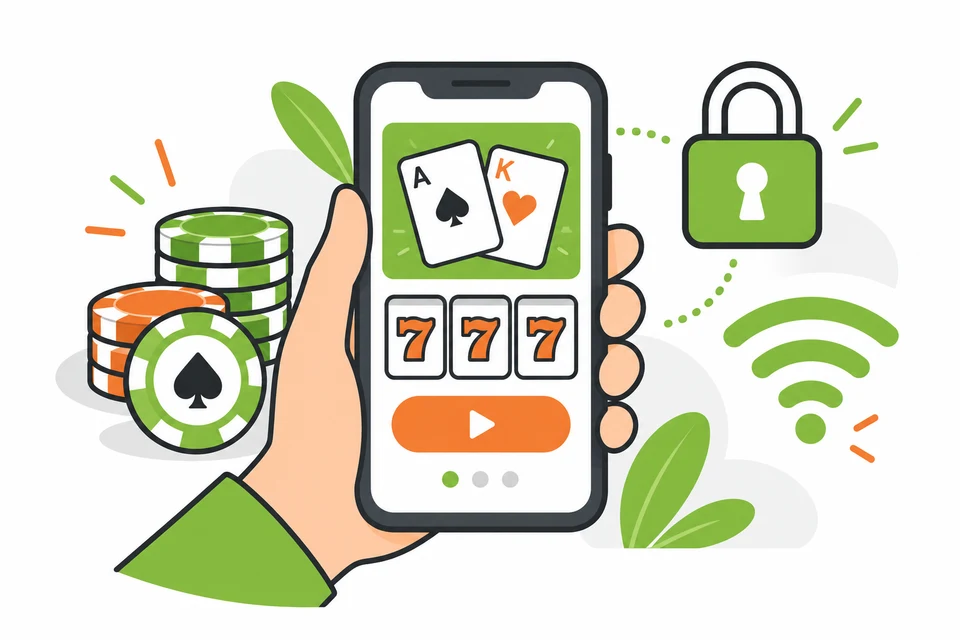
Online casino games, sports betting and e-bingo may lawfully be offered to people in the Philippines only by PAGCOR-licensed operators. These are sometimes called Philippine inshore gaming operators (PIGOs) or e-games licensees. Players must be at least 21 years old and not in a prohibited group (PAGCOR responsible gaming). In February 2026 PAGCOR told a Senate hearing that it had tightened know-your-customer (KYC) rules so that players must submit a name, contact details, a government-issued ID and a real-time selfie holding that ID before they can deposit (AGBrief, February 2026).
Offshore gaming: the POGO ban
President Ferdinand Marcos Jr. announced a ban on POGOs in his State of the Nation Address in July 2024, citing their “social costs and threats to national security” (Inquirer, October 2025). Executive Order No. 74, signed on 5 November 2024, covered POGOs, internet gaming licensees and other offshore gaming offered exclusively to players abroad, including live-streamed casino games, random-number-generator games and online sports betting. Licensees had to cease operations and wind up by 31 December 2024, and no new licences or renewals were allowed (Manila Bulletin, November 2024). The same day, the Palace directed CEZA to comply with the ban (Philstar, November 2024). CEZA had argued that its internet gaming regime was distinct from POGOs (SiGMA, August 2024).
Congress then made the ban statutory. Republic Act No. 12312 was approved on 23 October 2025. It defines offshore gaming as online games of chance or sports betting operated from the Philippines for players outside it, prohibits it nationwide, cancels visas and work permits of POGO workers, and sets penalties of six to twelve years’ imprisonment and fines of up to PHP 50 million, rising with repeat offences (RA 12312; Inquirer, October 2025). APECO welcomed the law and reported that it had already phased out its single POGO locator (APECO, November 2025). The Act targets operators, service providers and facilitators rather than players.
Enforcement against unlicensed sites
PAGCOR works with the Cybercrime Investigation and Coordinating Center and the National Telecommunications Commission to block unlicensed sites and remove illegal advertising (AGBrief, February 2026). The Department of Information and Communications Technology reported in 2025 that about 7,000 unauthorised gambling websites had been taken down (NEXT.io, 2025). Payment controls have become a second line of enforcement. In September 2026 the Bangko Sentral ng Pilipinas (BSP) said it had found thousands of illegal betting payments disguised as purchases from small retailers, and that more than 8,000 merchant accounts had been closed. It warned payment firms that they could lose their licences if they failed to stop such flows (AGBrief, September 2026).
Advertising
On 10 July 2025 PAGCOR ordered all licensees, suppliers and gaming system administrators to remove billboards and other out-of-home advertising for online gaming, with a deadline of 15 August 2025 (Inquirer, July 2025). It then agreed with the Ad Standards Council to pre-screen gambling advertisements. Online gambling advertisements are currently barred from television and radio during prime time, 5:30 pm to 8:30 pm. At the February 2026 Senate hearing, PAGCOR’s chairman said that “if it’s possible to completely ban them, that’s what we want to enforce” (GMA News, February 2026). We found no evidence that an all-day broadcast ban had been adopted by October 2026.
Position of players
Playing with a PAGCOR-licensed operator is lawful for adults aged 21 or over who are not in a prohibited group. PAGCOR’s rules bar government officials and employees, members of the military and police, gaming establishment employees and people listed in the National Database of Restricted Persons (PAGCOR responsible gaming).
Gambling outside an authorised framework is different. Presidential Decree No. 1602 penalises any person who takes part in illegal or unauthorised gambling, not only organisers: the basic penalty for participants is prisión correccional in its medium period or a fine of PHP 1,000 to PHP 6,000, with heavier penalties for maintainers, conductors and public officials (PD 1602). Philippine lawyers note that a player on an unlicensed app could in principle face a fine or short imprisonment under PD 1602, and a penalty one degree higher if charged under the Cybercrime Prevention Act (Respicio & Co.). The same commentary does not describe how often this happens, and we found no reported prosecution of an individual solely for playing on an offshore website. Enforcement in practice is directed at operators, payment channels and promoters. The Anti-POGO Act does not penalise players. Players using unlicensed sites have no access to PAGCOR’s complaints process or exclusion tools.
Taxation
Operators
Under the PAGCOR Charter, PAGCOR pays a 5% franchise tax on its gaming revenue to the Bureau of Internal Revenue (BIR). Of the balance, 50% goes to the National Treasury, with further fixed shares to the Philippine Sports Commission, the Board of Claims of the Department of Justice and host cities. Since the Universal Health Care Act of 2019, half of the national government’s share goes to PhilHealth (PAGCOR corporate profile). Private licensees pay licence fees and a share of revenue to PAGCOR. BIR Revenue Memorandum Circular No. 32-2022, following the Supreme Court’s ruling in Bloomberry Resorts and Hotels v. BIR, treats the 5% franchise tax as covering licensees’ and contractees’ gaming income in place of corporate income tax, while their non-gaming income is taxed under the ordinary rules (Ocampo & Suralvo, 2022).
For online operators, PAGCOR introduced a minimum guaranteed fee from 1 April 2026. Between April and September 2026, GSAs offering electronic casino games pay at least PHP 9 million a month and those without casino games at least PHP 3 million. From 1 October 2026 the minimums rise to PHP 10.5 million and PHP 4 million a month. PAGCOR’s memo said the aim was to “address the gaps in the current fee structure” and ensure that operators “contribute equitably” (GGRAsia, December 2025).
Players
In May 2026 the BIR issued Revenue Memorandum Circular No. 57-2026, which clarifies that jackpot prizes from casinos and other gambling are taxable “winnings” under the National Internal Revenue Code. They are subject to a final withholding tax of 20% for citizens and resident aliens and 25% for non-resident aliens not engaged in business in the Philippines, calculated on the gross prize without deductions. Operators must withhold and remit the tax. The BIR said the circular applies to licensed operators and, where applicable, unlicensed ones (Philstar, May 2026).
Consumer protection and responsible gambling
PAGCOR’s Responsible Gaming Code of Practice (version 6.0, 2021) sets the main protection rules. Its central tool is the National Database of Restricted Persons (NDRP), a database of people barred from entering or playing at PAGCOR-operated and PAGCOR-licensed gaming facilities. It has three types of entry:
- Self-exclusion, for six months (irrevocable), one year or five years;
- Family exclusion, requested by a spouse, parent or adult child, for six months, one year or three years; and
- Licensee-initiated exclusion, for cheating, theft, fraud or money laundering, for one year, five years or life.
Self-exclusion requests can be made through PAGCOR’s Online Self-Exclusion Application portal, and family exclusion forms are sent to PAGCOR’s responsible gaming unit (PAGCOR responsible gaming). PAGCOR said in September 2026 that its self-exclusion programme covered more than 26,000 verified people (Newsbytes, September 2026).
PAGCOR lists accredited help centres, including the National Problem Gambling Helpline on (02) 8248-9568, Bridges of Hope, Seagull’s Flock and Gamblers Anonymous Philippines (PAGCOR responsible gaming). General guidance is available in our responsible gambling guide.
Recent and upcoming developments
- Total-ban bills (2025, pending). Several bills filed in the 20th Congress in July 2025 would ban online gambling, including Senate Bill No. 47 by Senate Majority Leader Joel Villanueva (NEXT.io), bills by Senators Juan Miguel Zubiri and Loren Legarda, and House Bill No. 1876 by Representative Benny Abante (GMA News, July 2025). Senate Bill No. 686, filed by Senator Christopher “Bong” Go, proposes up to six months’ imprisonment or a fine of up to PHP 500,000 for players and up to five years for corporate officers (GGRAsia, July 2025). Other senators, including Sherwin Gatchalian and Risa Hontiveros, proposed stricter regulation instead (Inquirer, 2025).
- Senate hearings (August 2025 and February 2026). A joint Senate committee hearing on 14 August 2025 considered three ban bills and two regulatory bills (Inquirer, August 2025). The Committee on Games and Amusement resumed hearings on 11 February 2026 (Asgam, February 2026). At the latest point we could verify, none of the ban bills had passed either chamber.
- Government and PAGCOR position. PAGCOR opposes a total ban and favours tighter controls, arguing that the sector yields more than PHP 100 billion a year for the government (Inquirer, 2025). The Palace said in 2025 that it wanted a detailed analysis before acting (NEXT.io).
- E-wallet links removed (August 2025). On 14 August 2025 the BSP gave the financial institutions it supervises 48 hours to remove in-app links and icons leading to online gambling sites; the largest e-wallets complied (Philstar, August 2025). In February 2026 PAGCOR was seeking a reversal of the order for licensed operators (Asgam, February 2026); we found no report that it had been reversed.
- Minimum guaranteed fee (2026). In force since 1 April 2026, with higher minimums from 1 October 2026 (see Taxation).
- Payment-system controls (September 2026). The BSP published draft rules requiring stricter merchant screening by payment providers, after uncovering gambling payments disguised as retail purchases (AGBrief, September 2026).
- Tax on winnings (May 2026). RMC No. 57-2026 clarified the final withholding tax on gambling jackpots.
Casino listings for players in the Philippines
The listings below are generated automatically from our casino database. They do not by themselves show that an operator is licensed in the Philippines. Offering online casino games to people in the Philippines is legal only through operators licensed by PAGCOR, and an overseas licence does not authorise an operator to serve Philippine residents; listings of operators without a PAGCOR licence must not be read as an indication that playing with them is lawful. Readers should check PAGCOR’s licensing pages and verification tools before playing.
Vegas Casino Online
No Deposit Bonus
$ 20
Liberty Slots Casino
No Deposit Bonus
$ 18

Slots.lv
100% up to
$2,000
+ 20 Spins
Sloto'Cash Casino
100% up to
∞

Casino Extreme
200 Spins

Bovada Casino
100% up to
$1,000
Casino Brango
500% up to
$/€100
+ 500 Spins
Shazam Casino
Exclusive No Deposit Bonus
$ 50
Lucky Tiger Casino
No Deposit Bonus
$ 55
Red Stag Casino
25% up to
∞
Rich Palms Casino
250% up to
∞

Miami Club Casino
50 Spins

Highway Casino
$ 30

Lincoln Casino
No Deposit Bonus
$ 18

Yabby Casino
202% up to
∞

DuckyLuck Casino
500% up to
$/€2,500
+ 150 Spins

PlayCroco Casino
300% up to
∞
+ 60 Spins

Fair Go Casino
200% up to
∞

Uptown Aces
250% up to
∞

Las Vegas USA Casino
No Deposit Bonus
$ 20

Drake Casino
300% up to
$2,000
Sun Palace Casino
No Deposit Bonus
$ 20
Slots Plus
No Deposit Bonus
$ 20
Ignition Casino
200% up to
$100
.jpg?x83485)
Everygame Classic Casino
200% up to
∞
+ 50 Spins
Slots And Casino
500% up to
∞
+ 150 Spins

Slotsroom Casino
400% up to
∞
+ 20 Spins

Casino Max
400% up to
∞
+ 20 Spins
El Royale Casino
230% up to
∞
Black Lotus Casino
300% up to
$7,000
+ 45 Spins

Red Dog Casino
Slots Empire
230% up to
$7,500

Lucky Creek
50 Spins

Spinfinity Casino
400% up to
∞
+ 20 Spins

Jackpot Capital
25% up to
∞

Ripper Casino
25% up to
∞

Las Atlantis Casino
$ 2,500
Slotastic
250% up to
∞

Grand Eagle
200% up to
$5,500
+ 30 Spins

Cherry Jackpot
400% up to
∞
+ 20 Spins
Grande Vegas
150% up to
$300
LadyLuck Casino
100 Spins

Roaring 21 Casino
400% up to
∞
+ 20 Spins

Ozwin Casino
$ 10
Treasure Mile
200% up to
$/€4,000
+ 50 Spins

TropicanaCasino

Borgata Online Casino

BetOnline Casino
100 Spins

Grand Rush
200% up to
$4,000
+ 40 Spins

Jazz Casino
10% up to
$250

BetMGM Casino NJ
100% up to
$1,000
Sources and further reading
- Philippine Amusement and Gaming Corporation, PAGCOR Corporate Profile (accessed 6 October 2026).
- Congress of the Philippines, Republic Act No. 9487, amending PD 1869 (PAGCOR Charter) (2007).
- Lawphil Project, Presidential Decree No. 1602: Prescribing Stiffer Penalties on Illegal Gambling (1978).
- Lawphil Project, Republic Act No. 12312: Anti-POGO Act of 2025 (2025).
- PAGCOR, Electronic Gaming Licensing Department (accessed 6 October 2026).
- PAGCOR, List of Licensees for Gaming Venue Operations (as of 31 August 2026) (2026).
- PAGCOR, Responsible Gaming (accessed 6 October 2026).
- PAGCOR, Responsible Gaming Code of Practice, Version 6.0 (2021).
- Aurora Pacific Economic Zone and Freeport Authority, Statement of APECO President and CEO on the newly signed Anti-POGO Act of 2025 (2025).
- Philippine Daily Inquirer, Marcos signs law making Pogo ban permanent (2025).
- Manila Bulletin, Marcos issues EO banning all offshore gaming operations (2024).
- The Philippine Star, Palace to CEZA: Ensure POGO ban followed (2024).
- The Philippine Star, BSP orders e-wallets to remove online gambling links (2025).
- The Philippine Star, Casino jackpots taxable as ‘winnings’, BIR says (2026).
- Ocampo & Suralvo Law Offices, BIR clarifies the tax treatment of the PAGCOR, its licensees, and contractees (2022).
- Respicio & Co., Is online gambling like “casino apps” legal in the Philippines? Laws and penalties (accessed 6 October 2026).
- GGRAsia, New ‘minimum guaranteed fees’ to be paid from April 1, 2026 by all types of ‘gaming system administrators’, says Pagcor (2025).
- GGRAsia, Philippine senator submits bill to ban online gambling, proposes jail terms (2025).
- Philippine Daily Inquirer, Pagcor orders removal of e-gambling billboard ads, to limit TV promos (2025).
- Philippine Daily Inquirer, Pagcor OK with e-gambling curbs, warns vs total ban (2025).
- Philippine Daily Inquirer, To ban or regulate? Senate probes online gambling in PH (2025).
- GMA News, PH online gambling ban pushed anew in House, Senate (2025).
- GMA News, PAGCOR, ASC mull total ban on online gambling ads on TV, radio (2026).
- AGBrief, PAGCOR tightens regulations on online gambling (2026).
- AGBrief, Philippine payment firms face license risk over disguised online casinos (2026).
- Asgam, Philippines resumes Senate hearing on online gambling as PAGCOR reveals stricter advertising controls on the radar (2026).
- NEXT.io, Philippine president taking cautious approach to gambling reform (2025).
- Newsbytes.PH, Digital shift brings new risks to PH gambling sector (2026).
- SiGMA, CEZA chief: there’s no POGO in Cagayan Special Economic Zone (2024).
- Wikipedia, Entertainment City (accessed 6 October 2026).
- Wikipedia, Philippine offshore gaming operator (accessed 6 October 2026).