Legal casino gambling age in Saint Kitts and Nevis

Saint Kitts and Nevis regulates gambling through a licensing system that has two layers. At federal level, the Gaming Control Act 2021 (Act No. 11 of 2021) requires a licence for casinos, internet gaming, racing, lotteries, slot parlours and sports betting, and designates the Financial Services Regulatory Commission (FSRC) as the Gaming Commission. On the island of Nevis, the Nevis Online Gaming Ordinance 2025 created a separate regime for internationally facing online gaming, administered by the Nevis Online Gaming Authority (NOGA). Nevis-licensed operators must block players located in St Kitts and Nevis. A National Lotteries Authority was legislated for in 2025. This guide sets out the statutes, the regulators, the position of players, taxation and the protections that exist.
Key points
- The Gaming Control Act 2021, assented to on 26 March 2021, repealed the Betting and Gaming Act and replaced the former Gaming Board with a Gaming Commission, a function performed by the FSRC.
- Operating any of six classes of gaming without a licence is an offence; the Act does not make gambling by a player an offence, and it expressly allows persons domiciled in the Federation to take part if they meet the minimum age and are not excluded.
- Nevis operates its own online gaming licensing regime under the Nevis Online Gaming Ordinance 2025; NOGA announced its eighth licence in May 2026, its register listed 11 licences in October 2026, and B2C licensees must geo-block St Kitts and Nevis.
- Individuals pay no personal income tax, which was abolished in 1980, so there is no income tax on players’ winnings.
- The National Lotteries Authority Bill 2025, passed in July 2025, is intended to bring lottery operations, estimated by the government at EC$70 million a year, under a state-managed structure.
Last reviewed: 8 October 2026.
Online casinos for Saint Kitts and Nevis
We may earn commission from links. Commission and paid placements do not affect casino ordering. Affiliate disclosure · How these listings work.

Vegas Casino Online
Sign Up400% up to
$500

Liberty Slots Casino
Sign Up100% up to
$259

Sloto'Cash Casino
Sign Up100% up to
$500
Lucky Tiger Casino
Sign Up250% up to
$1,000
Shazam Casino
Sign Up250% up to
$2,500
Casino Brango
Sign Up500% up to
$/€100
+ 500 Spins
Vegas Casino Online
Sign Up400% up to
$500
Liberty Slots Casino
Sign Up100% up to
$259
Sloto'Cash Casino
Sign Up100% up to
$500
Lucky Tiger Casino
Sign Up250% up to
$1,000
Shazam Casino
Sign Up250% up to
$2,500
Casino Brango
Sign Up500% up to
$/€100
+ 500 Spins
Historical development
Saint Kitts and Nevis is a two-island federation that became independent from Britain and joined the Commonwealth in 1983 (Commonwealth Secretariat country profile). Nevis has its own Island Assembly and Island Administration, which, as described below, has legislated separately on online gaming.
Before 2021, gambling was governed by the Betting and Gaming Act, Cap. 17.01, with oversight split between a Gaming Board and a Racing Commission. When the Gaming (Control) Bill 2021 was debated in the National Assembly in March 2021, the then Prime Minister and Minister of Finance, Dr Timothy Harris, said that these bodies had achieved only limited success in licensing, regulating and supervising the sector over several years, according to a Caribbean Media Corporation report published by Caribbean Today. He presented the reform as necessary to meet international standards set by the Financial Action Task Force (FATF), the intergovernmental body that sets anti-money laundering standards, and to protect the Federation against financial crime. The Bill was also intended to clarify which residents could lawfully take part in gaming.
The Bill was published by the government information service on 16 March 2021 (SKNIS, Gaming Control Bill 2021). It passed later that month and became the Gaming Control Act 2021. One land-based casino named in press coverage is the Royal Beach Casino at the St Kitts Marriott Resort in Frigate Bay, a property that Caribbean Journal described in 2015 as the largest resort in the country, with 393 rooms. We could not find an official register listing the current number of licensed land-based gaming venues.
Since 2021 the framework has been extended in three directions: online gaming licensing on Nevis (2025), the creation of a National Lotteries Authority (2025), and tighter rules on the beneficial ownership of gaming licensees (2026).
Legal framework

The Gaming Control Act 2021
The principal statute is the Gaming Control Act 2021 (Act No. 11 of 2021), which the Governor-General assented to on 26 March 2021 and which was published the same day in Extra-Ordinary Gazette No. 15 of 2021. The FSRC publishes it, together with its amendments, in its gaming law library. In later instruments the Act is cited as the Gaming Control Act, Cap. 17.01. Its main features are:
- The regulator. Section 3 establishes a Gaming Commission and provides that “The Financial Services Regulatory Commission shall function as the Gaming Commission”.
- Licence classes. Section 10(1) lists six classes of gaming licence: casino, internet gaming, racing, lottery, slot parlour and sports betting.
- Offences. Under section 10(3), a natural person who operates without a licence commits an offence and is liable on summary conviction to a penalty of up to $50,000, up to two years’ imprisonment, or both; under section 10(4), a corporation is liable to a fine of up to $150,000.
- Licence term. Under section 18, a gaming licence runs from issue until 31 December and must be renewed annually, with due diligence information on changes to directors, shareholders and key gaming employees.
- Participation. Section 34 provides that any person, including natural persons domiciled in Saint Christopher and Nevis, may be permitted to gamble if they meet the minimum age and are not on an exclusion or self-exclusion list.
- Anti-money laundering. Section 37 requires licensees’ internal controls to cover risk assessment for money laundering, terrorist financing and proliferation financing, suspicious activity reporting, and reports of all transactions over $10,000.
- Repeal. Section 50 repeals the Betting and Gaming Act, Cap. 17.01.
“Internet gaming” is defined in section 2 as a gaming activity in which a gambling game is “made available through communications technology or electronic means”. The Act requires applicants to describe measures to safeguard the identity and information of participants, but it does not say expressly whether an internet gaming licensee may accept players located in the Federation.
Amendments
The Gaming (Control) (Amendment of Schedule) Order, No. 24 of 2022, made by the Minister responsible for Finance on 14 September 2022, revised the application forms, added a personal questionnaire used for the “fit and proper” test and replaced parts of the fee schedule.
The Gaming (Control) (Amendment) Bill 2025 inserts a new subsection (4) into section 18 so that the annual renewal requirement does not apply to the National Lotteries Authority or to operators under the National Lotteries Authority Act 2025, according to the first reading version of the Bill. The government reported that the National Assembly passed it on 31 July 2025, minutes after the National Lotteries Authority Bill.
Most recently, the Gaming Control (Amendment) Act 2026 (Act No. 7 of 2026) was passed and assented to on 18 June 2026 and published on 19 June 2026. It defines a “beneficial owner or controller”, requires licensees to notify the Commission within 21 days of changes in owners, controllers, directors or senior management, and widens the grounds on which applicants can be refused, including involvement in fraud or other financial crime.
The Nevis online gaming legislation
The Nevis Island Assembly passed the Nevis Online Gaming Bill 2025 at its sitting on 29 April 2025, after it was introduced on 6 March 2025 by the Premier and Minister of Finance, Mark Brantley (Nevis Island Administration, 30 April 2025). The resulting Nevis Online Gaming Ordinance 2025 (No. 2 of 2025) is supported by the Nevis Online Gaming Regulations 2025 (SRO No. 5 of 2025), which were made on 19 June 2025 and took effect on 1 July 2025. Official sources give different dates for the start of the regime: the Nevis Island Administration states that the Ordinance came into force on 1 May 2025, while NOGA announced on 27 June 2025 that the Ordinance and Regulations had been signed and published, with applications accepted from 1 July 2025.
Regulator and licensing model
Saint Kitts and Nevis follows a licensing model: gambling is lawful when offered by an operator holding the relevant licence, rather than being reserved to a state monopoly or prohibited. Two bodies issue licences.
The Gaming Commission (FSRC)
The FSRC, acting as the Gaming Commission, licenses and supervises casinos, slot parlours, racing, lotteries, sports betting and internet gaming under the 2021 Act. The fee schedule in the Act sets, in dollars without naming the currency, the following application and annual licence fees (Fourth Schedule):
| Licence | Application fee | Annual licence fee |
|---|---|---|
| Casino | $10,000 | $100,000 |
| Internet gaming | $5,000 | $50,000 |
| Lottery | $5,000 | $50,000 |
| Slot parlour | $2,000 | $20,000 |
| Sports betting | $1,000 | $10,000 |
| Racetrack | $1,000 | $10,000 |
Separate registration fees apply to suppliers, distributors, key gaming employees, junket operators, lottery agents and slot operators, and slot machines are registered individually. The 2022 Order revised the registration and slot fees. The FSRC does not appear to publish a public register of gaming licensees, so the number of federal licences could not be verified.
The Nevis Online Gaming Authority
On Nevis, the Ordinance established an Online Gaming Authority responsible for registration, licensing, compliance and enforcement, supported by a locally incorporated management company, with a designated Regulator who investigates complaints and issues directives (Nevis Island Administration, 30 April 2025). Applicants must be formed or incorporated under Nevis law. According to the NOGA website, two licence types are offered: a B2C licence for operators offering casino games and betting to the public, and a B2B licence for platform, white-label and software suppliers. The website states that it is operated by a Nevis-incorporated management company acting for the Authority. The Authority keeps a public licence register, listing each licensee’s name, licence number, expiry date and approved website addresses. It announced its eighth online gaming licence on 7 May 2026, without naming the licensee; on 8 October 2026 the register listed 11 licences, nine B2C and two B2B.
NOGA does not publish fee amounts in the material we reviewed. The Rio Times reported in October 2026 that a flat annual fee of €28,000 had been reported by the Curaçao Chronicle in July, and itself noted that the figure was not independently confirmed (Rio Times, 3 October 2026). That figure should therefore be treated as unverified.
Lotteries
On 31 July 2025, Prime Minister and Minister of Finance Dr Terrance Drew told the National Assembly that existing lottery operations generated an estimated EC$70 million a year but paid only EC$50,000 to the government, a situation he called “shocking and unacceptable” (SKNIS, 31 July 2025). The National Lotteries Authority Bill 2025 established the National Lotteries Authority as a body corporate to manage lottery operations, with the Gaming Commission remaining its regulator. The government projected that EC$10 million to EC$15 million a year would be ring-fenced for social services, including a planned National Health Insurance scheme, and that winnings, procurement and salaries would stay in the Federation. We could not confirm from official sources whether the Authority had begun selling lottery products by October 2026.
Online gambling: what is permitted and how it is enforced
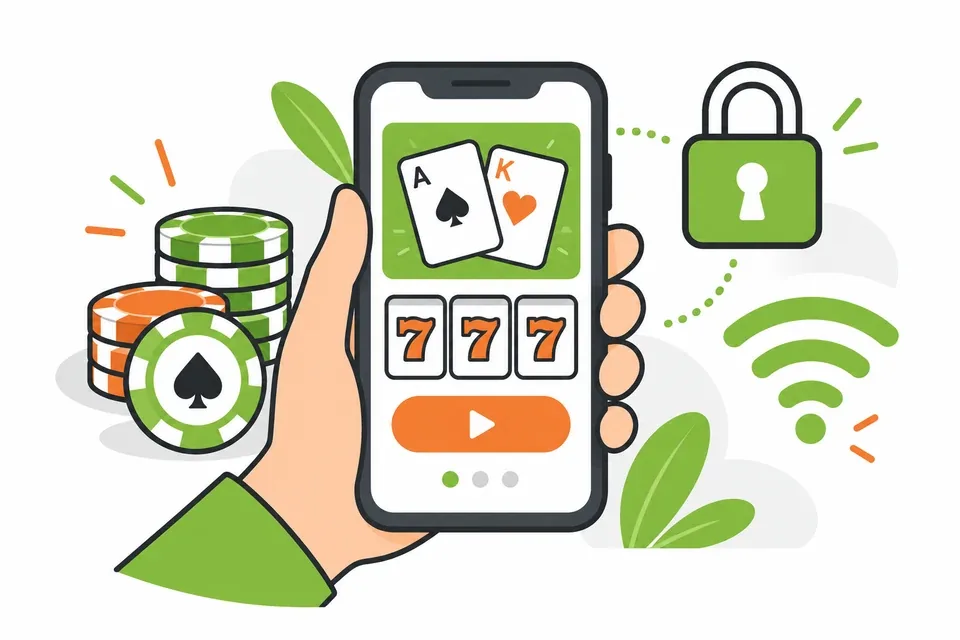
Online gambling in Saint Kitts and Nevis has to be read across the two regimes.
Federal internet gaming licence. Since 2021, the Gaming Control Act has provided for an internet gaming licence issued by the Gaming Commission. Before then, the FSRC had warned in June 2016 that online casinos and online gaming were “not currently licensed or authorized to conduct business from or within” the Federation and that anyone purporting to do so was acting illegally (FSRC general warning, 6 June 2016). That warning remains on the FSRC website but pre-dates the 2021 Act. We found no published list of internet gaming licences issued by the Gaming Commission.
Nevis online gaming licence. The Nevis regime is designed for international markets. The Nevis Island Administration states that, under the Online Gaming Regulations, persons residing in St Kitts and Nevis may not take part in gaming under the new regime (Nevis Island Administration, 25 July 2025). The Regulations themselves require B2C licensees to apply geo-IP blocking, meaning technical blocking of users by location, for a list of jurisdictions that includes St Kitts and Nevis. NOGA’s current restricted countries list names Australia, Austria, St Kitts and Nevis, France, Germany, the Netherlands, Spain, the United Kingdom and the United States, together with FATF-blacklisted and sanctioned countries.
Offshore operators. Operating gaming in the Federation without a licence is an offence under section 10 of the 2021 Act. We found no legal provision or official statement describing website blocking by internet service providers, payment blocking, or a published blacklist of unlicensed foreign gambling sites, and no recorded enforcement action against foreign operators serving local players.
Advertising. The Gaming Control Act contains no general rules on gambling advertising. Its only related provision, section 25, restricts licence names that falsely suggest a connection with a person or Minister.
Position of players
The 2021 Act regulates operators, not players. Its offences fall on persons who operate without a licence and on licensees that breach their duties. The Act does not make it an offence for an individual to place a bet or play a casino game, whether at a licensed venue or online, and section 34 states that persons domiciled in the Federation may be permitted to gamble if they meet the minimum age and are not on an exclusion list.
The age rule in section 31 bars anyone under 21 from playing or wagering at a casino, slot parlour or racetrack, but the penalty, a fine of up to $50,000, falls on the licensee. Internet gaming and sports betting are not named in that section. Similarly, a licensee that knowingly allows a self-excluded or excluded person to gamble may be fined up to $5,000; the excluded person is not.
We found no legal provision making it an offence for residents to use foreign online casinos and no reported prosecution or fine of a player for doing so. Absence of a player offence is not the same as protection, however. Nevis-licensed sites are required to block local residents, and a foreign site serving residents is outside the supervision of either local regulator, so players would have no local route for complaints or disputes.
Taxation
Players
The Inland Revenue Department states that “Income tax on individuals was abolished in 1980” (Inland Revenue Department, Corporate Income Tax). Individuals are therefore not taxed on gambling winnings as income. We found no separate tax on winnings.
Operators
The Gaming Control Act does not set a gaming tax rate. Section 49 provides that the Act is without prejudice to any tax or levy imposed through the Comptroller of Inland Revenue, and section 36 requires licensees to keep daily records of gaming receipts available to both the Commission and the Comptroller for at least five years. Operators incorporated in the Federation must file corporate income tax returns (Inland Revenue Department). A 2018 tax summary by Dawgen Global gives a corporate income tax rate of 33% and a standard value added tax (VAT) rate of 17%; these figures should be checked against current law. The licence fees listed above are the main gaming-specific charges. For lotteries, the government’s case for the National Lotteries Authority rests on retaining revenue that, it says, currently leaves the Federation (SKNIS, 31 July 2025).
Consumer protection and responsible gambling
The protections in the Gaming Control Act 2021 are mainly duties placed on licensees:
- Minimum age. No one under 21 may play or wager at a casino, slot parlour or racetrack (section 31).
- Self-exclusion. Licensees must keep a self-exclusion list, may not knowingly let listed persons gamble, and must keep the list confidential (section 32). This is an operator-level scheme; we found no national, cross-operator self-exclusion register.
- Exclusion lists. Licensees must also keep lists of persons barred from their premises, including career offenders, people associated with organised crime and people suspected of money laundering or terrorist financing (section 33).
- Integrity and anti-money laundering. Internal controls, transaction reporting and fit and proper checks on owners and managers, strengthened by the 2026 amendment, protect the sector against criminal use.
On Nevis, the Regulations require B2C licensees to have know-your-customer, responsible gaming, underage gaming and anti-money laundering policies, but do not set out their content in the text we reviewed (SRO No. 5 of 2025). The Nevis Island Administration (30 April 2025) states that operators must adopt responsible gaming policies and offer accessible dispute resolution; those duties are aimed at players abroad, since residents are blocked.
We could not identify a dedicated national gambling helpline or problem-gambling treatment service in Saint Kitts and Nevis. Players who are concerned about their gambling may ask a licensed venue to place them on its self-exclusion list and can find general guidance in our responsible gambling guide.
Recent and upcoming developments
- Nevis online gaming regime (2025). The Nevis Online Gaming Bill was passed on 29 April 2025, and the Regulations took effect on 1 July 2025.
- National Lotteries Authority (2025). The National Lotteries Authority Bill and the Gaming Control (Amendment) Bill were passed on 31 July 2025. The launch date of the Authority’s lottery products could not be verified.
- Nevis licences (2026). NOGA announced its eighth online gaming licence on 7 May 2026; its register listed 11 by October 2026.
- Beneficial ownership rules (June 2026). The Gaming Control (Amendment) Act 2026 (Act No. 7 of 2026) introduced notification duties and wider refusal grounds linked to beneficial owners and controllers.
- Dedicated online gaming regulator (October 2026). The Rio Times (3 October 2026) reported that the Nevis Island Administration announced on 2 October 2026 that Phil Jones had been designated Regulator, Online Gaming, at the Nevis branch of the FSRC, as a dedicated role from 1 October 2026; NOGA welcomed the designation on 6 October 2026. The Nevis Island Administration linked the change to the growth of the sector and to preparations for the Caribbean Financial Action Task Force’s fifth round of mutual evaluations, for which no date had been announced.
Casino listings for players in Saint Kitts and Nevis
The listings below are generated automatically from our casino database. They do not show that an operator is licensed in Saint Kitts and Nevis. Operators licensed by the Nevis Online Gaming Authority are required to block players located in St Kitts and Nevis, so a Nevis licence does not authorise an operator to serve local residents. Readers can check Nevis licences on the NOGA licence register (see NOGA’s guidance on verifying a licence) and should contact the FSRC about federal gaming licences.
Vegas Casino Online
No Deposit Bonus
$ 20
Liberty Slots Casino
No Deposit Bonus
$ 18

Slots.lv
100% up to
$2,000
+ 20 Spins
Sloto'Cash Casino
100% up to
∞

Casino Extreme
200 Spins

Bovada Casino
100% up to
$1,000
Casino Brango
500% up to
$/€100
+ 500 Spins
Lucky Tiger Casino
No Deposit Bonus
$ 55
Shazam Casino
Exclusive No Deposit Bonus
$ 50

Miami Club Casino
50 Spins

Lincoln Casino
No Deposit Bonus
$ 18

Highway Casino
$ 30
Rich Palms Casino
250% up to
∞
Red Stag Casino
25% up to
∞
Yabby Casino
202% up to
∞
Uptown Aces
250% up to
∞
PlayCroco Casino
300% up to
∞
+ 60 Spins

DuckyLuck Casino
500% up to
$/€2,500
+ 150 Spins
Fair Go Casino
200% up to
∞
Drake Casino
300% up to
$2,000
Las Vegas USA Casino
No Deposit Bonus
$ 20
Slots Plus
No Deposit Bonus
$ 20
Sun Palace Casino
No Deposit Bonus
$ 20
Ignition Casino
200% up to
$100
.jpg?x75995)
Everygame Classic Casino
200% up to
∞
+ 50 Spins
Slots Empire
230% up to
$7,500
Red Dog Casino
Slots And Casino
500% up to
∞
+ 150 Spins

Slotsroom Casino
400% up to
∞
+ 20 Spins
Black Lotus Casino
300% up to
$7,000
+ 45 Spins
El Royale Casino
230% up to
∞

Casino Max
400% up to
∞
+ 20 Spins
JacksPay
200% up to
$2,000
Spinfinity Casino
400% up to
∞
+ 20 Spins

Lucky Creek
50 Spins

Jackpot Capital
25% up to
∞
Slotastic
250% up to
∞
Ripper Casino
25% up to
∞
Las Atlantis Casino
$ 2,500
Ozwin Casino
$ 10

Grand Eagle
200% up to
$5,500
+ 30 Spins
Roaring 21 Casino
400% up to
∞
+ 20 Spins
LadyLuck Casino
100 Spins
Grande Vegas
150% up to
$300
Treasure Mile
200% up to
$/€4,000
+ 50 Spins
Cherry Jackpot
400% up to
∞
+ 20 Spins
Borgata Online Casino
TropicanaCasino

BetOnline Casino
100 Spins

Grand Rush
200% up to
$4,000
+ 40 Spins

Jazz Casino
10% up to
$250

BetMGM Casino NJ
100% up to
$1,000
Sources and further reading
- Government of Saint Christopher and Nevis (published by the FSRC), Gaming Control Act, 2021 (Act No. 11 of 2021) (2021).
- Government of Saint Christopher and Nevis (published by the FSRC), Gaming Control (Amendment) Act, 2026 (Act No. 7 of 2026) (2026).
- Government of Saint Christopher and Nevis (published by the FSRC), Gaming (Control) (Amendment of Schedule) Order, S.R.O. No. 24 of 2022 (2022).
- National Assembly of Saint Christopher and Nevis (published by SKNIS), Gaming (Control) (Amendment) Bill, 2025, first reading version (2025).
- Financial Services Regulatory Commission, Law Library: Gaming (accessed 8 October 2026).
- Financial Services Regulatory Commission, General Warning: Online Casino and Online Gaming (2016).
- St Kitts and Nevis Information Service, Gaming Control Bill, 2021 (2021).
- Caribbean Media Corporation / Caribbean Today, Bill Passed to Regulate Gaming Industry in St. Kitts and Nevis (2021).
- St Kitts and Nevis Information Service, Prime Minister Drew Champions National Lotteries Authority Bill to Keep Millions in the Federation (2025).
- Consulate General of St Kitts and Nevis, Toronto, Gaming Control (Amendment) Bill Passed to Support the Launch of the National Lotteries Authority (2025).
- Nevis Island Administration, Nevis Island Assembly Passes Online Gaming Bill (2025).
- Nevis Island Administration, Nevis Island Administration Passes Legislation to Launch Online Gaming Industry, Diversify Economy, and Boost Revenue (2025).
- Nevis Island Administration, Nevis Online Gaming Ordinance Now in Force (2025).
- Nevis Island Administration (published by NOGA), Nevis Online Gaming Regulations 2025 (SRO No. 5 of 2025) (2025).
- Nevis Online Gaming Authority, Announcement: Nevis Online Gaming Ordinance Officially Signed (2025).
- Nevis Online Gaming Authority, Nevis Gaming License: Restricted Countries (accessed 8 October 2026).
- Nevis Online Gaming Authority, Nevis Gaming Authority Issues Eighth Online Gaming Licence (2026).
- Nevis Online Gaming Authority, How to Verify Whether a Company Holds a Valid Nevis Online Gaming Licence (2026).
- Nevis Online Gaming Authority, News (including the designation of the Regulator, Online Gaming, 6 October 2026) (accessed 8 October 2026).
- The Rio Times, Nevis online gaming regulation: Phil Jones appointed (2026).
- Inland Revenue Department, St Kitts and Nevis, Corporate Income Tax (accessed 8 October 2026).
- Dawgen Global, International Tax: St. Kitts and Nevis Highlight 2018 (2018).
- Caribbean Journal, St Kitts Marriott Resort Undergoing “Soft Renovations” (2015).
- Commonwealth Secretariat, St Kitts and Nevis (accessed 8 October 2026).