

 In short: A payline is a pattern across the reels on which matching symbols, usually starting from the leftmost reel, form a line win; your total stake is active lines multiplied by bet per line. Wild symbols substitute for the regular symbols listed in the rules, usually not scatters, and some expand, stick or multiply wins, depending on the game.
Slots use different rules to decide which symbol combinations pay. A payline defines a path across the reels, while a wild can substitute for specified symbols. Understanding these features helps you read the result and the cost of a spin; it does not guarantee a prize or a profit.
How Paylines Work
In a conventional line-based slot, a payline connects positions across the reels. It may run straight across or follow a zig-zag pattern. A winning combination must satisfy the game’s rules for the number of matching symbols, their order and the direction in which they are read.
Many games pay consecutive matches starting on the leftmost reel. Others pay in both directions or use different arrangements. Three matching symbols scattered around the screen do not necessarily form a line win. Check the paytable’s line diagrams and minimum combination lengths.
Some slots have selectable paylines; others include a fixed set in every spin. A line win normally requires an active line. Scatter prizes and bonus triggers may follow separate rules. Games using ways-to-win or cluster mechanics need not use conventional paylines at all.
Paylines, Line Bets and Total Stake
Where a game uses a separate line bet, the basic calculation is:
Total stake = active paylines × bet per line.
For example, 20 lines at £0.05 per line cost £1 per spin. Ten lines at the same line bet cost £0.50. With fixed paylines, the controls may show only the total stake. Feature purchases or extra-bet options can add costs, so check the displayed total before playing.
Adding active lines covers more eligible patterns, but increasing the total stake also increases the money at risk. More lines do not establish a better return percentage or guarantee that a payout exceeds the spin’s cost. A £0.40 payout on a £1 spin is a £0.60 net loss, even if the game celebrates it. GambleAware NSW explains these small payouts and multiple-line betting risks.
Check whether the paytable quotes awards as multiples of the line bet or of the total stake. Our slots payouts and odds guide explains how this differs from return to player (RTP).
What Wild Symbols Do
A wild substitutes for the symbols listed in the game’s rules to help complete a winning combination. It often cannot replace a scatter or bonus symbol, and it may appear only on certain reels. Some wilds also have their own paytable awards. Neither all classic slots nor all modern slots share the same wild features.
For example, Play’n GO’s That’s Rich has ten fixed paylines and a wild that substitutes for symbols other than the scatter. Its wild can expand to fill a reel. This is one game’s design, not a rule for every slot.
Common Types of Wilds
- Stacked wilds: groups of wild symbols arranged together on a reel. A visible stack need not fill the entire reel.
- Expanding wilds: wilds that grow across additional positions when the specified conditions are met.
- Sticky wilds: wilds that remain in place for a stated number of spins or for a feature’s duration.
- Walking or shifting wilds: wilds that move between positions over successive spins or respins.
- Trailing wilds: moving wilds that leave additional wild positions behind, as defined by the game.
- Multiplier wilds: wilds that multiply qualifying awards. The rules determine which wins qualify and how multiple multipliers combine.
Feature names are not a universal specification. In The Wild Life’s published rules, wilds appear on reels two to four and have different expansion and retention rules in the base game and free spins. Play’n GO’s Triple Launch Fortune Wild separately defines walking, expanding and multiplier effects.
Check the Rules Before a Spin
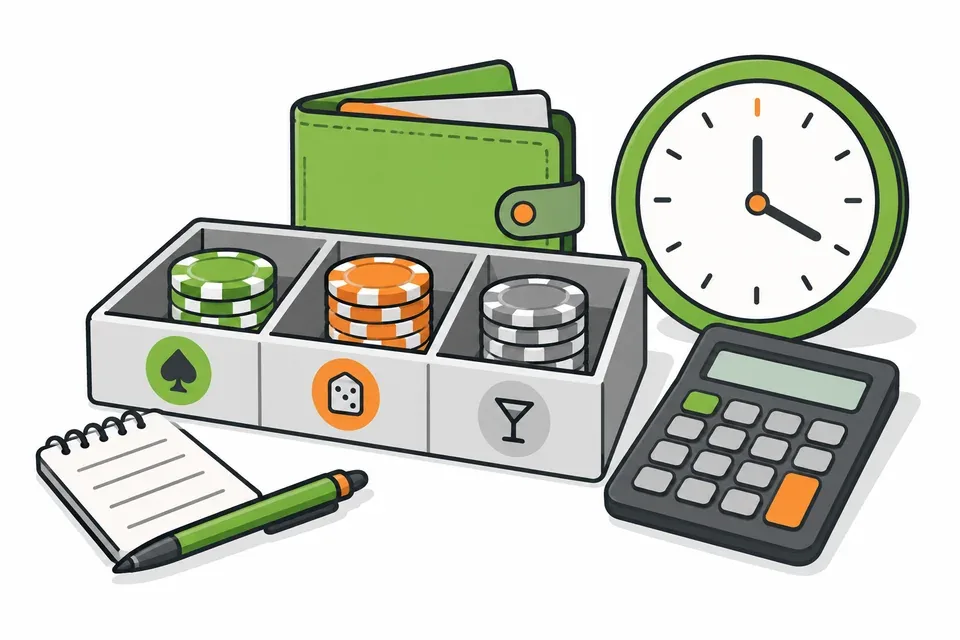
Look for the active lines, total stake, paying direction, wild exclusions and feature conditions. Several wilds on screen can still produce no payable combination. A feature can change the current game state, but its presence does not promise a profitable session. Set a spending limit you can afford to lose and do not increase your bet to recover losses.

Best Online Slots Bonuses for Australians

Yabby Casino
202% up to
∞

Casino Brango
500% up to
$/€100
+ 500 Spins

Uptown Aces
250% up to
∞

Miami Club Casino
100% up to
$100

Liberty Slots Casino
$ 18

Lincoln Casino
100% up to
$100
+ 25 Spins

Grand Rush
200% up to
$4,000
+ 40 Spins

Casino Extreme
200 Spins

Bovada Casino
100% up to
$1,000

Red Stag Casino
275% up to
$550
+ 100 Spins

Sloto'Cash Casino
100% up to
$500

Fair Go Casino
200% up to
∞

Everygame Classic Casino
200% up to
∞
+ 50 Spins

Black Lotus Casino
300% up to
$7,000
+ 45 Spins

Everygame Casino
125% up to
$1,000

Jackpot Capital
$ 50

Lucky Creek
200% up to
$/€7,500

Ripper Casino
150% up to
$1,500

Grande Vegas
150% up to
$300

Treasure Mile
200% up to
$/€4,000
+ 50 Spins

Grand Eagle
200% up to
$5,500
+ 30 Spins

Lucky Tiger Casino
$ 55

Shazam Casino
$ 50

Highway Casino
250% up to
$2,500

Rich Palms Casino
250% up to
∞

Slots.lv
100% up to
$2,000
+ 20 Spins

Gold Prize Casino
50% up to
$1,000

El Royale Casino
230% up to
∞

NewVegas Casino
400% up to
$3,000

Ozwin Casino
200% up to
$2,000
+ 50 Spins

DuckyLuck Casino
500% up to
$/€2,500
+ 150 Spins

Slots Plus
$ 20

Slots Empire
230% up to
$7,500

Slots And Casino
500% up to
∞
+ 150 Spins

Las Atlantis Casino
$ 2,500

Slotastic
400% up to
∞
+ 20 Spins

LadyLuck Casino
100 Spins

Cherry Jackpot
400% up to
∞
+ 20 Spins

Roaring 21 Casino
400% up to
∞
+ 20 Spins
Wicked Plays
300% up to
$1,000

BetOnline Casino
100 Spins

RedCherry Casino
100% up to
$100

Jazz Casino
200% up to
$2,000
+ 100 Spins

Vegas Casino Online
400% up to
$500

Drake Casino
300% up to
$2,000

Las Vegas USA Casino
$ 20

Sun Palace Casino
$ 20

Slotsroom Casino
200% up to
$2,000
+ 200 Spins

Casino Max
300% up to
$3,000

Spinfinity Casino
300% up to
$3,000

PlayCroco Casino
300% up to
∞
+ 60 Spins

Ignition Casino
200% up to
$100
Autoplay Slots
3D Slots
Slots Payouts and Odds
Slots Paylines and Wild Symbols
Penny Slots