

 A slot’s payout amount, return to player (RTP) and odds describe different things. The paytable tells you what a qualifying result pays. RTP describes the game’s theoretical average return relative to stakes, while the odds describe the probability of an outcome. None of these figures promises a profit from a session of slot machines.
What Does RTP Mean?
A theoretical RTP of 96% means the mathematical model returns an average of £96 in prizes for every £100 staked over a very large volume of play. It does not mean that each player receives £96 back, that 96% of spins win, or that a £100 deposit will last for a predictable time. The UK Gambling Commission explains why RTP is not a session guarantee.
House edge = 100% − theoretical RTP. A 96% RTP therefore corresponds to a 4% house edge under the same game rules and conditions. At 97.54% RTP, the corresponding edge is 2.46%.
Total Stakes and Expected Loss
Total stakes include money wagered again after a payout. They are not the same as the amount deposited.
For a simplified example, 200 spins at £1 each produce £200 in total stakes. At 96% RTP, the mathematical expected payout is £192 and the expected net loss is £8. These are averages across possible outcomes, not a prediction: an individual session may lose much more or finish ahead.
Increasing the stake does not automatically improve RTP. If that same 4% edge applies at £2 per spin, 200 spins produce £400 in stakes and an expected loss of £16. Compare the rules and RTP of the actual game configuration rather than assuming higher denominations offer better value.
RTP, Hit Frequency and Volatility
- RTP: the theoretical proportion of stakes returned as prizes.
- Hit frequency: how often a spin produces a qualifying payout, using the game’s stated definition. That payout can be smaller than the total stake.
- Volatility: the variability of results. Games with similar RTPs can distribute their payouts very differently.
- Maximum win: a stated upper award, not the likelihood of receiving it.
A high hit frequency does not necessarily mean a high chance of making a net profit. Likewise, a high maximum win says little about the average return. RTP alone cannot tell you the probability of a jackpot or of ending a session ahead.
How Slot Odds Are Determined
In random slots, the game software uses a random number generator and the game’s mathematical rules to determine outcomes. Symbol probabilities, reel arrangements, prizes and features all contribute to the return. The Gambling Commission’s worked example shows how outcome probabilities and prize amounts combine to produce RTP.
You cannot calculate exact odds from the number of different pictures on the screen alone: they need not be equally likely. The paytable describes awards, but a full probability calculation also needs the relevant mathematical model. For line-win calculations, see our guide to paylines and wild symbols.
Ordinary independent random spins do not become due to pay after a losing run. Features such as held symbols or accumulated bonuses can have their own state-dependent rules; these do not make the next random result predictable. Some land-based machines use compensated designs, so the independent-spin explanation should not be applied indiscriminately to every machine.
Where to Check the Applicable RTP
Start with the game’s information, help or rules screen. Match the figure to the version, mode and stake conditions you are using; a review or comparison table may describe a different configuration. If the figure or conditions are unclear, seek clarification from the operator before wagering.
Do not assume a machine near an entrance or bar has favourable odds. The term “loose” may describe a relatively higher payout rate; it does not establish positive expected returns. Changing timing, chasing losses or using a betting sequence cannot turn a fixed negative expectation into a dependable winning method. GambleAware NSW addresses common machine-selection and winning myths.
Comparing Listed RTP Figures
The table below is a starting point for checking published figures, not a ranking of your chances of winning today. Verify the RTP and conditions in the actual game. A higher RTP under comparable conditions means a lower theoretical house edge, not guaranteed returns.
| Slot Machine | RTP | Maximum Win | Game Platform |
|---|---|---|---|
 Chess Mate | 98.72%House Advantage: 1.28% | × 20,000 | Multi Slot Casinos |
 Classic Cinema | 98.47%House Advantage: 1.53% | × 5,000 | Multi Slot Casinos |
 Bonanza Billion | 98.21%House Advantage: 1.79% | × 2,000 | BGAMING |
 Smash A Ghost | 98.14%House Advantage: 1.86% | × 300 | Gameplay Interactive |
 Gold Rush | 98.02%House Advantage: 1.98% | × 400 | Rival |
| Gold Rush | 98.02%House Advantage: 1.98% | × 400 | Rival |
Keep the Cost of Play in View
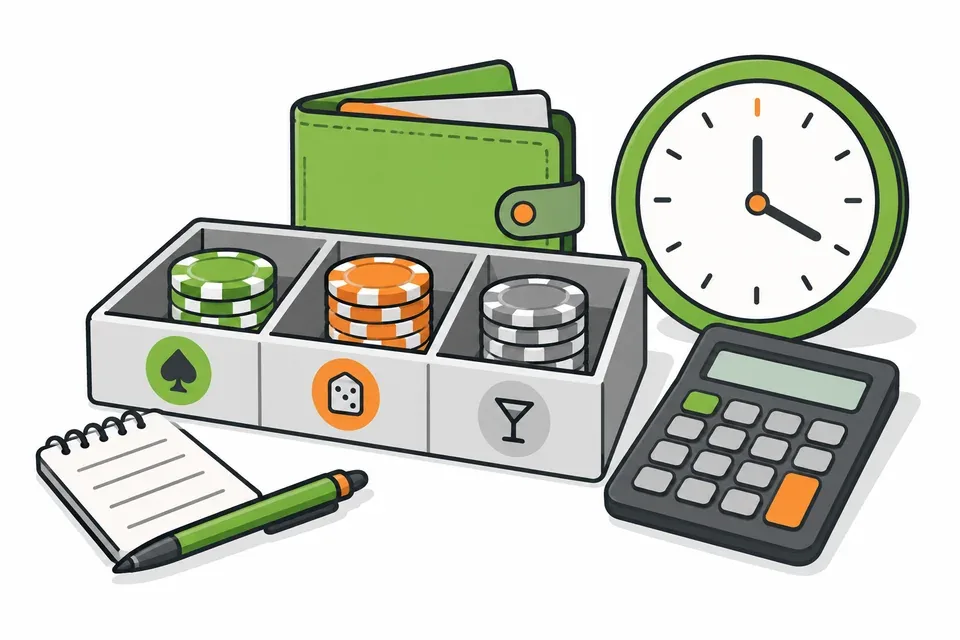
Use the total stake and your spending limit to judge the cost of a session. Playing longer to try to reach the theoretical average adds further stakes and risk. Treat slots as paid entertainment, and stop at the limit you set.

Best Online Slots Bonuses for Australians

Yabby Casino
202% up to
∞

Casino Brango
500% up to
$/€100
+ 500 Spins

Uptown Aces
250% up to
∞

Miami Club Casino
100% up to
$100

Liberty Slots Casino
$ 18

Lincoln Casino
100% up to
$100
+ 25 Spins

Grand Rush
200% up to
$4,000
+ 40 Spins

Casino Extreme
200 Spins

Bovada Casino
100% up to
$1,000

Red Stag Casino
275% up to
$550
+ 100 Spins

Sloto'Cash Casino
100% up to
$500

Fair Go Casino
200% up to
∞

Everygame Classic Casino
200% up to
∞
+ 50 Spins

Black Lotus Casino
300% up to
$7,000
+ 45 Spins

Everygame Casino
125% up to
$1,000

Jackpot Capital
$ 50

Lucky Creek
200% up to
$/€7,500

Ripper Casino
150% up to
$1,500

Grande Vegas
150% up to
$300

Treasure Mile
200% up to
$/€4,000
+ 50 Spins

Grand Eagle
200% up to
$5,500
+ 30 Spins

Lucky Tiger Casino
$ 55

Shazam Casino
$ 50

Highway Casino
250% up to
$2,500

Rich Palms Casino
250% up to
∞

Slots.lv
100% up to
$2,000
+ 20 Spins
Gold Prize Casino
50% up to
$1,000

El Royale Casino
230% up to
∞

NewVegas Casino
400% up to
$3,000

Ozwin Casino
200% up to
$2,000
+ 50 Spins

DuckyLuck Casino
500% up to
$/€2,500
+ 150 Spins

Slots Plus
$ 20

Slots Empire
230% up to
$7,500

Slots And Casino
500% up to
∞
+ 150 Spins

Las Atlantis Casino
$ 2,500

Slotastic
400% up to
∞
+ 20 Spins

LadyLuck Casino
100 Spins

Cherry Jackpot
400% up to
∞
+ 20 Spins

Roaring 21 Casino
400% up to
∞
+ 20 Spins
Wicked Plays
300% up to
$1,000

BetOnline Casino
100 Spins

RedCherry Casino
100% up to
$100

Jazz Casino
200% up to
$2,000
+ 100 Spins

Vegas Casino Online
400% up to
$500

Drake Casino
300% up to
$2,000

Las Vegas USA Casino
$ 20

Sun Palace Casino
$ 20

Slotsroom Casino
200% up to
$2,000
+ 200 Spins

Casino Max
300% up to
$3,000

Spinfinity Casino
300% up to
$3,000

PlayCroco Casino
300% up to
∞
+ 60 Spins

Ignition Casino
200% up to
$100
Autoplay Slots

3D Slots

Slots Payouts and Odds
Slots Paylines and Wild Symbols

Penny Slots