Legal casino gambling age in Sri Lanka
Sri Lanka is one of the few countries in South Asia where casinos operate lawfully, but for most of its history gambling was governed by a colonial-era prohibition, a revenue statute and a casino law that was barely implemented. On 1 December 2025 the Gambling Regulatory Authority Act, No. 17 of 2025 came into operation, replacing the old laws with a single regulator, the Gambling Regulatory Authority (GRA), empowered to license casinos, betting and, for the first time, “digital gambling”. Gambling taxes remain under the Betting and Gaming Levy Act, No. 40 of 1988, and state lotteries fall outside the new Act. At the time of review the GRA was not yet fully operational and no digital gambling licence had been reported as issued.
Key points
- The Gambling Regulatory Authority Act, No. 17 of 2025 was certified on 3 September 2025 and came into operation on 1 December 2025. It repeals the Gaming Ordinance (1889) and the Casino Business (Regulation) Act of 2010, saving existing casino licences.
- Casinos, betting and digital gambling may be carried on only under a GRA licence. Operating without one is punishable by a fine of up to Rs. 10 million, up to two years’ imprisonment, or both (section 42).
- Licensed casinos must collect a casino entrance levy from every Sri Lankan citizen who enters. It was raised from US$50 to US$100 on 1 January 2026, when the gross collection levy on betting and gaming also rose from 15% to 18%.
- City of Dreams Sri Lanka, a US$1.2 billion integrated resort built by John Keells Holdings with a casino operated by Melco Resorts & Entertainment, opened in Colombo in August 2025.
- Online gambling regulations had not been issued by October 2026. In August 2026 the telecoms regulator was reported to have ordered internet providers to block 24 unlicensed gambling websites.
Last reviewed: 6 October 2026.
Top Rated Online Casinos for Sri Lanka

Vegas Casino Online
Sign Up400% up to
$500

Liberty Slots Casino
Sign Up100% up to
$259

Sloto'Cash Casino
Sign Up100% up to
$500

Lucky Tiger Casino
Sign Up250% up to
$1,000
Shazam Casino
Sign Up250% up to
$2,500

Casino Brango
Sign Up500% up to
$/€100
+ 500 Spins
Vegas Casino Online
Sign Up400% up to
$500
Liberty Slots Casino
Sign Up100% up to
$259
Sloto'Cash Casino
Sign Up100% up to
$500
Lucky Tiger Casino
Sign Up250% up to
$1,000
Shazam Casino
Sign Up250% up to
$2,500
Casino Brango
Sign Up500% up to
$/€100
+ 500 Spins
Historical development
The foundation of Sri Lankan gambling law was the Gaming Ordinance, No. 17 of 1889, enacted when the island was the British colony of Ceylon. Its long title described it as an ordinance “to provide for the more efficient suppression of unlawful gaming and of common gaming places”. It made unlawful gaming punishable by a fine of up to 100 rupees or six months’ imprisonment and keeping a “common gaming place” (any place to which the public had access and which was kept for betting or playing a game for a stake) punishable by a fine of up to 500 rupees or a year’s imprisonment. A person found in such a place was presumed to have been gaming unless the contrary was proved (Gaming Ordinance, revised edition). Betting on horse races was dealt with separately: an ordinance of 1930 set up registration and taxation of race betting, according to a policy study by the Advocata Institute (2024).
Casinos nonetheless operated in Colombo for decades. Before 2010 they relied on gaps in the ordinance and on registration for tax purposes, a practice the Sunday Times (2013) described as exploiting the old law to circumvent the official ban. The Betting and Gaming Levy Act of 1988, in Advocata’s words, was the first time the central government of independent Sri Lanka recognised the gaming industry and taxed it. The Casino Business (Regulation) Act of 2010 then required a ministerial licence, but no licensing procedure was set up for twelve years. In 2015 an amendment to the levy legislation halted the registration of new casinos, which stalled at least one foreign integrated-resort project (Advocata). The first licensing regulations under the 2010 Act, the Casino Business Licensing Regulations No. 1 of 2022, were published on 31 August 2022 (Nithya Partners, 2022).
By 2024 four casinos were operating, all in Colombo, and more than 600 registered betting centres offered betting on overseas horse racing and sport (Advocata). The Gambling Regulatory Authority Bill was gazetted in May 2025 and passed by Parliament in August 2025 (GGRAsia, August 2025).
Legal framework

Gambling Regulatory Authority Act, No. 17 of 2025
The Gambling Regulatory Authority Act was certified by the Speaker on 3 September 2025 (SiGMA). It came into operation on 1 December 2025 under a mid-November 2025 gazette notice (GGRAsia, November 2025). Its main provisions are:
- Scope (section 2). The Act does not apply to lotteries conducted by the Development Lotteries Board under the Development Lotteries Board Act, No. 20 of 1997, to lotteries of the National Lotteries Board established under the Finance Act, No. 11 of 1963, or to “social gambling”, meaning spontaneous, non-commercial gambling in a home among family or acquaintances.
- Definitions (section 79). “Gambling” includes betting, gaming, online gaming, casinos, cruise-ship casinos and junket operations. “Digital gambling” means gambling conducted by electronic or digital means and includes internet and mobile gambling.
- Licensing (sections 16 to 20). Only a company incorporated under the Companies Act, No. 7 of 2007 with a minimum capital set by ministerial order may apply. The premises must be registered with the Authority, and the Minister specifies by order the types of gambling, including digital gambling, that may be authorised (section 19).
- Digital gambling (section 18). A licensee “shall not carry on digital gambling unless such licensee holds a digital gambling licence”, and may do so only in the manner specified by gazetted order.
- Repeal and savings (section 78). The Betting on Horse-Racing Ordinance (Chapter 44), the Gaming Ordinance (Chapter 46) and the Casino Business (Regulation) Act are repealed. Casino licences and horse-racing registrations in force before the appointed date are deemed to have been issued under the new Act.
Betting and Gaming Levy Act, No. 40 of 1988
The Betting and Gaming Levy Act was not repealed, and the GRA Act requires licensees to comply with it as a condition of renewal (section 24). It imposes an annual levy on persons carrying on the business of a bookmaker or of gaming, requires them to register with the Inland Revenue Department, and adds a monthly levy on gross collections. It was most recently amended by Act No. 11 of 2023 and Act No. 25 of 2025. Its definition of a bookmaker covers a person who receives bets “via internet” on horse racing or sporting events held in or outside Sri Lanka (Inland Revenue Department, PN/BGL/2023-01).
Casino Business (Regulation) Act, No. 17 of 2010
Until 1 December 2025 casinos were governed by the Casino Business (Regulation) Act, certified on 7 December 2010. Section 2 prohibited carrying on the business of a casino after 1 January 2012 except under a licence issued by the Minister and within an area designated by gazetted order, on pain of up to five years’ imprisonment, a fine of five million rupees, or both. Licences granted under it remain valid under the 2025 Act.
Regulator and licensing model
Sri Lanka follows a licensing model: there is no state casino monopoly, but every casino, betting and digital gambling business requires a GRA licence. The Authority’s board, under section 7, combines four ex officio members (the Secretary to the Ministry of Finance, the Commissioner General of Inland Revenue, the head of the Financial Intelligence Unit and the Inspector General of Police, or their representatives) with three members appointed for expertise in fields such as economics, accountancy, law or information technology. Appeals against the refusal, suspension or cancellation of a licence go to the Secretary to the Ministry within sixty days, and then to the Court of Appeal on questions of law (section 32).
Casino licences and fees
Under the 2022 licensing regulations a casino licence was valid for five years, with a fee of Rs. 500 million for a new licence or renewal (Nithya Partners). The fee structure was revised in early 2024, when minimum investment requirements were also gazetted (Advocata). According to The Morning (September 2024), a new operator investing at least US$250 million pays a licence fee of Rs. 10 billion and one investing at least US$500 million an initial fee of Rs. 5 billion, while operators licensed before 2023 pay Rs. 500 million for the first five years and Rs. 1.5 billion for the following fifteen. The same report counted six casino licences, including two issued in 2024. Casinos also pay an annual levy of Rs. 500 million under the Betting and Gaming Levy Act (Inland Revenue Department). We found no public register of licensees at the time of review.
City of Dreams Sri Lanka
The country’s first integrated resort, City of Dreams Sri Lanka, was built by John Keells Holdings in Colombo at a reported cost of US$1.2 billion (Yogonet, August 2025). Melco Resorts & Entertainment operates its casino and the 113-room Nüwa hotel; the complex also includes the 687-room Cinnamon Life hotel. According to Melco, its local subsidiary holds a 20-year casino licence and the resort officially opened on 1 August 2025. The 180,000-square-foot casino opened to the public on 2 August 2025 (G3 Newswire).
Lotteries and betting
Lotteries are a state activity. The National Lotteries Board traces its origins to the Hospital Lottery of 1955 and was founded under the Finance Act, No. 11 of 1963; the Development Lotteries Board was set up in 1983 to raise money for the President’s Fund (Advocata). The GRA Act leaves both outside its scope. Advocata reports that both boards have begun selling “digital lotteries” online.
Online gambling
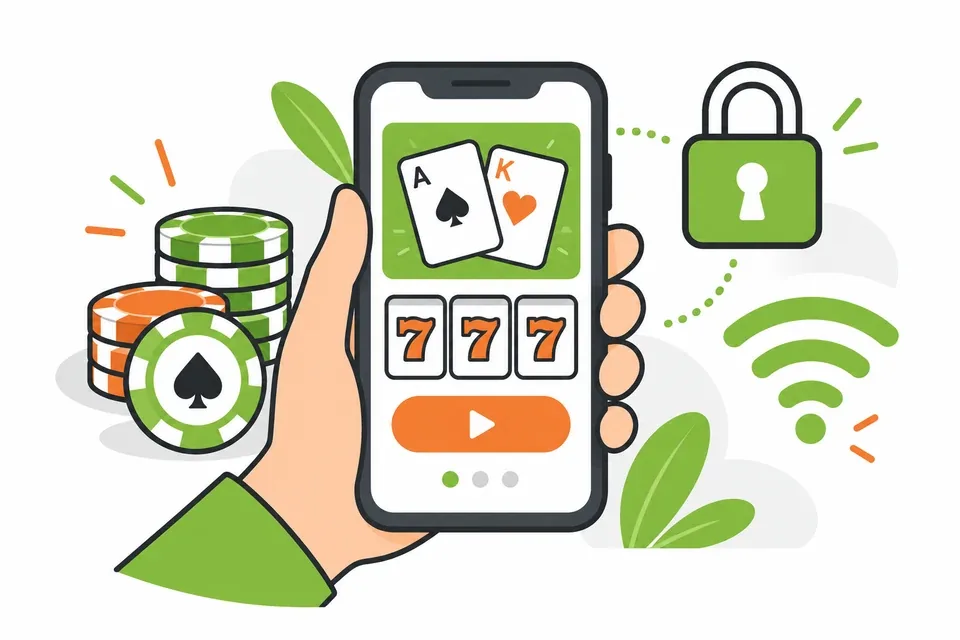
Before December 2025 no statute licensed online casinos. The levy legislation taxed bookmakers who took bets via the internet, at an annual levy of Rs. 5 million for those operating through agents or the internet, but it did not create a licensing regime. In 2024 Advocata observed that foreign betting websites were “freely accessible from Sri Lanka, with no local law prohibiting Sri Lankans from joining such global betting platforms”.
The 2025 Act changes the position in principle. Digital gambling, including internet and mobile casino games, falls within the definition of gambling and requires a digital gambling licence, and providing it without a licence is an offence under section 42. In practice the licensing system is not yet in place. The Act lets licensees offer digital gambling only “in such manner as may be specified by Order”, and the Minister must first specify the authorised types of gambling under section 19. In July 2026 the GRA’s chairperson, N. M. W. N. Bandara, and its acting Director General told Parliament’s Committee on Public Finance that the first phase of regulations, covering the section 19 order, licensing, online gambling and anti-money laundering, was awaiting an expert review and was expected in October 2026 (The Morning, July 2026). Press reports that online betting has been “legalised” (Sunday Times, March 2026) describe the statutory framework, not a working licence regime. We found no report of a digital gambling licence having been issued.
Enforcement against unlicensed operators
The GRA Act contains no express power to block websites or to direct payment providers. In August 2026, however, it was reported that the Telecommunications Regulatory Commission of Sri Lanka had directed all telecommunications providers to block 24 unlicensed gambling and betting websites with immediate effect, citing the GRA Act, and that the authorities had identified more than 40 local payment channels used by offshore platforms (SCCG Management, August 2026, summarising trade press). We were unable to read the original direction or the ministry statement. Advertising gambling carried on in contravention of the Act is an offence under section 44, punishable by a fine of up to Rs. 100,000, up to two years’ imprisonment, or both.
Position of players
The new Act is aimed mainly at operators, but it contains one offence that can apply to players. Under section 49, a person who knowingly, or having reason to believe it, “enters, remains, and is found in any gambling premises” carried on in contravention of the Act commits an offence, punishable by a fine of up to Rs. 100,000, up to two years’ imprisonment, or both. “Gambling premises” are defined as premises to which people have access for gambling, including Sri Lanka’s territorial waters. The wording points to physical premises. We found no provision that expressly makes it an offence for an adult to gamble online with an unlicensed foreign operator, and no reported prosecution of a player for doing so. The old presumption in the Gaming Ordinance against persons found in a common gaming place fell with the Ordinance’s repeal.
Several other rules affect players directly. A licensee may not allow anyone under 18 to gamble (section 52), and engaging a minor in gambling is an offence (section 51). The 2022 casino licensing regulations went further and barred persons under 21 from casinos (Nithya Partners); we could not confirm whether that age limit continues under the GRA’s forthcoming regulations. Sri Lankan citizens may enter licensed casinos but must pay the casino entrance levy each time. The levy is designed, as the then finance minister, Mangala Samaraweera, put it when the citizen-only levy was first proposed in 2019, “primarily to discourage local residents from gambling” (Asgam, April 2019).
Taxation
Gambling taxes are levied under the Betting and Gaming Levy Act and collected by the Inland Revenue Department. From 1 January 2026, under the Betting and Gaming Levy (Amendment) Act, No. 25 of 2025, the main charges are:
| Charge | Rate | Applies to |
|---|---|---|
| Casino entrance levy | US$100 per entry (US$50 from 1 April 2023 to 31 December 2025) | Sri Lankan citizens entering a place of business of gaming |
| Gross collection levy | 18% (15% from 1 April 2023 to 31 December 2025) | Bookmakers and gaming businesses with monthly gross collections above Rs. 1 million |
| Annual levy: gaming | Rs. 500 million a year | Casino businesses |
| Annual levy: bookmakers | Rs. 5 million (agents or internet); Rs. 1 million (with live telecast); Rs. 75,000 (without live telecast) | Bookmakers |
Sources: Daily FT, January 2026; Yogonet, January 2026; Inland Revenue Department, PN/BGL/2023-01. The annual levy amounts are those set in 2023; we did not find a later change.
The entrance levy has a complicated history. An amendment of 2015 provided for a levy of US$100; an Inland Revenue Department notice of February 2023 stated that it applied to any person entering a casino from 1 September 2022. From 1 April 2023, Act No. 11 of 2023 limited it to citizens and reduced it to US$50, payable by a citizen who enters a place of gaming “physically or via internet” (IRD). Parliament passed the 2025 amending Act on 5 December 2025 (Yogonet).
Casino and betting companies also pay corporate income tax. The PwC worldwide tax summary for Sri Lanka lists a 40% rate for businesses consisting of betting and gaming, liquor and tobacco (PwC, last reviewed 2022); we were not able to confirm the current rate from an official source. We also found no authoritative source on whether, or at what rate, individual players’ winnings are taxed, and readers should check with the Inland Revenue Department.
Consumer protection and responsible gambling
Responsible gambling is one of the GRA’s statutory objects: section 3 directs it to “foster responsible gambling in order to minimize the harm caused by gambling”. The Act’s concrete measures are mostly indirect. Licensed gambling software must include user tools for self-imposed limits on time, spending or losses and must include mechanisms to identify and restrict access by people registered in self-exclusion programmes (section 33).
However, the Act does not itself establish a national self-exclusion register, and we found no state-funded gambling helpline or treatment service in Sri Lanka. Advocata’s 2024 study recommended betting limits, visit limits and awareness campaigns against problem gambling, which suggests these were not in place at the time. The detail is expected to come in the GRA’s regulations. General guidance on setting limits and recognising warning signs is available in our responsible gambling guide.
Anti-money laundering
The head of the Financial Intelligence Unit sits on the GRA board, the Director-General may issue anti-money laundering rules to licensees under the Prevention of Money Laundering Act and the Financial Transactions Reporting Act (section 5), and the Authority must carry out money laundering risk assessments (section 6). Sri Lanka was on the Financial Action Task Force (FATF) list of jurisdictions under increased monitoring (“grey list”) from 2017 to 2019 (Sunday Times, October 2025). Its next mutual evaluation is by the Asia/Pacific Group on Money Laundering (APG). The APG schedule gives a technical compliance submission date of 31 March 2026 and lists the evaluation for the 2027 plenary.
Recent and upcoming developments
- Gambling Regulatory Authority Act (August to December 2025). The Bill was gazetted in May 2025, passed in August and certified on 3 September 2025. It came into operation on 1 December 2025 (GGRAsia, August 2025; GGRAsia, November 2025).
- Higher levies (January 2026). Following a February 2025 budget proposal (GGRAsia), the levy increases took effect on 1 January 2026; the amending Act was certified on 17 December 2025 (Yogonet).
- Missed deadline (June to October 2026). The GRA did not become fully operational by the 30 June 2026 target, partly because senior staff had not been recruited (SCCG Management). In July 2026 the Committee on Public Finance criticised the lack of industry consultation. The first regulations, including online gambling rules, were expected in October 2026 (The Morning). They had not been published when this guide was reviewed.
- Website blocking (August 2026). Twenty-four unlicensed gambling websites were reported blocked on the direction of the telecoms regulator (SCCG Management).
- AML evaluation (2026 to 2027). Sri Lanka’s APG mutual evaluation is under way, with the plenary discussion scheduled for 2027 (APG).
Casino listings for players in Sri Lanka
The listings below are generated automatically from our casino database and do not show that an operator is licensed in Sri Lanka. Online gambling requires a GRA digital gambling licence, and none had been reported as issued at the time of review. The listings must not be read as an indication that offering or playing online casino games in Sri Lanka is lawful; readers should check an operator’s status with the GRA once its register is available.
Vegas Casino Online
No Deposit Bonus
$ 20
Liberty Slots Casino
No Deposit Bonus
$ 18

Slots.lv
100% up to
$2,000
+ 20 Spins
Sloto'Cash Casino
100% up to
∞

Casino Extreme
200 Spins

Bovada Casino
100% up to
$1,000
Casino Brango
500% up to
$/€100
+ 500 Spins
Shazam Casino
Exclusive No Deposit Bonus
$ 50
Lucky Tiger Casino
No Deposit Bonus
$ 55
Red Stag Casino
25% up to
∞
Rich Palms Casino
250% up to
∞

Miami Club Casino
50 Spins

Highway Casino
$ 30

Lincoln Casino
No Deposit Bonus
$ 18

Yabby Casino
202% up to
∞

DuckyLuck Casino
500% up to
$/€2,500
+ 150 Spins

PlayCroco Casino
300% up to
∞
+ 60 Spins

Fair Go Casino
200% up to
∞
Uptown Aces
250% up to
∞

Las Vegas USA Casino
No Deposit Bonus
$ 20

Drake Casino
300% up to
$2,000
Sun Palace Casino
No Deposit Bonus
$ 20
Slots Plus
No Deposit Bonus
$ 20
Ignition Casino
200% up to
$100
.jpg?x83485)
Everygame Classic Casino
200% up to
∞
+ 50 Spins
Slots And Casino
500% up to
∞
+ 150 Spins

Slotsroom Casino
400% up to
∞
+ 20 Spins

Casino Max
400% up to
∞
+ 20 Spins
El Royale Casino
230% up to
∞
Black Lotus Casino
300% up to
$7,000
+ 45 Spins
Red Dog Casino
Slots Empire
230% up to
$7,500

Lucky Creek
50 Spins

Spinfinity Casino
400% up to
∞
+ 20 Spins

Jackpot Capital
25% up to
∞
Ripper Casino
25% up to
∞

Las Atlantis Casino
$ 2,500

Slotastic
250% up to
∞

Grand Eagle
200% up to
$5,500
+ 30 Spins

Cherry Jackpot
400% up to
∞
+ 20 Spins
Grande Vegas
150% up to
$300
LadyLuck Casino
100 Spins

Roaring 21 Casino
400% up to
∞
+ 20 Spins

Ozwin Casino
$ 10
Treasure Mile
200% up to
$/€4,000
+ 50 Spins

TropicanaCasino
Borgata Online Casino

BetOnline Casino
100 Spins

Grand Rush
200% up to
$4,000
+ 40 Spins

Jazz Casino
10% up to
$250

BetMGM Casino NJ
100% up to
$1,000
Sources and further reading
- Parliament of Sri Lanka, Gambling Regulatory Authority Act, No. 17 of 2025 (2025).
- Government of Ceylon (via LankaLAW), Gaming Ordinance, Ordinance No. 17 of 1889 as amended, revised edition (accessed 6 October 2026).
- Parliament of Sri Lanka (via Ministry of Finance), Casino Business (Regulation) Act, No. 17 of 2010 (2010).
- Laws of Sri Lanka, Betting and Gaming Levy Act, No. 40 of 1988, as amended (accessed 6 October 2026).
- Inland Revenue Department, Implementation of Casino Entrance Levy (CEL), PN/CEL/2023-01 (2023).
- Inland Revenue Department, Betting and Gaming Levy (Amendment) Act No. 11 of 2023, PN/BGL/2023-01 (2023).
- Advocata Institute, A Comprehensive Policy Framework for the Gaming Industry of Sri Lanka (2024).
- Pieris, N. (Nithya Partners), Casino Regulations in Sri Lanka (2022).
- The Morning, Gaming industry: Rouletting to generate revenue (2024).
- The Morning, ‘Scam hub’: SL delays gambling regulations, targets October (2026).
- Sunday Times (Sri Lanka), Sri Lankan casinos under licence system (2013).
- Sunday Times (Sri Lanka), Sri Lanka legalises online betting, targets grey market (2026).
- Sunday Times (Sri Lanka), Sri Lanka to undergo third money laundering, terrorism financing evaluation in 2026 (2025).
- Asia/Pacific Group on Money Laundering, APG Global Fifth Round Mutual Evaluation Schedule (2026).
- GGRAsia, Sri Lanka hikes casino fees in 2025 budget proposal (2025).
- GGRAsia, Sri Lanka’s parliament passes Gambling Regulatory Authority Bill (2025).
- GGRAsia, Sri Lanka’s Gambling Regulatory Authority Act in effect from Dec 1 (2025).
- SiGMA, Sri Lanka brings new gambling authority act into force (2025).
- Daily FT, New casino entry levy, betting and gaming taxes come into effect (2026).
- Yogonet, Sri Lanka enforces higher casino entry levy and gaming tax rates from January 2026 (2026).
- Asgam, New US$50 entry levy on Sri Lankan casinos will only apply to locals, government reveals (2019).
- Melco Resorts & Entertainment, City of Dreams Sri Lanka (accessed 6 October 2026).
- Yogonet, Sri Lanka’s first integrated casino resort, City of Dreams Colombo, opens with Melco at the helm (2025).
- G3 Newswire, City of Dreams Sri Lanka opens its gaming floor to the public (2025).
- SCCG Management, Sri Lanka Blocks 24 Unlicensed Gambling Websites Under New Regulatory Act (2026).
- PwC, Sri Lanka: Corporate – Taxes on corporate income (last reviewed 29 June 2022) (accessed 6 October 2026).