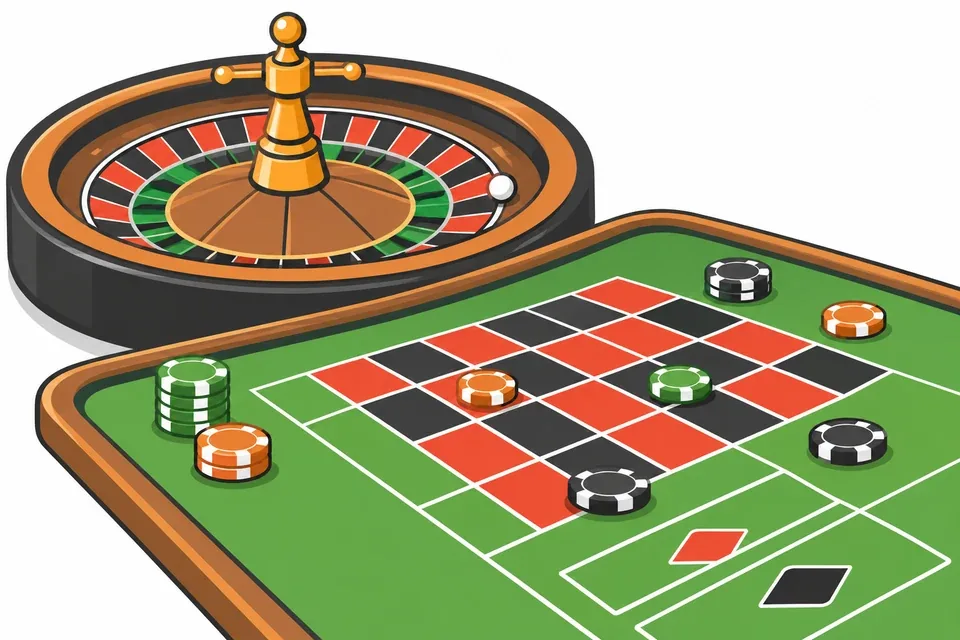

In short: There is no best number to play: on a fair wheel every pocket has the same 1/37 (single zero) or 1/38 (double zero) chance on each spin. Hot, cold or lucky numbers do not change the next result, and a straight-up bet pays 35:1, giving a house edge of 2.70% or 5.26%.
There is no best number to choose on a fair, independent roulette game. Every pocket has the same probability on each spin. Personal favourites can make selection simpler, but they do not provide a mathematical advantage.
Probability and payout are different
On a 37-pocket single-zero wheel, one selected number has a 1/37 chance of winning, approximately 2.70%. The odds against that result are 36:1, while a standard straight-up bet pays only 35:1 profit plus the returned stake. That difference creates the house edge.
On a 38-pocket double-zero wheel, the chance is 1/38. With the same 35:1 payout, the house edge is approximately 5.26%. Zero and double zero are separate pockets; neither is covered by ordinary red/black or odd/even bets.
Hot and cold numbers
A “hot” number has appeared often in a chosen sample, while a “cold” number has appeared less often. The labels depend on the sample and describe the past. On independent spins they do not change the next result.
Randomness does not require every number to appear within a fixed number of rounds. Repeats and long absences are possible. Increasing a bet because a number is “due” is the gambler’s fallacy; following a recent winner is no more reliable.
Wheel neighbours
Neighbour bets cover adjacent pockets around the wheel, not adjacent numbers in numerical order. On a standard European wheel, 5 and its two neighbours on each side are 16, 24, 5, 10 and 23. Other wheel sequences need their own selection.
Five equal straight-up units cover five pockets. If one wins at 35:1, the total return is 36 units, including the winning stake; subtracting the five units wagered gives 31 units of net profit. Otherwise all five units are lost. Greater coverage costs more and does not reduce the standard house edge.
Sector bets
Voisins du zéro conventionally uses nine units across a trio, five splits and a corner to cover 17 numbers. Tiers uses six split bets covering 12 numbers. Orphelins commonly uses one straight-up unit on 1 and four splits: 6/9, 14/17, 17/20 and 31/34. Number 17 is covered twice in that package.
These groupings make betting convenient. Their names do not identify a more favourable area of a fair wheel, and returns vary when chips are distributed unevenly.
Lucky numbers and patterns
Birthdays, favourite numbers and visual patterns on the grid have no predictive power. A dealer’s routine or a short run of results is not evidence of a biased wheel. Physical-bias research requires measurements and testing beyond selecting numbers from a results board.
Making a practical choice
Compare the wheel, payouts and zero rules rather than hunting for a lucky pocket. Choose a total stake you can afford to lose, including every number in a package. No number selection or staking progression guarantees a profit.

Best Online Roulette Bonuses
Shazam Casino
Exclusive No Deposit Bonus
$ 50

Black Lotus Casino
300% up to
$7,000
+ 45 Spins

Lucky Creek
200% up to
$/€7,500

Grand Eagle
200% up to
$5,500
+ 30 Spins

Treasure Mile
200% up to
$/€4,000
+ 50 Spins

Jazz Casino
200% up to
$2,000
+ 100 Spins

Bovada Casino
100% up to
$1,000

Ignition Casino
200% up to
$100

Slots.lv
100% up to
$2,000
+ 20 Spins

Slots And Casino
500% up to
∞
+ 150 Spins
Best Numbers to Play
Roulette on a Mobile Device
Popular Online Roulette Casinos
Progressive Roulette
Roulette Bankroll Management
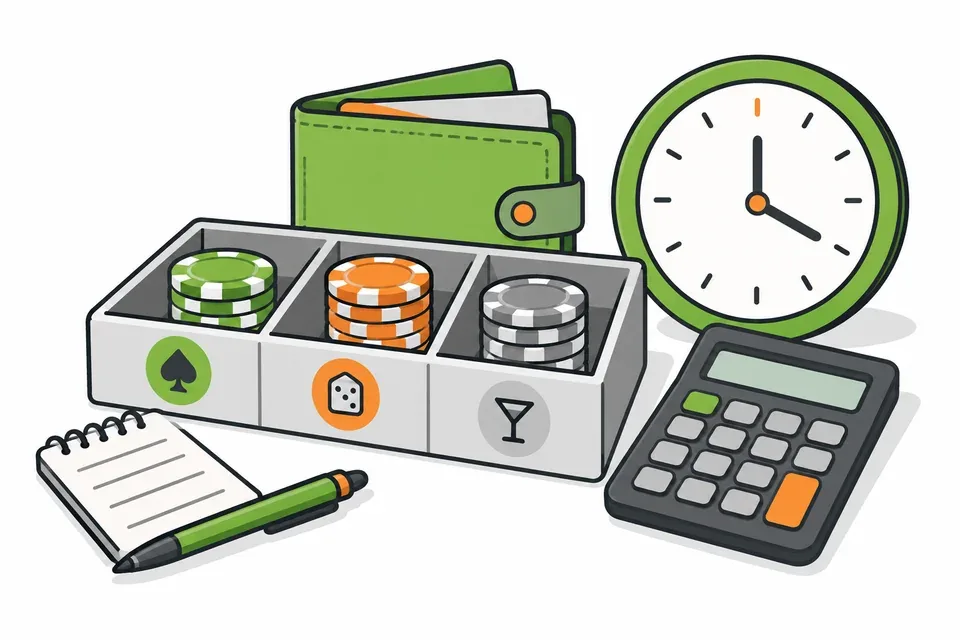


With standard payouts, single-zero roulette has a house edge of approximately 2.70%, while double-zero roulette has approximately 5.26% on most bets. The double-zero five-number bet has a higher edge of approximately 7.89%. La partage reduces the edge on qualifying single-zero even-money bets to approximately 1.35%. Check the actual rules: a French label does not guarantee that concession, and modified games can have different returns. House edge is a long-run expectation, not a fixed deduction from every session.
French-style roulette may be offered at land-based venues or online casinos, depending on the operator and your location. Check the current table rules for la partage or en prison and their treatment of zero. The name alone does not establish a 1.35% house edge, and availability can change.
Overlapping bets change the distribution of possible payouts and may put several stakes on the same number. They do not reduce the standard house edge per unit wagered. Count the complete stake when calculating net profit: one component winning does not necessarily mean the combined wager made money.
A rule returning half an even-money stake when a zero wins reduces the loss on that outcome. On a standard double-zero wheel, half-loss treatment for both 0 and 00 reduces the edge on those bets to approximately 2.63%. Single-zero la partage produces approximately 1.35%. Check which pockets and bets qualify; neither concession guarantees a profit.
Roulette already has a mathematical house edge, so an ordinary losing run is not evidence of cheating. That does not justify a blanket guarantee that every casino is honest. Verify the operator’s licence and relevant testing information, and report a specific concern through its complaint process. No single testing agency audits every casino product worldwide.
The five-number bet on 0, 00, 1, 2 and 3 is commonly called the basket or top-line bet. Nicknames such as “the beast” are informal; their origin should not be assumed. At the standard 6:1 payout on a 38-pocket wheel, its house edge is approximately 7.89%, compared with approximately 5.26% on most other standard double-zero bets.
Some offers allow roulette, while others exclude it or give its wagers reduced contribution toward a requirement. This also applies to no-deposit bonuses. Check eligible games, contribution rates, maximum stakes, expiry and withdrawal restrictions in the current terms. Do not assume that a general casino bonus covers roulette.
Limits vary by operator, table, currency and bet type. Read the current table information for minimum stakes, per-number limits, outside-bet limits and any overall cap. There is no universal online roulette minimum or maximum, and the full cost of a sector or multiwheel wager can exceed the displayed chip denomination.
Access to live-dealer games, free viewing and any demo mode depends on the provider and operator. Many live tables require real-money wagers, but limited seats are not a universal explanation: online tables can serve many remote players. Check the specific product’s access rules rather than assuming every live game has the same policy.
Many roulette games work on compatible phones and tablets through a browser or app. Support depends on the game, operator, device and operating-system version. There is no general rule that Android provides every game or that iPhone users always have fewer options. Check compatibility and use any demo to learn the touch controls before risking money.
Further reading: Gambling Commission standards for random outcomes.