On a fair roulette wheel, each spin is independent and each pocket has the same chance of winning. A number that has not appeared for 70 spins is no more likely to appear next than any other number.
Many people tend to believe this, as they do not understand that every ball spin has absolutely nothing to do with events in the past. It is preposterous to think that a roulette wheel has memory, or records of historical data! There is no mechanism to store information, including which of the numbers was a winner at the prior spin, or the one before it, or at any of the earlier spins.
Every time a ball is spun, the outcome is not linked with past outcomes, just like the case with a pair of dice. Therefore, each ball spin is an independent event.
If we take the American roulette wheel, at every spin of the ball the probability of a specific number winning is 1/38 (1 chance out of 38).
Let us presume that the number 20 emerged as a winner two consecutive times. At the third spin, the probability for the number 20 to win is again 1/38, or the exact probability as any of the remaining numbers on the wheel. If we presume that the number 20 has not won in the past 85 wheel spins, the probability for this number to win at the 86th spin is again 1/38!
Repeating numbers
For a specified block of spins on a fair double-zero wheel, the chance of number 20 appearing twice is (1/38)2 = 1/1,444; three times is 1/54,872; and four times is 1/2,085,136. These are probabilities assessed before the whole block starts.
Once three 20s have already occurred, the conditional chance of another 20 is still 1/38. The rarity of the original four-spin sequence does not make its final spin less likely after the first three are known.
Best Online Roulette Bonuses

Shazam Casino
Exclusive No Deposit Bonus
$ 50

Black Lotus Casino
300% up to
$7,000
+ 45 Spins

Lucky Creek
200% up to
$/€7,500

Grand Eagle
200% up to
$5,500
+ 30 Spins

Treasure Mile
200% up to
$/€4,000
+ 50 Spins

Jazz Casino
200% up to
$2,000
+ 100 Spins
These odds will be correct, regardless of what has occurred on prior spins, because the wheel has no memory of past events. On each separate wheel spin, the probability remains 1/38. The table below presents the expected probabilities of repeating numbers.
| Repeats | Any Number | Pre-selected Number |
|---|---|---|
| 1 | 1 / 1 | 1 / 38 |
| 2 | 1 / 38 | 1 / 1444 |
| 3 | 1 / 1444 | 1 / 54 872 |
| 4 | 1 / 54 872 | 1 / 2 085 136 |
The next number matches the preceding result with probability 1/38 on a fair double-zero wheel. That is a long-run rate, not a promise of a repeat every 38 spins or a fixed number each hour.

Number Sequences
Betting on neighbouring wheel pockets is a way to choose coverage, not evidence of an effective profit strategy. Each covered pocket retains its ordinary probability.
Wheel neighbours and neighbours on the rectangular betting layout are different. To cover a sector of the wheel, a player may need bets scattered across the layout. This affects placement, not the house edge.
When playing on a particular wheel, one needs to know whether it uses the French or the American number sequence.
Inspect the actual wheel diagram before using a neighbour or sector bet. Do not assume a particular pocket order without checking the game.
Number Spans
If we consider the American roulette wheel, the most popular contiguous bet combination is based on the center column.
The latter features the span (in a clockwise manner) from the numbers 23 to 5 with five gaps (0, 7, 9, 28, 30). In addition, two other numbers remain outside of the span (8 and 29). This bet covers a span width of 15 numbers, which represents almost 2/5 of the wheel perimeter.
Roulette Number Sequences
American Roulette
European Roulette
French Roulette
Classic Roulette Bets
This bet is usually placed in one of the following ways:
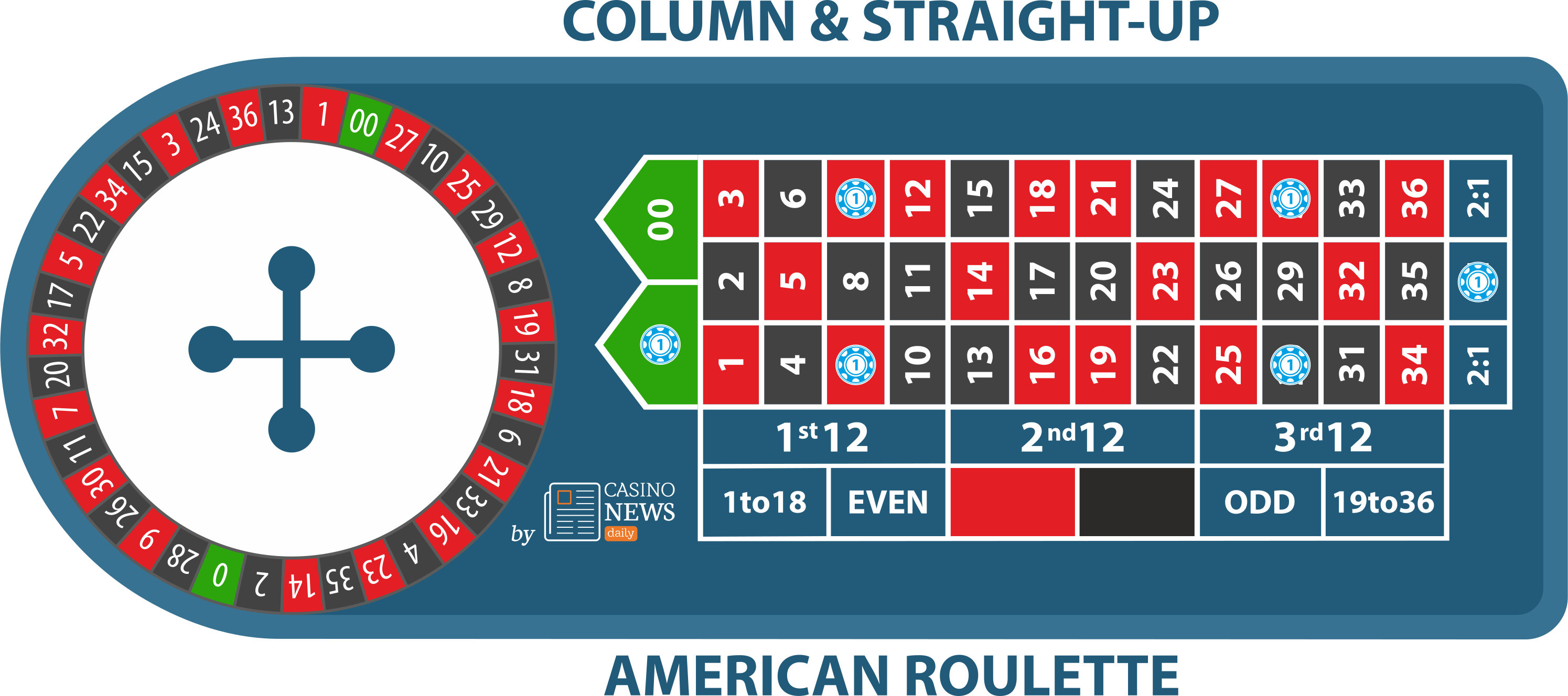
1. A player may place one chip on each of the numbers 0, 7, 9, 28, 30 and then place a stack of four chips (or more) on the center column.
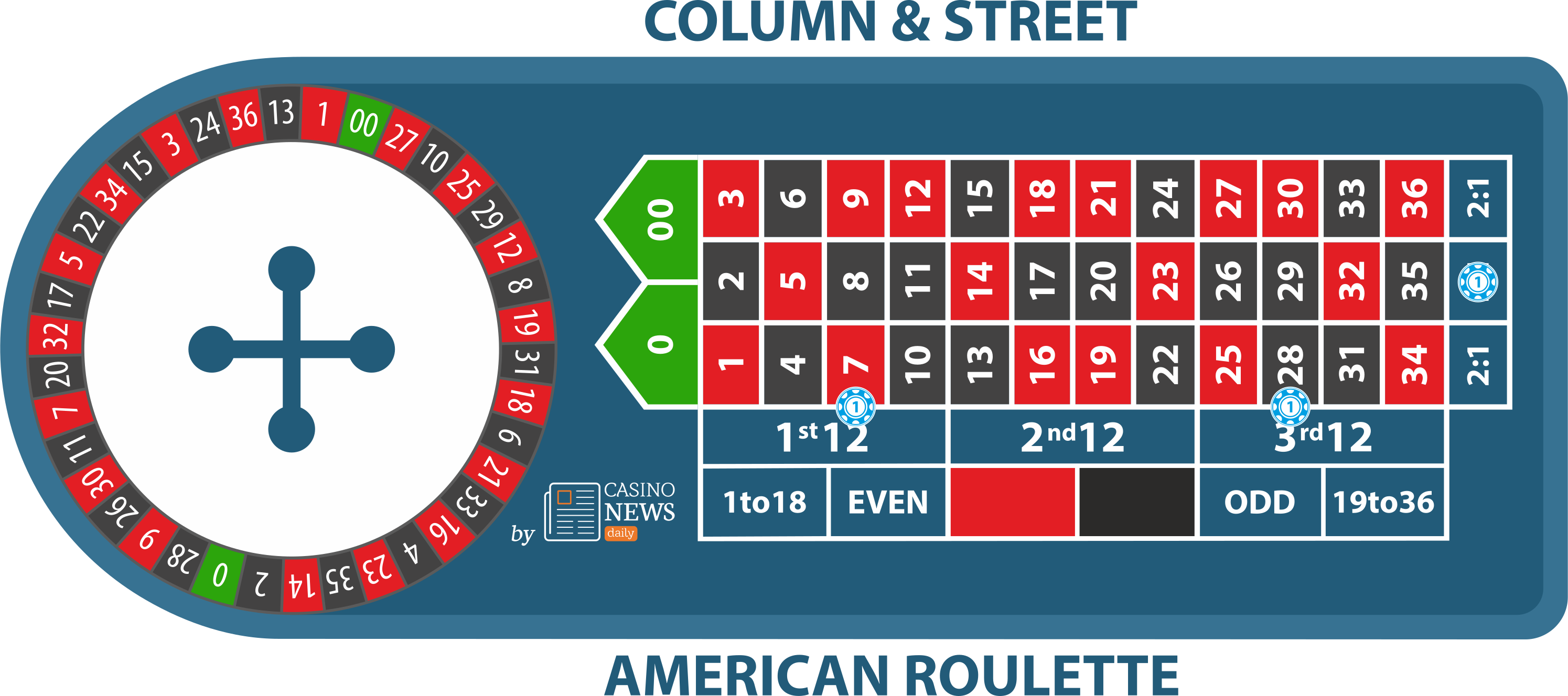
2. A player may place one chip on the row including 7, 8, 9, one chip on the row including 28, 29, 30, and then place two chips (or more) on the center column.
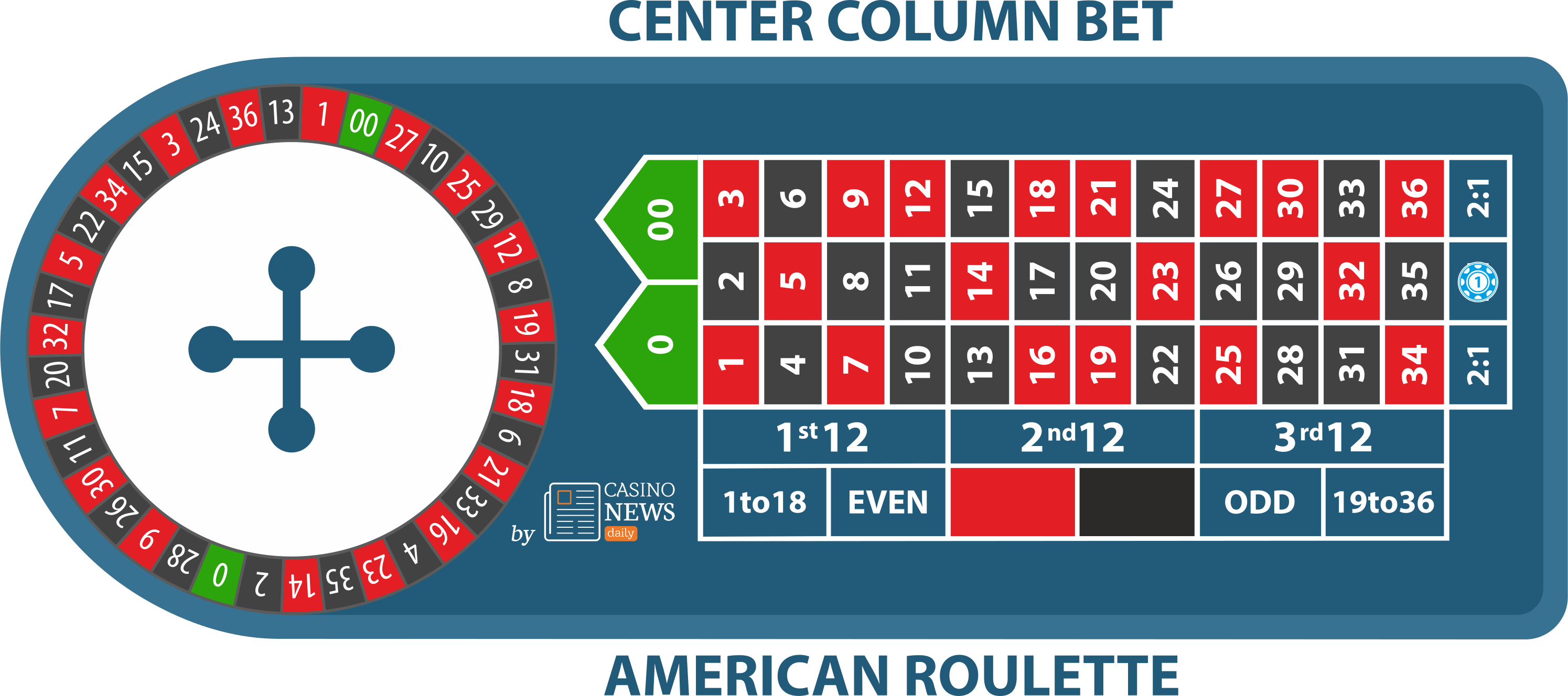
3. A player may bet right on the center column while hoping the ball will not come to rest on one of the five gaps.
The following combinations illustrate wheel-sector coverage. Covering a continuous span without gaps does not make the covered pockets more likely to win than an equal number of other pockets.
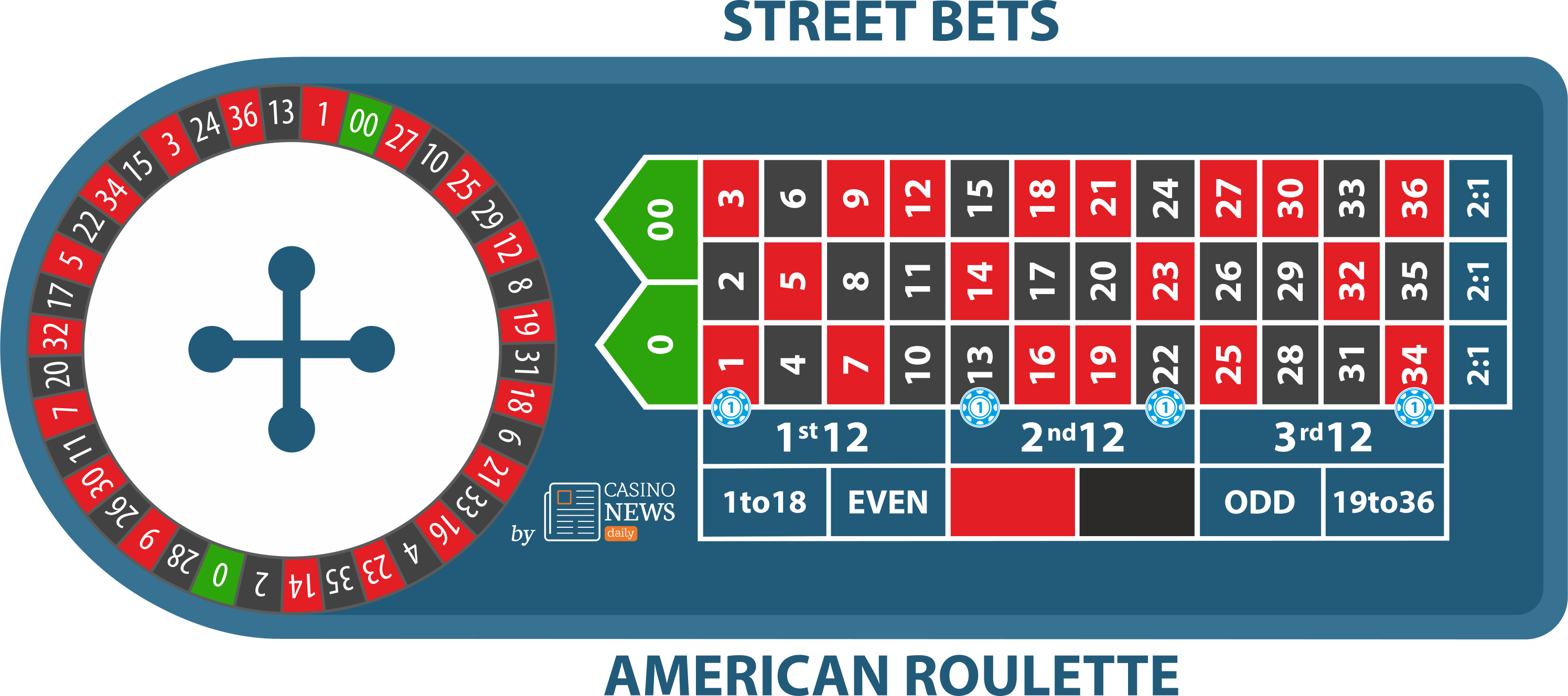
The first span extends from 22 to 1 and includes 4 street bets as follows: one on 1, 2, 3, one on 13, 14, 15, one on 22, 23, 24, and one on 34, 35, 36. We should note that there is also a secondary span of four numbers on the opposite side of the wheel. It includes the numbers 23, 35, 14, 2.
The second span extends from 19 to 4. It includes one street bet on 4, 5, 6, one street bet on 31, 32, 33, and after that two split bets, one on 16-19 and one on 18-21. Only two numbers remain outside of the major span, 32 and 5.

On a standard single-zero wheel, a neighbours bet can simplify sector placement where offered. Individual straight-up bets can also cover selected pockets. Check the total stake and payout rules.
Further reading: Gambling Commission standards for random outcomes.